A soft spot beneath a rug, a floor that slopes toward one wall, or a musty crawlspace smell can point to more than an aging house. When floor joists begin to rot, the framing that supports your living space may be losing strength. Learning how to repair rotted floor joists starts with one rule: do not cover the damage before finding and stopping the moisture that caused it.
Wood rot is not a cosmetic issue. It can allow floors to sag, make doors stick, crack finished walls, and eventually create an unsafe area of the home. The right repair depends on how much wood has deteriorated, where the damage is located, and whether the beam, sill plate, subfloor, or foundation supports are affected too.
Know the Warning Signs Before the Damage Spreads
Floor joists are usually hidden below the floor, often in a crawlspace or basement. That means homeowners commonly notice symptoms upstairs before they see the damaged framing. A floor that feels bouncy, uneven, or noticeably soft deserves prompt attention, especially if the problem is getting worse.
Other warning signs include a persistent damp or earthy odor, mold growth on framing, rusty HVAC equipment or pipes in the crawlspace, standing water, and wood that looks dark, flaky, or deeply cracked. If you can press a screwdriver into a joist with little effort, the wood may be deteriorated beyond a simple surface treatment.
Do not assume every low spot means rot. A settling foundation, undersized framing, shifting support posts, termite damage, or a failing main beam can create similar symptoms. That is why a close inspection is more valuable than guessing based on the floor above.
Why Floor Joists Rot
Fungus needs moisture and wood to grow. In most homes, the wood was not the original problem. The problem was water or chronically humid air reaching the framing and staying there long enough for decay to begin.
Common causes include plumbing leaks, groundwater entering the crawlspace, poor exterior grading, clogged gutters, disconnected downspouts, foundation wall seepage, or an unsealed dirt crawlspace. In Virginia and the Maryland and DC region, humid summers can also load a vented crawlspace with moist outside air. When that air contacts cooler surfaces, condensation can keep joists damp even when there is no obvious flooding.
Termites and other wood-destroying insects can make the damage more severe, but rot and insect damage are not interchangeable. A proper assessment should identify both conditions. Treating insects without correcting moisture can leave rot active. Drying the crawlspace without repairing insect-damaged wood can leave weakened framing in place.
How to Repair Rotted Floor Joists: Start With a Full Assessment
Before any repair work begins, determine whether the joist is lightly damaged, partially compromised, or structurally unsound. This is the point where a professional structural inspection is often the safest choice. A joist can look acceptable along its visible edge while its top surface, concealed behind insulation or subflooring, has extensive decay.
An assessment should examine the length of each affected joist, its bearing points, the rim joist, sill plate, beam pockets, support columns, and nearby subfloor. It should also trace the source of moisture. Replacing one bad joist while leaving a wet crawlspace, leaking pipe, or failing drainage system in place is a short-term patch, not a permanent fix.
The repair approach typically falls into one of three categories. Minor surface decay may be addressed after the framing is dried and the moisture problem is corrected. A joist with limited, localized damage may be reinforced. A joist that has lost significant material, is crushed at a bearing point, or no longer supports the floor properly may need partial or complete replacement.
Repair Options Depend on the Extent of Rot
Sistering a Partially Damaged Joist
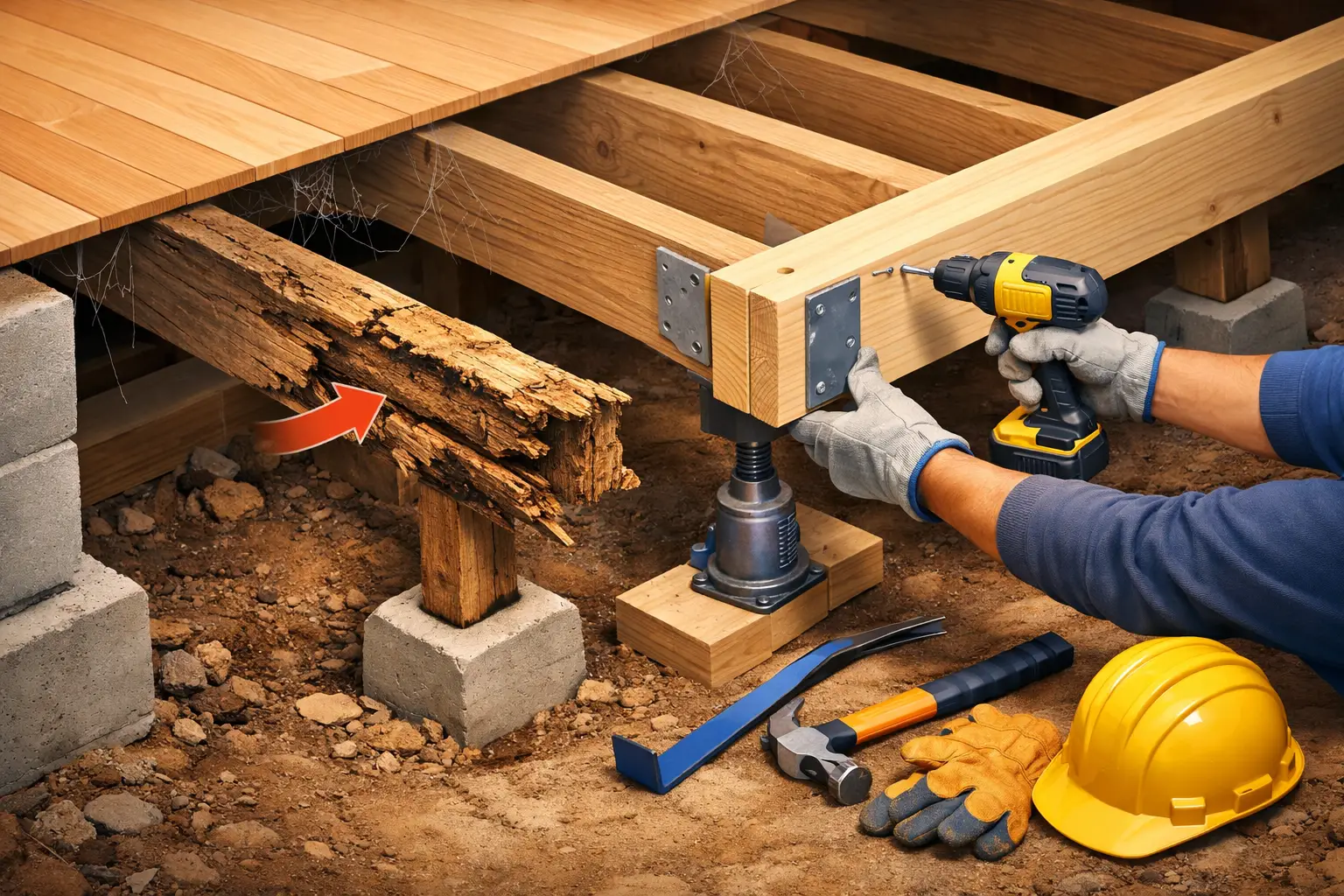
Sistering means fastening a new engineered or dimensional lumber member alongside an existing joist. It can be an effective repair when the original joist still has enough sound wood to share the load and the damaged area is limited.
The new member must extend well beyond the weakened section and, where possible, bear properly at each end. The repair should be designed for the span and load, not simply attached with a few screws. Construction adhesive, properly sized structural fasteners, and solid blocking may be part of the repair, but the exact details depend on the framing layout.
Sistering is not appropriate for every situation. If the rot extends into the joist ends, rim joist, sill plate, or supporting beam, adding wood beside the damaged area may not restore a reliable load path. The support beneath the joist has to be sound too.
Replacing a Severely Rotted Joist
Full replacement is often necessary when a joist is deeply decayed, broken, or no longer supported at one end. This work usually requires temporary shoring to support the floor before the damaged member is removed. Improper shoring can crack finishes above, shift framing, or create a serious safety hazard.
A contractor may use temporary beams and adjustable support posts to carefully lift and stabilize the affected area. The floor should be raised gradually, not forced quickly back to level. In an older home, aggressive lifting can damage drywall, tile, plumbing connections, and trim. Sometimes the goal is to restore safe support while accepting a small amount of remaining floor variation.
Replacement joists must be correctly sized, installed with approved hangers or bearing connections where needed, and integrated with the existing framing. If multiple joists are affected, a broader repair involving a new beam, support posts, or supplemental framing may be more dependable than replacing boards one at a time.
Repairing the Beam, Rim Joist, or Sill Plate
Joists do not work alone. Their ends often rest on a beam, rim board, ledger, or sill plate. If water has damaged those connected components, the repair scope needs to expand.
For example, a leaking exterior wall or wet foundation can rot the sill plate along a section of the home. Replacing joists without restoring the sill plate leaves the new framing dependent on compromised wood. This is where engineering-based diagnosis matters: the repair must rebuild the entire path that transfers the home’s weight safely to the foundation.
Stop the Moisture Before Closing the Crawlspace
Once the structural repair is complete, the moisture source needs a permanent solution. The best method depends on the conditions around and beneath the home, but effective plans often combine exterior water management with crawlspace or basement moisture control.
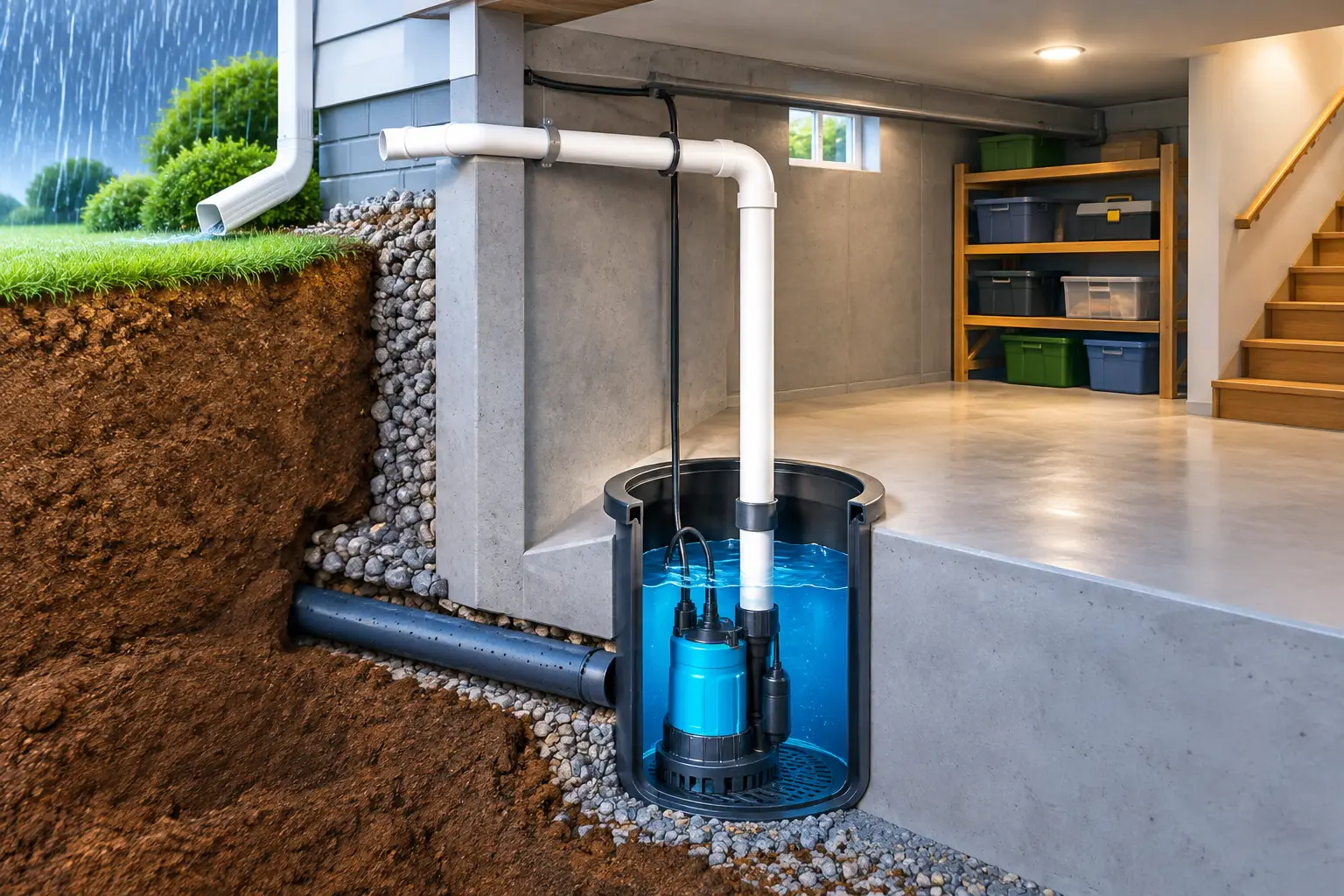
Correcting grading so surface water drains away from the foundation, extending downspouts, repairing plumbing leaks, and addressing foundation seepage are common first steps. In a crawlspace with high humidity or recurring groundwater, encapsulation, drainage, a sump system, and a properly sized dehumidifier may be recommended. The goal is to keep the framing dry year-round, not just after a cleanup.
Avoid relying on bleach, paint, or a dehumidifier alone as a structural repair. These measures may improve appearance or reduce odors, but they do not restore wood that has lost its strength. Likewise, do not install new insulation against wet framing. It can conceal ongoing decay and make future inspections harder.
When This Is Not a DIY Repair
Homeowners can safely handle some prevention work, such as redirecting downspouts, monitoring humidity, and calling a plumber for an active leak. Structural joist repair is different. It can involve temporary support of occupied living areas, electrical and plumbing obstacles, mold exposure, confined crawlspace conditions, and code requirements.
Call a structural repair professional promptly if the floor is visibly sagging, joists are soft or split, damage reaches a beam or sill plate, multiple joists are affected, or standing water is present. A qualified inspection can distinguish isolated repair needs from a foundation, drainage, or framing problem that requires a more complete solution.
For homeowners dealing with sagging floors, wet crawlspaces, or visible wood rot, Foundation Works provides honest inspections and permanent structural and moisture-control recommendations. The right repair should protect the floor you walk on, the framing you cannot see, and the long-term value of your home.
A rotted joist rarely improves with time. Address the water, verify the full extent of the damage, and restore the structure before a soft floor becomes a much larger repair.