
A basement wall does not bow inward overnight. It usually moves a fraction at a time as saturated soil, freeze-thaw cycles, poor drainage, and expanding clay press against it from outside. Wall anchors are a proven structural repair system designed to stop that movement and, in many cases, gradually improve the wall’s position without rebuilding the foundation.
For homeowners, the first signs can be unsettling: horizontal cracks in block or concrete walls, walls that appear to lean inward, dampness along a crack, or basement finishes separating from the wall. These symptoms deserve a professional evaluation. A cosmetic patch may hide the crack, but it cannot relieve the pressure causing it.
What Wall Anchors Do for a Failing Basement Wall
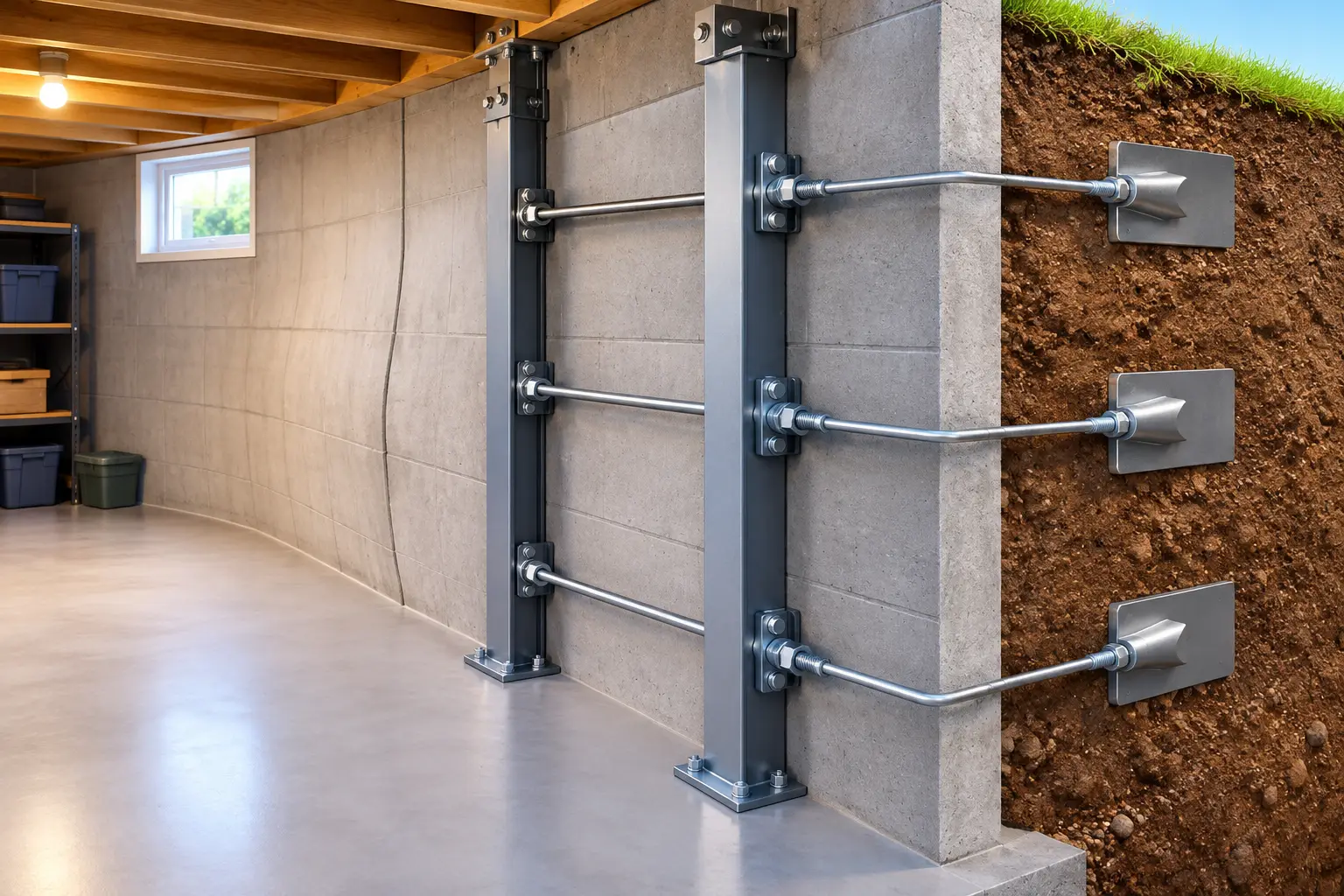
Wall anchors stabilize foundation walls by connecting the damaged wall to stable, undisturbed soil farther away from the home. A steel wall plate is installed inside the basement against the bowing area. A heavy-duty rod runs through the foundation wall and connects to an earth anchor installed outside, typically several feet from the home where the soil is less affected by the pressure immediately beside the foundation.
Once tightened, the system counteracts the outside force pushing the wall inward. The result is a permanent restraint system that helps prevent additional movement. Depending on the wall condition, soil conditions, and the repair design, anchors may also be adjusted over time to help straighten the wall gradually.
This distinction matters. Filling a crack can improve appearance and may reduce minor water entry, but it does not stabilize a wall that is moving. Engineering-based structural repair addresses the force behind the damage, not only the visible symptom.
Warning Signs That May Point to a Wall Anchor Repair
Horizontal cracking is one of the clearest signs of lateral soil pressure on a basement wall. On concrete block walls, it often appears along a mortar joint near the middle of the wall. On poured concrete walls, the crack may run horizontally or show a pattern of inward bending.
Look for changes beyond the crack itself. A wall that is visibly curved, bowed, or leaning requires prompt attention. So does a wall with loose block, crumbling mortar, widening gaps, or water entering through cracks after rain. In finished basements, warning signs can be less obvious: baseboards pulling away, drywall cracking, a musty odor, or a section of wall that no longer looks straight.
Exterior conditions often add useful context. Downspouts that release water beside the house, negative grading that directs rain toward the foundation, and standing water near the basement can all increase the moisture load in the soil. Wet soil is heavier, and some soils expand significantly as they absorb water. That added pressure can worsen existing wall movement.
Not every basement crack means the wall needs anchors. Small shrinkage cracks in poured concrete, for example, may be stable and may call for a different approach. The critical question is whether the wall is moving and what is causing that movement. An honest inspection should separate cosmetic concerns from structural ones.
When Wall Anchors Are the Right Solution
Wall anchors work best when there is accessible yard space outside the affected wall. The earth anchors need to be installed in stable soil at a specified distance from the foundation, so lot layout matters. Landscaping, patios, utilities, property lines, septic systems, and neighboring structures must all be considered before work begins.
They are commonly used for basement walls that have bowed inward from soil pressure but remain structurally repairable. The amount of movement matters. A mildly to moderately bowed wall may be an excellent candidate for anchors, while a severely deteriorated or collapsed wall may require a more extensive structural repair plan.
The wall material matters, too. Concrete block, poured concrete, and other foundation types respond differently. A qualified contractor evaluates the crack pattern, degree of deflection, wall height, framing connection, soil conditions, drainage, and exterior access before recommending a system. There is no responsible one-size-fits-all answer for a moving foundation wall.
What the Wall Anchor Installation Process Looks Like
A professional installation begins with an inspection and a repair plan based on the wall’s actual condition. The crew identifies the affected wall sections, determines appropriate anchor locations, and checks the outside work area for access and potential obstructions.
Inside the basement, small areas of finish materials may need to be removed to expose the foundation wall. Steel plates are positioned against the wall at engineered intervals. Outside, crews excavate limited locations for the earth anchors rather than digging up the entire foundation perimeter. Steel rods connect the interior plates to those earth anchors through carefully drilled openings in the foundation wall.
The system is then tightened to stabilize the wall. The interior plates remain visible unless they are later incorporated into a finishing plan. For many homeowners, that is a worthwhile trade-off for a permanent structural solution. The work area should be kept orderly, and the repair team should explain what will be visible, what is being repaired, and how the system will be monitored.
Wall anchors often pair naturally with drainage and moisture-control corrections. If rainwater continues to collect beside the foundation, the soil pressure problem can persist even after the wall has been stabilized. Correcting gutter discharge, surface grading, and basement or crawlspace water intrusion can protect the repair and reduce the conditions that caused damage in the first place.
Why Waiting Can Make a Bowing Wall More Expensive
A horizontal crack is often the first visible stage of a pressure problem. As the wall moves farther inward, cracks can widen, block can shift, and the connection between the foundation wall and the home’s framing can be affected. Water can also find easier paths through damaged areas, adding moisture concerns to an already serious structural issue.
Waiting does not always mean a wall will fail immediately. It does mean the underlying pressure has more time to cause damage. Early stabilization can preserve more repair options and may prevent a project from becoming substantially more invasive.
Avoid attempting to solve a bowing wall with surface sealants, paint, or repeated crack filling alone. Those products have a place for certain minor defects, but they are not designed to hold back soil pressure or restore structural stability. If a crack returns after it has been patched, or if it changes in width or direction, treat that as a reason to investigate further.
Questions to Ask Before Approving Wall Anchors
A clear repair recommendation should explain why anchors are appropriate for your wall, not simply state that they are needed. Ask what is causing the movement, how much deflection has been observed, where the earth anchors will be placed, and whether drainage conditions need to be addressed as part of the repair.
It is also reasonable to ask what the finished repair will look like inside and outside, whether future adjustment is expected, and how the installer protects nearby landscaping and utilities. A contractor should be able to explain the scope in plain language and identify any limits of the system. Permanent repairs start with an accurate diagnosis, not pressure to buy more work than your home needs.
For homeowners in Virginia and the Maryland metropolitan region, seasonal rain, clay soils, and aging basement construction can create the conditions that push foundation walls beyond their limits. Foundation Works evaluates these problems with the goal of identifying the root cause and recommending a repair plan that protects the home for the long term.
If you have noticed a horizontal crack, inward bowing, or recurring basement water near a damaged wall, do not wait for the next heavy rain to see whether it gets worse. A professional inspection can give you a clear answer, a practical repair path, and the reassurance of knowing what your foundation wall truly needs.

