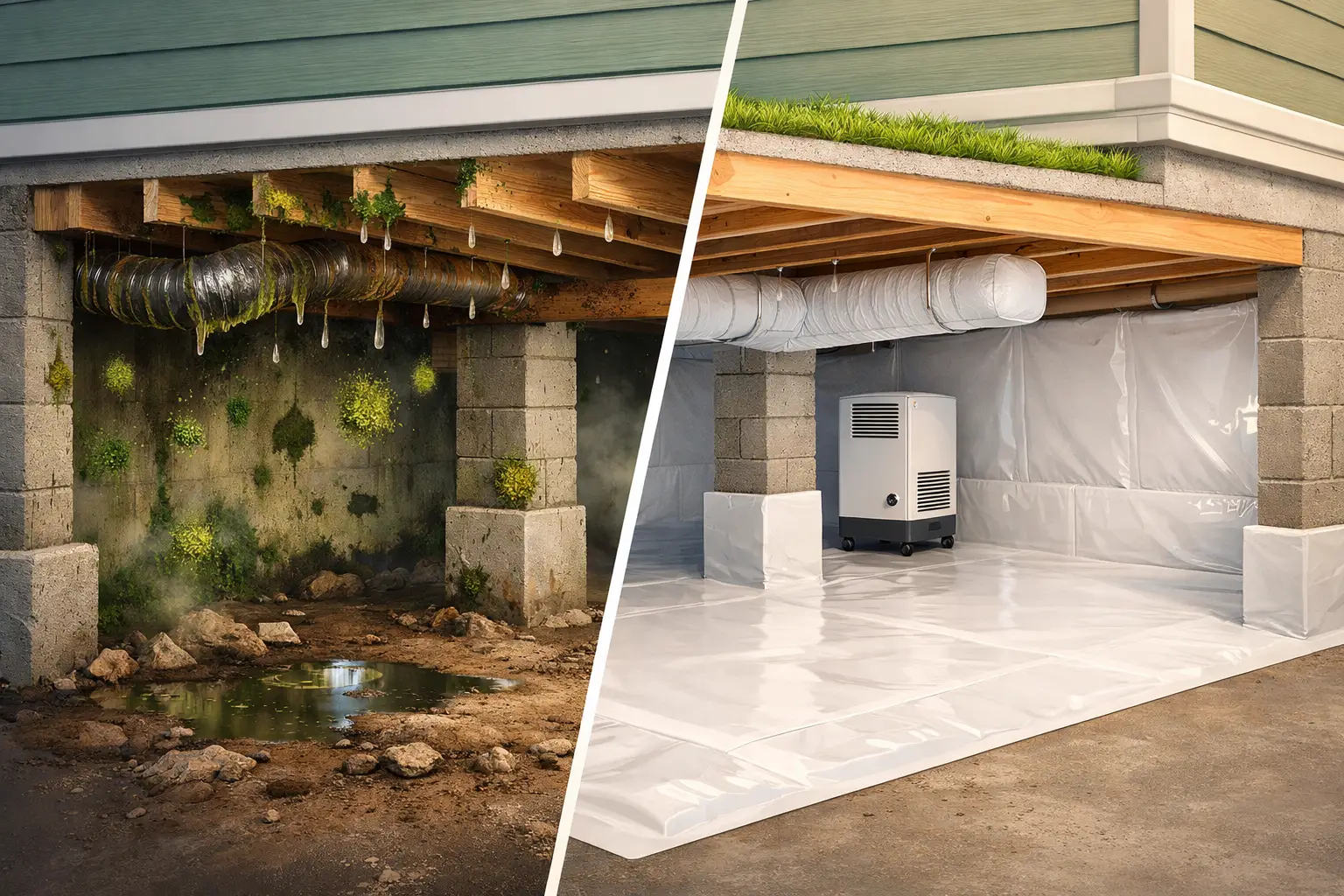
A musty odor near the first floor, dark spotting on floor joists, and floors that feel soft underfoot often point to the same problem: excess moisture below the home. So, does crawl space encapsulation prevent mold? In many homes, yes. A properly designed encapsulation system removes the damp conditions mold needs to grow. But it is not a magic cover-up. Existing water entry, plumbing leaks, damaged wood, and poor drainage must be addressed first.
For homeowners in Virginia, Maryland, and Washington, DC, crawl space moisture is a common threat. Humid summers, heavy rain, clay soils, and older vented crawl spaces can keep the framing under a home damp for long periods. Left alone, that moisture can lead to mold growth, wood rot, pest activity, sagging floors, and expensive structural repairs.
Why Mold Grows in Crawl Spaces
Mold needs three basic things: moisture, a food source, and enough time. A crawl space provides the food source without any effort. Wood joists, subflooring, paper-faced insulation, stored materials, and dust can all support mold growth when they stay damp.
Moisture can enter from several directions. Rainwater may run toward the foundation because of poor grading or clogged gutters. Groundwater can seep through foundation walls or rise through the crawl space floor. A plumbing leak, leaking HVAC condensation line, or unsealed dryer vent can add moisture from inside the home. In a traditional vented crawl space, warm outdoor air can also enter during summer and condense on cooler framing and ductwork.
That last issue surprises many homeowners. More vents do not always mean a drier crawl space. During humid weather, outdoor air can actually bring in enough water vapor to keep the area damp. If wood moisture remains elevated, mold has the conditions it needs to spread.
Does Crawl Space Encapsulation Prevent Mold for Good?
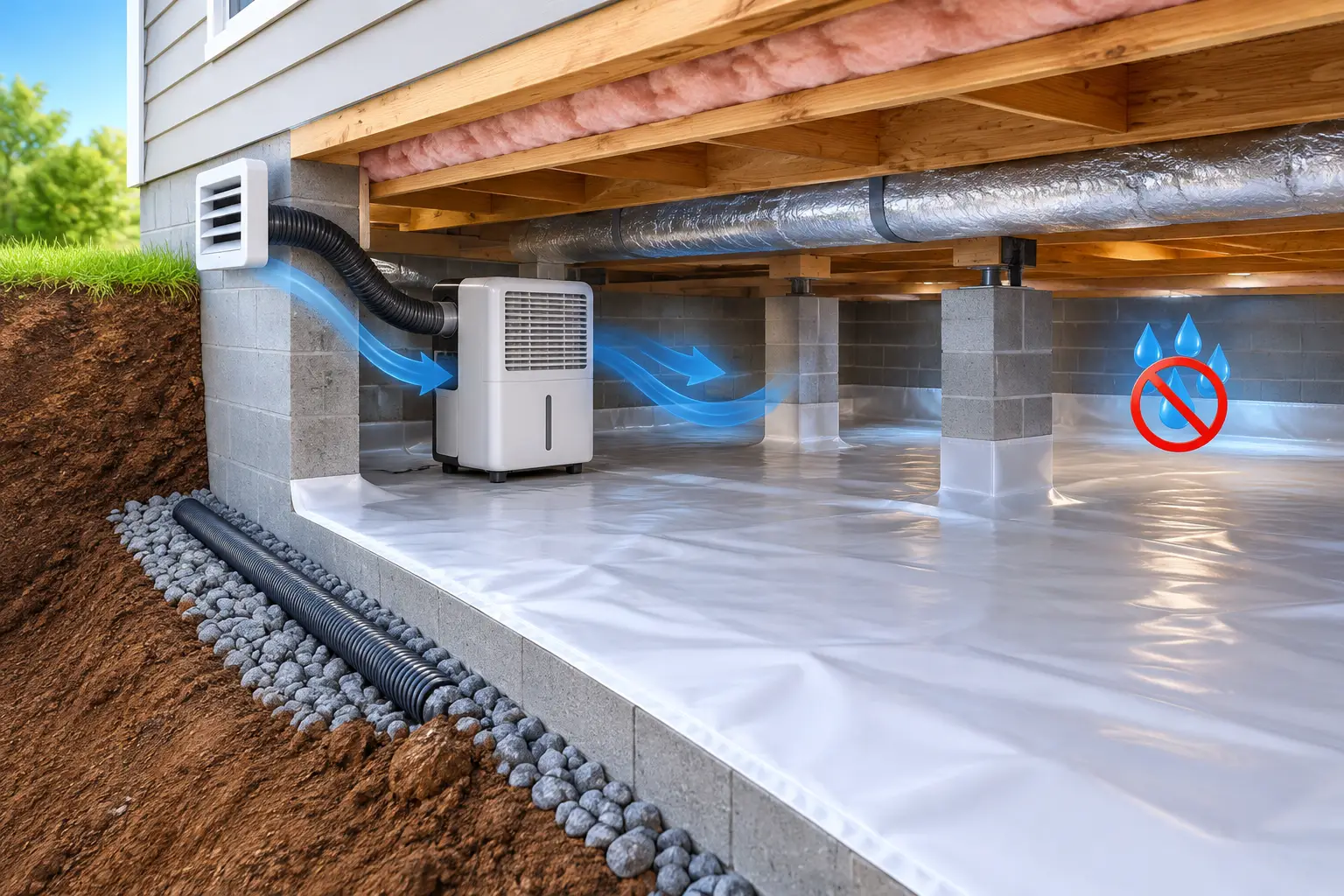
Encapsulation can prevent future mold growth when it is installed as part of a complete moisture-control plan. The system typically includes a durable vapor barrier across the crawl space floor and up the walls, sealed seams and penetrations, closed or conditioned vents, and a method to control humidity. Depending on the home, that may include a dehumidifier, sump pump, drainage system, or both.
The goal is simple: separate the crawl space from wet soil and humid outside air, then maintain dry, stable conditions. When relative humidity stays under control and water is directed away from the foundation, mold loses the environment it needs to grow.
Still, “prevent” depends on the quality of the diagnosis and installation. Installing a vapor barrier over standing water does not solve a drainage problem. Sealing a crawl space with an active plumbing leak inside can trap moisture where it does more damage. And encapsulating over visibly moldy or rotted framing without correcting the cause can leave a homeowner with a cleaner-looking space but an unresolved structural concern.
A permanent solution starts by identifying how water is getting in and where it is going.
What Must Happen Before Encapsulation
A crawl space should be inspected from the outside in. The exterior grade, gutters, downspouts, foundation walls, crawl space entry, interior plumbing, insulation, wood framing, and soil conditions all matter. The right repair scope varies by home.
If water collects after rain, exterior drainage improvements, an interior drainage system, or a sump pump may be needed before the space is sealed. If foundation cracks allow water intrusion, those cracks should be repaired with the appropriate waterproofing method. If a leaking pipe is contributing to the problem, that leak needs correction before the crawl space is enclosed.
Existing mold also deserves direct attention. Small, limited areas may be cleaned after the moisture source is fixed. Larger growth, widespread contamination, or mold affecting damaged structural wood may require specialized remediation and replacement of compromised materials. Mold treatment without moisture control is temporary. Moisture control without evaluating damaged framing can also leave important repairs undone.
This is why an inspection matters more than a one-size-fits-all package. A homeowner may need encapsulation alone, but another may need drainage, structural wood repair, and humidity control to protect the home properly.
Signs Your Crawl Space Needs Attention
You do not have to enter the crawl space to notice trouble. The warning signs often show up in the living area first. A persistent musty smell, especially after rain or during humid weather, is a common clue. So are unusually high indoor humidity, condensation on windows, and worsening allergy-like symptoms when the HVAC system runs.
Structural symptoms can be just as revealing. Floors that slope, bounce, or feel weak may indicate moisture-damaged beams, joists, or subflooring. Doors that stick and interior cracks can have several causes, but persistent crawl space moisture can contribute to wood movement and deterioration below the home.
Outside, look for downspouts that discharge next to the foundation, soil that slopes toward the house, pooling water, or vents with damp soil beneath them. Inside the crawl space, visible fungal growth, wet insulation, rusted metal connectors, fallen insulation, standing water, or soft wood should not be ignored.
These symptoms do not automatically mean every home needs full encapsulation. They do mean the moisture source should be evaluated before a small problem becomes wood rot or floor failure.
The Role of Dehumidifiers, Drainage, and Vapor Barriers
A vapor barrier is central to encapsulation, but it is only one part of the system. It blocks moisture vapor rising from the soil. A heavy-duty liner that is sealed at seams and secured to walls performs far better than thin plastic laid loosely on the ground.
Drainage handles liquid water. If rainwater or groundwater enters the crawl space, a vapor barrier cannot pump it out. A properly sized sump pump and interior drainage path may be necessary to collect and remove that water. Exterior grading and downspout extensions also reduce the amount of water reaching the foundation in the first place.
A dehumidifier manages the remaining moisture in the air. Once the crawl space is sealed, humidity should be monitored and controlled rather than assumed to be fine. In humid Mid-Atlantic conditions, a crawl-space-rated dehumidifier is often the difference between a sealed space and a truly dry one.
The trade-off is that a complete system costs more than laying plastic over soil. It also requires occasional maintenance, including checking the dehumidifier, pump, and discharge line. But a lower upfront price that skips the real source of water can lead to repeat mold, damaged framing, and another repair bill later.
Can Mold Return After Crawl Space Encapsulation?
Yes, mold can return if moisture returns. A failed sump pump, clogged discharge line, new plumbing leak, storm damage, or disconnected dehumidifier can change conditions quickly. That does not mean encapsulation failed. It means the moisture-control system needs maintenance and the new source must be corrected.
Homeowners should periodically check that the crawl space remains dry, especially after major storms. Watch for changes in odor, humidity, flooring, or visible moisture. Keep gutters clean, extend downspouts away from the foundation, and make sure the sump pump has power and a clear discharge route.
A professionally installed system also makes future inspections easier. A clean, sealed crawl space makes leaks, pest activity, and wood damage more visible than a dark space covered with wet insulation and loose debris.
Protect the Structure, Not Just the Air
Mold is often the warning sign, not the entire problem. The same moisture that supports mold can weaken joists, rot girders, corrode connectors, and create conditions that affect the floors above. Waiting for a stronger odor or visible damage rarely makes the repair easier.
If your crawl space smells musty, shows signs of water entry, or has damp or damaged wood, get an honest assessment of the cause before choosing a solution. Foundation Works evaluates crawl space moisture and structural conditions together, so the repair plan can address what is actually putting your home at risk. A dry crawl space is not just cleaner. It is a practical way to protect the structure supporting your family and your investment.