A floor that feels soft underfoot, slopes toward one wall, or bounces when someone walks across the room is more than an everyday annoyance. It can be an early sign that the framing beneath your home is under stress. Timely floor joist repair can stop a localized problem from becoming widespread damage to floors, walls, finishes, and the home’s structural support system.
Many homeowners first notice the symptoms upstairs, but the cause often sits below – in a damp crawlspace, basement, or under-supported section of framing. The right repair starts with identifying why the joists are weakening or moving, not simply covering the visible signs.
What Floor Joists Do for Your Home
Floor joists are the horizontal framing members that support the floors above a crawlspace or basement. They carry the weight of furniture, people, interior walls, and daily activity, then transfer that load to beams, foundation walls, and support posts.
When joists remain dry, properly sized, and adequately supported, they can serve a home for decades. Problems begin when moisture causes wood decay, insects damage the framing, a beam or post settles, or the joists are altered without providing proper reinforcement. A weak joist can affect more than one room because framing members work together as a system.
That is why a sagging floor is not always a floor problem. It may be a moisture problem, a beam problem, a foundation support problem, or several issues occurring at once.
Warning Signs That Point to Floor Joist Trouble
Some floor movement is common in older homes, especially where materials have expanded and contracted over many years. But noticeable changes deserve a professional look, particularly if they are getting worse.
Watch for floors that slope, dip, or feel uneven from one side of a room to another. A bouncy or springy feeling, soft spots near bathrooms or exterior walls, and new squeaks can also signal deteriorating framing. In severe cases, furniture may appear tilted, doors may rub or fail to latch, and cracks can develop in drywall above the affected area.
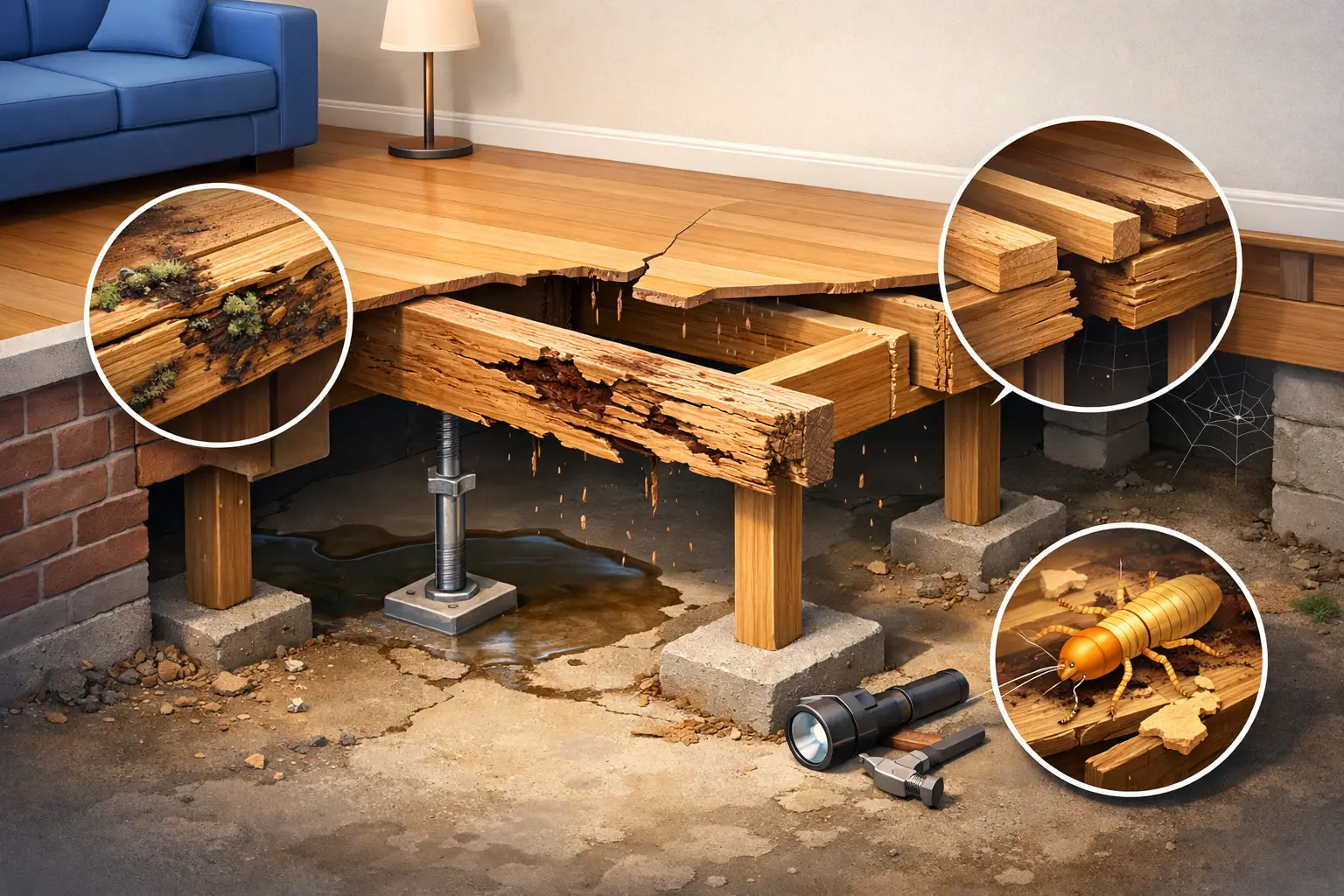
The crawlspace or basement can provide more direct evidence. Dark staining on joists, crumbling wood, fungal growth, standing water, rusted metal connectors, or posts that have shifted out of position all require attention. If you can press a screwdriver into a joist easily, the wood may have rot damage that has reduced its structural capacity.
Do not assume an uneven floor is just a cosmetic issue because the room still feels usable. Structural damage often progresses quietly below finished flooring, where it is easy to miss until repairs become more extensive.
Common Causes of Damaged Floor Joists
Crawlspace moisture and wood rot
In Virginia and Maryland, humid summers, groundwater, poor drainage, and unsealed crawlspaces can keep framing exposed to damaging moisture. Wood does not need to be submerged to decay. Prolonged high humidity can create the conditions that allow fungal growth and rot to take hold.
A plumbing leak, leaking appliance line, or water entering through foundation walls can make the damage worse. Repairing a joist without addressing the water source leaves new or reinforced framing vulnerable to the same conditions.
Insect damage
Wood-destroying insects can hollow out sections of joists, beams, and rim framing. The outer surface may look intact while the wood inside has lost strength. A structural inspection can determine whether the damage is isolated or whether adjoining members also need repair.
Failing beams, posts, or supports
Joists may be sound but still sag when the beam beneath them is undersized, cracked, deteriorated, or inadequately supported. A support post can sink into weak soil, shift on a poor footing, or deteriorate in a wet crawlspace. When that happens, the beam drops and the floor above follows.
This is one reason a repair plan must look beyond the individual joist. Adding material to a joist will not correct a settling support system below it.
Improper alterations or overloading
Past renovations can create structural weak points. Holes or notches cut for plumbing, wiring, or ductwork may weaken joists when they are too large or placed in the wrong area. Removed walls, heavy tile installations, large tubs, and other changes can also add loads the original framing was not designed to handle.
A qualified evaluation determines whether reinforcement is needed and how to restore the load path safely.
How Professional Floor Joist Repair Works
A lasting repair begins with a close inspection of the floor system, beams, posts, foundation supports, and moisture conditions. The goal is to distinguish between surface-level movement and framing that has lost structural capacity. Measurements can identify how much the floor has moved and whether the movement is active.
The repair method depends on the cause and extent of damage. For a localized joist with limited deterioration, sistering may be appropriate. This process adds a new structural member alongside the damaged area to restore strength, provided the surrounding wood and supports are sound.
When rot is extensive, the affected section may need to be removed and replaced. Damaged beams may require reinforcement or replacement, while inadequate support posts may need new engineered supports and properly prepared footings. In some homes, adjustable crawlspace support systems can help stabilize a sagging beam and improve floor elevation gradually.
The word “gradually” matters. Lifting a floor too aggressively can crack drywall, disrupt plumbing, or create stress in finishes that have adapted to the sag. A careful repair plan balances structural correction with the condition and age of the home.
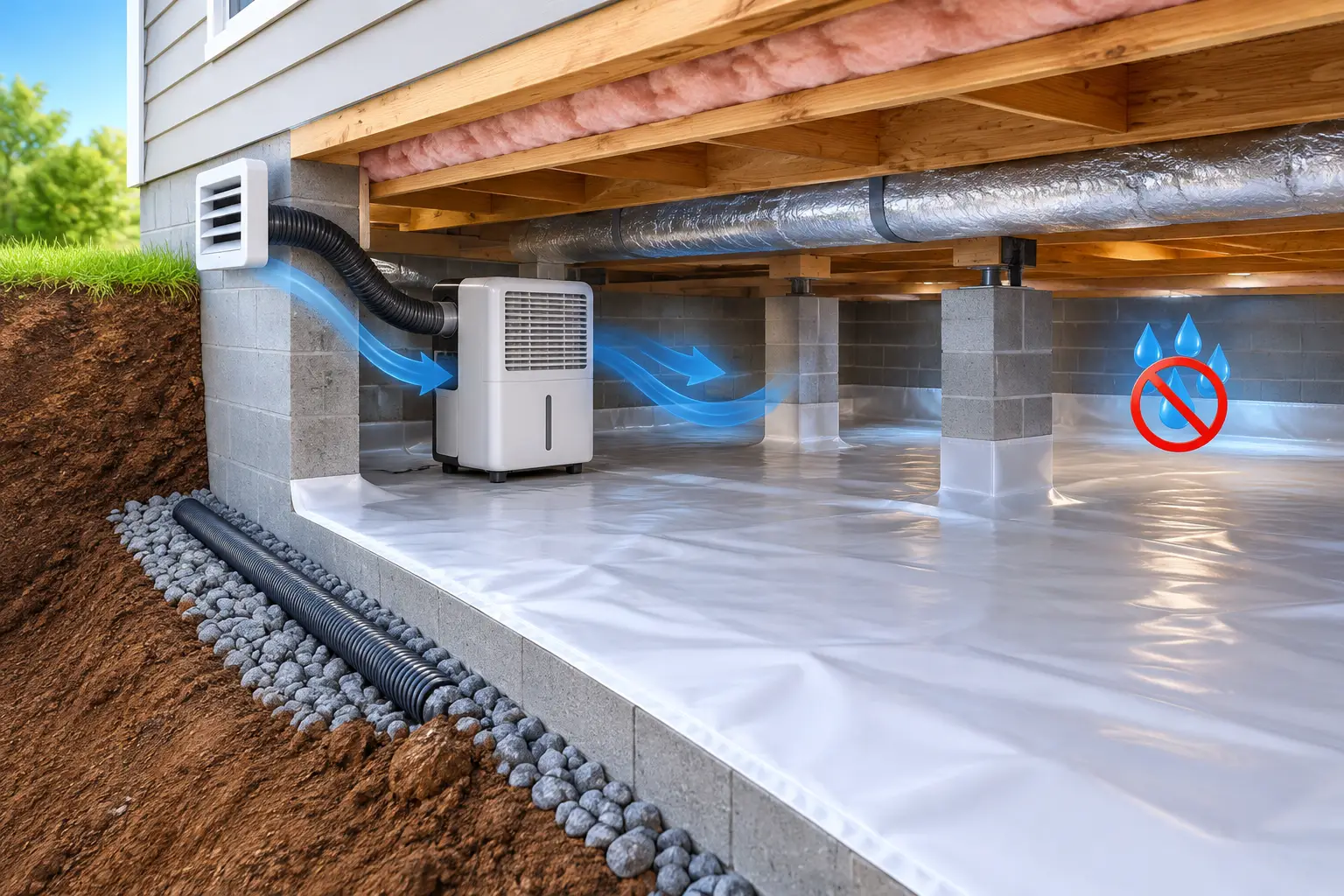
Moisture control should be part of the scope whenever water or humidity contributed to the damage. Depending on conditions, that can include drainage improvements, crawlspace encapsulation, vapor control, or repairs that stop water from entering through the foundation. Permanent structural work needs a dry environment to remain dependable.
What Not to Do When Floors Begin Sagging
Avoid treating a sagging floor as a simple flooring project. New carpet, leveling compound, or replacement hardwood may hide the symptom, but none will repair a weak joist, failing beam, or settling post. Covering the problem can also make future inspection more difficult.
It is also risky to place temporary jacks under framing without understanding what is being supported. Improper lifting can shift loads unexpectedly or create new damage. Temporary supports may be part of an emergency stabilization plan, but they are not a substitute for a designed repair.
Finally, do not rely on a visual crawlspace check alone. Rot can be hidden at bearing points, behind insulation, or inside a member that appears solid from a distance. A thorough assessment should examine the complete support system and identify the source of any water exposure.
When to Schedule an Inspection
Schedule an inspection promptly if a floor has changed noticeably, a new crack appears near a sagging area, or you find wet, stained, soft, or damaged framing in the crawlspace or basement. Faster action is especially important after a plumbing leak, flooding event, or long period of standing water beneath the home.
A professional evaluation should provide clear answers: what is damaged, what caused it, whether the issue is active, and which repairs are actually necessary. At Foundation Works, the focus is on engineering-based diagnosis and permanent fixes, not cosmetic patching or pressure to repair conditions that do not require it.
Your floors should feel solid because the structure beneath them is solid. If something feels different underfoot, trust that warning sign and have the framing checked before a manageable repair turns into a larger restoration project.