
A crack above a basement window, a door that suddenly will not latch, or a floor that feels lower on one side can make any homeowner worry. These symptoms do not automatically mean the home is failing, but they can be early signs that foundation settlement repair is needed. The key is identifying whether the movement is active, what caused it, and whether the repair plan will stop that cause instead of simply covering the evidence.
Settlement is a structural issue, not a paint-and-patch issue. When part of a foundation moves lower than the rest, the house above it responds. Framing shifts, walls crack, doors go out of square, and water can find new paths into the basement or crawlspace. Addressing the problem early generally gives homeowners more options and helps prevent a small concern from becoming a larger structural repair.
What Foundation Settlement Actually Means
Foundation settlement occurs when the soil beneath a home can no longer support the structure evenly. Some minor settling is common as a house ages. A small, stable hairline crack may be cosmetic and need monitoring rather than structural work. Trouble begins when movement is uneven, recurring, or severe enough to affect the home’s walls, floors, openings, or drainage.
In Northern Virginia and nearby Maryland communities, soil conditions can vary significantly from one neighborhood to the next – and even across a single property. Clay soils expand when wet and shrink during dry periods. Poorly compacted fill, leaks, roof runoff, inadequate grading, and groundwater can also weaken or wash out supporting soil. A foundation does not settle without a reason. A permanent repair plan must account for that reason.
Warning Signs That Deserve a Professional Inspection
Homeowners often notice settlement inside the house before they see a foundation concern outside. Doors that stick, cabinets that no longer align, and new gaps around trim can all reflect movement. A sloping floor, especially when paired with cracks, deserves prompt attention.
Outside, look for stair-step cracks through brick or block, widening cracks in foundation walls, separation where an addition meets the original home, or gaps around windows and doors. In a basement, diagonal wall cracks, cracked slab floors, and water entering through newly opened gaps may point to movement or drainage problems.
No one symptom proves settlement on its own. Seasonal humidity can affect wood framing, and minor drywall cracks can occur for ordinary reasons. However, several symptoms appearing together, cracks that widen over time, or visible changes after heavy rain or drought are clear reasons to schedule an honest evaluation.
Why Cosmetic Repairs Do Not Solve Settlement
It is understandable to want the visible crack repaired first. Caulking or patching may improve appearance, and some cracks can be sealed as part of a larger waterproofing plan. But if the foundation is still moving, a cosmetic repair alone is likely to crack again.
The same principle applies to interior fixes. Repainting a cracked wall, adjusting a sticking door, or installing new flooring may hide the symptom temporarily. It does not restore lost support beneath the foundation. Before investing in finishes, determine whether structural movement is present and whether it has stopped.
A proper inspection looks beyond the crack. It evaluates the crack pattern, the condition of the foundation, floor levels, framing behavior, exterior grading, downspout discharge, water exposure, and other clues that explain how the home is responding. That investigation is what separates a targeted repair from a guess.
Foundation Settlement Repair Options Depend on the Cause
There is no single repair that fits every settling home. The right approach depends on the foundation type, the depth and condition of stable supporting soil, the location of movement, and whether water management is contributing to the problem.
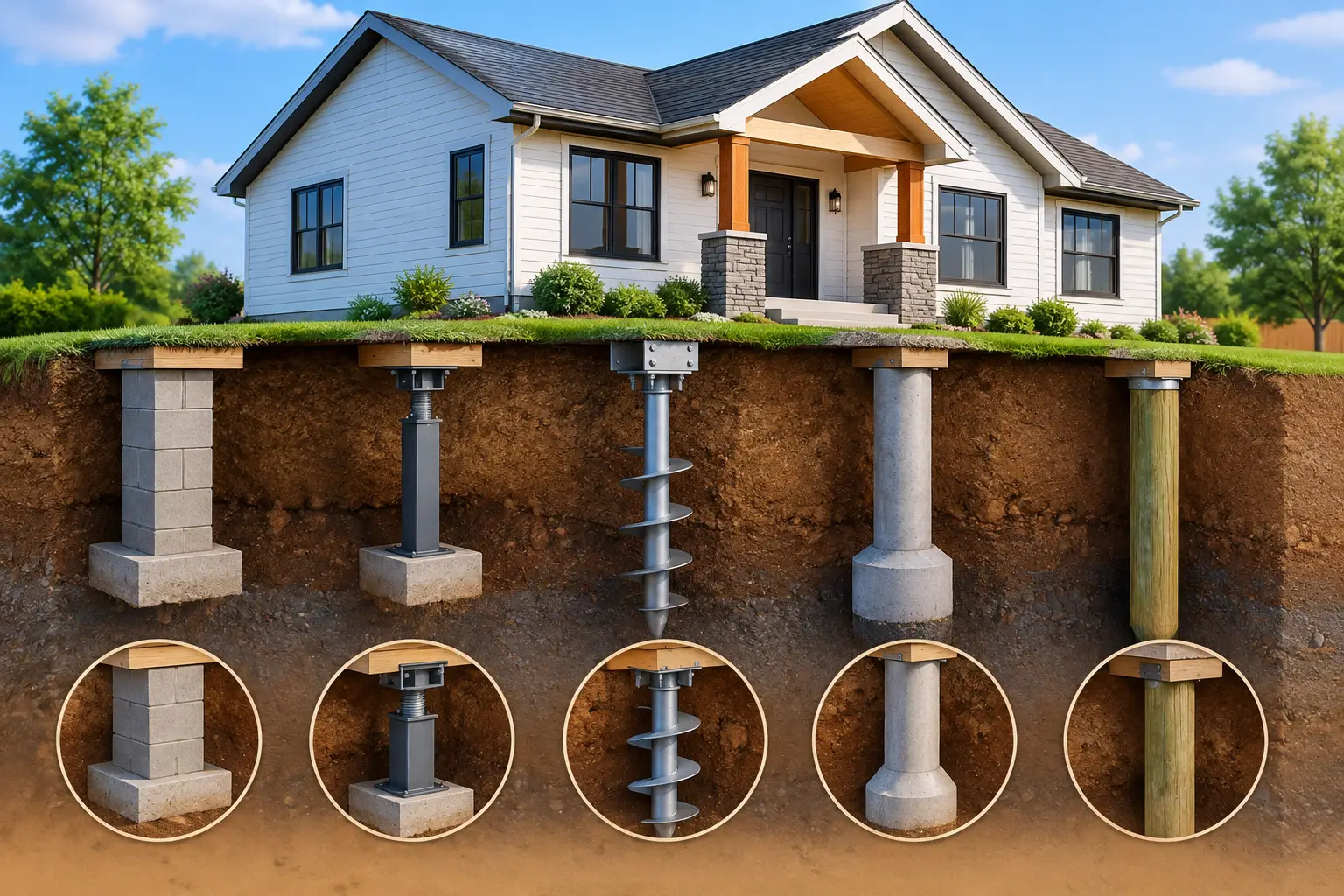
When a foundation needs deeper, reliable support, professionally installed pier systems may be used to stabilize and, where appropriate, carefully lift the affected section. Piers transfer a portion of the home’s load past weak or shifting near-surface soils to stronger bearing material below. The goal is controlled stabilization, not a rushed attempt to force every crack closed.
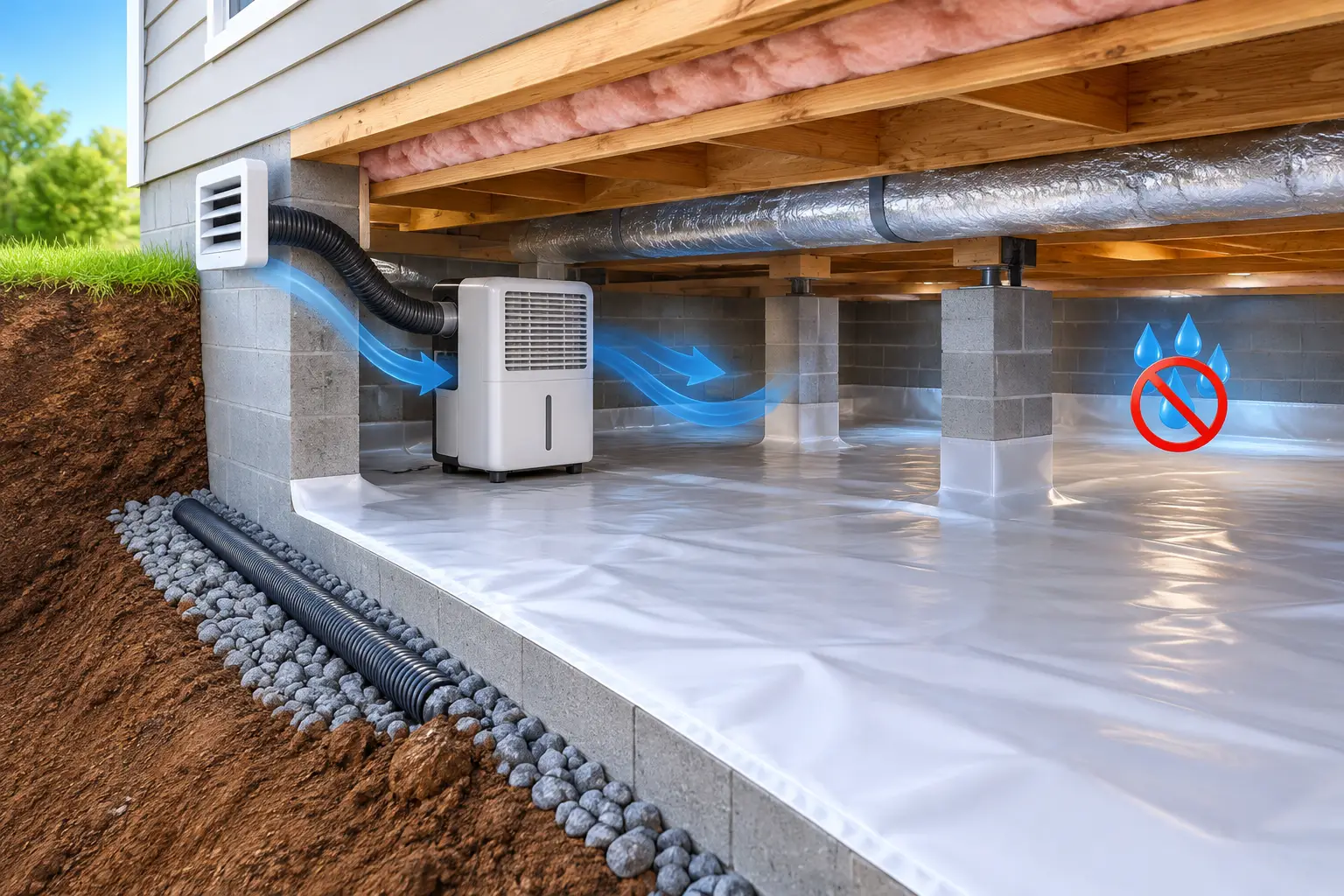
If settlement has affected crawlspace framing, the repair scope may also include failing beams, sagging joists, or inadequate support columns. Restoring proper support under the floor can improve stability and reduce noticeable slopes, but the underlying soil and moisture conditions still need to be addressed.
Water management is often part of the solution. Downspouts that empty beside the foundation, negative grading that directs rain toward the house, basement water intrusion, and damp crawlspaces can all contribute to soil instability and wood deterioration. Depending on the findings, drainage corrections, waterproofing, or crawlspace moisture control may be recommended alongside structural work. Not every settlement project requires all of these measures, but ignoring water is a common way to undermine a repair.
What a Good Inspection Should Tell You
A useful foundation inspection should leave you with clear answers, not more confusion. You should understand which symptoms are cosmetic, which are structural, whether movement appears active, and what evidence supports the recommendation. You should also know what happens if repairs are delayed and whether moisture or drainage conditions need attention.
Be cautious of a one-size-fits-all recommendation made without examining the entire affected area. Foundation concerns can look similar while having different causes. For example, a crack caused by settlement requires a different plan than a wall that is moving inward from soil pressure, and both differ from a surface crack caused by normal concrete shrinkage.
At Foundation Works, the focus is on engineering-based diagnosis and permanent repair systems. Homeowners should never feel pressured into work their property does not need. A free, no-obligation inspection is an opportunity to get straightforward information, understand the condition of the home, and decide on the next step with confidence.
What to Do While You Wait for an Evaluation
Do not attempt to force doors, jack up floors, or fill major foundation cracks with a store-bought product before the cause has been evaluated. These actions can obscure useful evidence or create additional damage. Instead, take clear photos of cracks and gaps, noting their location and date. If a crack seems to be changing, a simple pencil mark at each end can help document its growth.
Also pay attention to water. Make sure gutters are not overflowing, downspouts discharge away from the foundation, and landscaping is not trapping water against the house. These are sensible maintenance steps, but they are not a substitute for structural repair when the foundation has already lost support.
If you notice rapid crack growth, a suddenly sloping floor, a basement wall shifting inward, or water entering through a new opening, treat it as urgent. Prompt assessment can protect the structure, reduce the scope of related repairs, and preserve the value of one of your largest investments.
Foundation settlement can feel overwhelming because the problem is hidden below the home. The next step does not have to be complicated: get a professional evaluation, ask what is causing the movement, and choose a repair plan designed to keep it from coming back.