
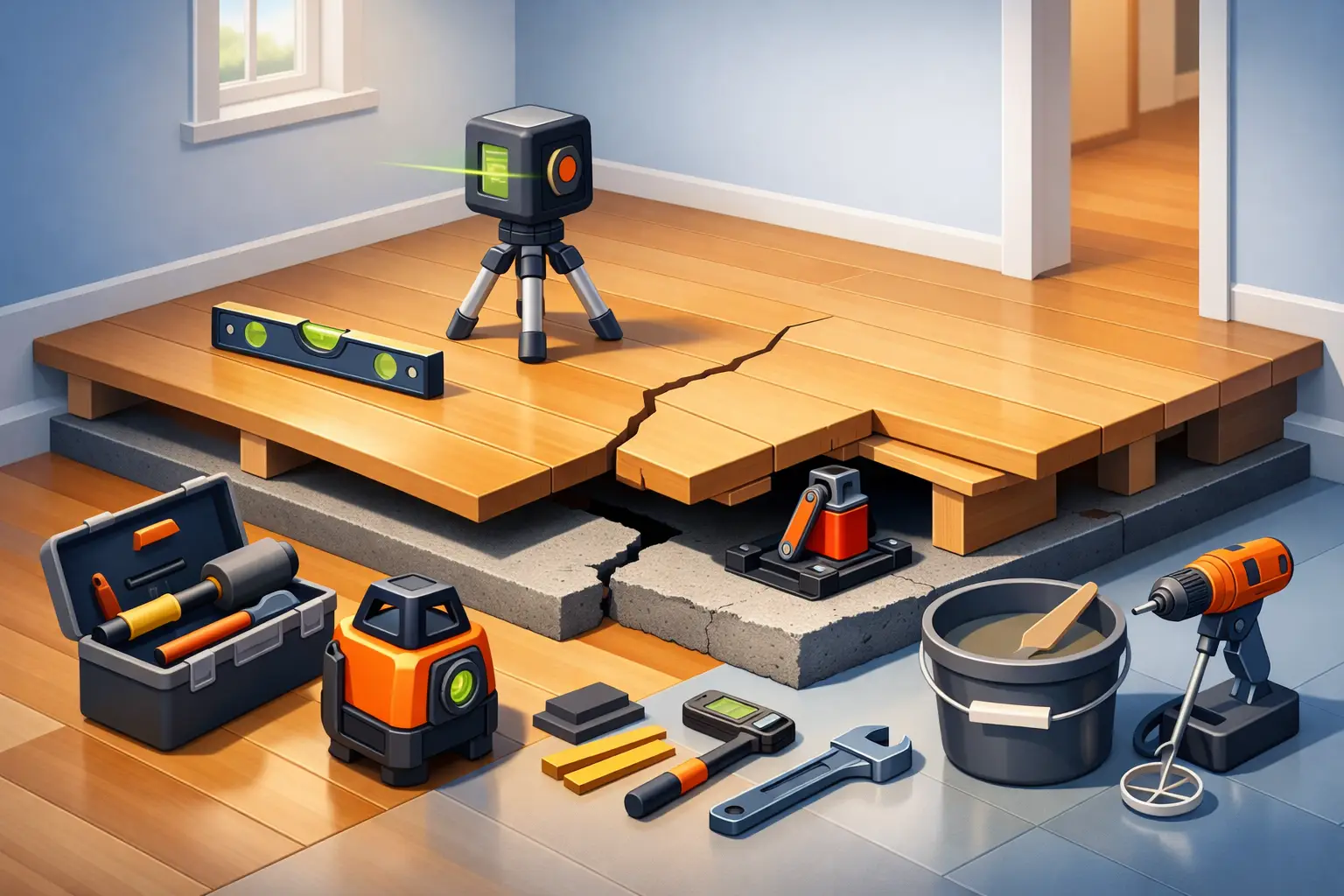
A floor that slopes toward one wall, bounces underfoot, or leaves a visible gap beneath baseboards is more than an annoyance. It can point to moisture damage, weakened framing, foundation movement, or a combination of problems below the finished floor. Knowing how to repair uneven floors starts with identifying why the floor changed – not covering the symptom with a new surface.
A rug, new flooring, or a leveling compound may hide a minor surface imperfection. It will not correct a sagging beam, rotted joist, settling foundation, or wet crawlspace. The right repair protects your home’s structure, safety, and long-term value.
Start by Determining What Is Actually Uneven
Not every uneven floor has the same cause or requires the same level of repair. First, distinguish between a problem in the finished flooring and a problem in the structure beneath it.
A localized dip near a doorway may result from an old flooring installation, damaged subflooring, or a transition between rooms. A broad slope across a room, a soft spot, or a floor that has noticeably worsened over time is more concerning. Those symptoms often involve the framing, support system, crawlspace, basement, or foundation.
Use a long level or straightedge to check the floor in several directions. A marble can also reveal the general direction of a slope, though it is not a diagnostic tool. Make note of where the lowest and highest areas occur, whether doors stick, and whether there are nearby wall or ceiling cracks. These details help show whether the issue is isolated or part of larger structural movement.
If you have a crawlspace or unfinished basement, look below the affected area. Signs such as standing water, damp insulation, mold-like growth, rusted supports, cracked masonry, split beams, or visibly sagging joists deserve prompt attention.
Common Causes of Uneven Floors
Moisture-damaged joists, beams, and subflooring
In many Virginia and Maryland homes, crawlspace moisture is a major contributor to uneven floors. Persistent humidity, groundwater, plumbing leaks, or poor drainage can cause wood framing to absorb moisture. Over time, joists and beams can weaken, decay, or lose their ability to carry the load above.
The floor may feel soft or springy before it visibly sags. In more advanced cases, the affected room can slope, and doors or trim may separate as the framing drops. Repairing the floor without stopping the moisture source allows the same damage to continue.
Inadequate support under the home
Older homes may have undersized beams, widely spaced supports, deteriorated wood posts, or temporary shims that were never intended as a permanent solution. Sometimes a prior owner added a makeshift support to reduce a bounce, but the underlying beam or footing continued to fail.
A permanent repair may require restoring damaged framing and adding properly designed support where the structure needs it. The exact approach depends on the span, loads, soil conditions, and condition of the existing materials.
Foundation settlement or shifting soil
When soil beneath a foundation loses bearing capacity, washes out, expands, contracts, or settles unevenly, portions of the home can move. Floor slopes may appear with interior drywall cracks, sticking windows, stair-step cracks in brick, gaps around exterior trim, or foundation cracks.
Foundation movement is not a problem to solve from inside the room alone. The repair must stabilize the foundation and address the conditions contributing to movement. Otherwise, cosmetic floor work can crack or separate as the home continues to shift.
Basement wall movement and structural pressure
An inward-moving basement wall can affect the framing and floors above it. Hydrostatic pressure from saturated soil, poor exterior drainage, and long-term water intrusion can place heavy loads on below-grade walls. As walls bow or shift, they may no longer support the structure as intended.
This is particularly urgent when you see horizontal wall cracks, bowing, water seepage, or movement around support points. A professional inspection can determine whether the floor issue is connected to basement wall distress.
How to Repair Uneven Floors the Right Way
The repair method should follow the diagnosis. A trustworthy contractor does not begin by promising to “level the floor” before inspecting the support system below it.
When damaged joists or beams are the problem, repairs can include reinforcing or replacing compromised framing and restoring proper support. This work may involve sistering sound structural lumber to weakened joists, replacing severely decayed sections, or installing engineered support systems. The goal is to safely carry the home’s load again, not simply push the floor upward.
If the floor has sagged because supports have settled or failed, new piers or adjustable support posts may be installed on stable footings. These supports can help transfer loads correctly and, where appropriate, allow careful adjustment of the framing. Raising a floor too aggressively can crack drywall, disturb plumbing, damage finishes, or reveal other movement, so any adjustment should be planned and controlled.
When settlement is traced to the foundation, stabilization may be necessary before floor-level corrections are considered. Depending on the home and soil conditions, an engineering-based repair plan can stabilize affected areas and prevent continued movement. Once the structure is secure, associated framing repairs can be evaluated.
If moisture caused the damage, water control is part of the structural repair. Crawlspace encapsulation, drainage improvements, waterproofing measures, and humidity control can protect repaired wood framing from repeat exposure. Replacing a rotted joist while leaving a wet crawlspace untreated is not a permanent fix.
When a Surface-Level Repair May Be Enough
There are cases where the structure is sound and the unevenness is limited to the finish floor or subfloor. For example, an isolated low spot beneath worn flooring may be corrected during a flooring renovation after confirming that joists, beams, and supports are stable.
Surface-level products can help prepare a stable subfloor for certain finished materials. They are not designed to compensate for active foundation movement, soft or decayed wood, or a structural dip across a room. If the floor feels bouncy, the low area is expanding, or the problem appears alongside cracks and moisture, stop before applying a cosmetic patch.
Avoid These Shortcuts
Homeowners often want a quick answer because uneven floors are disruptive and alarming. Still, a few common shortcuts can make a repair harder later.
Do not stack random shims beneath a beam or joist. Shims can slip, compress, trap moisture, and concentrate loads in the wrong place. Do not jack up framing without understanding what is carrying the load and what utilities run through the area. A sudden lift can damage pipes, wiring, walls, and flooring.
Avoid treating every floor slope as a foundation emergency, too. Some older homes have modest, long-standing variations that are not actively worsening. What matters is the pattern, the amount of movement, the condition of the structure below, and whether related warning signs are present. An honest inspection should separate cosmetic age-related irregularities from repairs that genuinely need attention.
Signs You Should Schedule a Structural Inspection
A professional evaluation is especially worthwhile when uneven floors occur with other symptoms. Watch for worsening slopes, soft or spongy areas, new cracks in interior walls, doors that no longer latch, gaps at cabinets or baseboards, musty crawlspace odors, standing water, wood rot, or visible sagging below the home.
These problems often develop gradually, which makes it easy to adapt to them. Homeowners may stop noticing the slope until furniture begins to lean or a door will not stay open. Early diagnosis generally gives you more repair options and helps prevent water and structural damage from spreading.
Foundation Works provides no-pressure inspections for homeowners who need clear answers about sagging floors, failing framing, crawlspace moisture, and foundation movement. A proper evaluation looks beyond the finished floor to identify the source of the problem and recommend only the work the home needs.
An uneven floor does not always mean a major structural failure, but it should not be dismissed as a cosmetic nuisance when it is changing, soft, or paired with moisture and cracking. Find the cause first, protect the structure below, and the repair above has a far better chance of lasting.

