
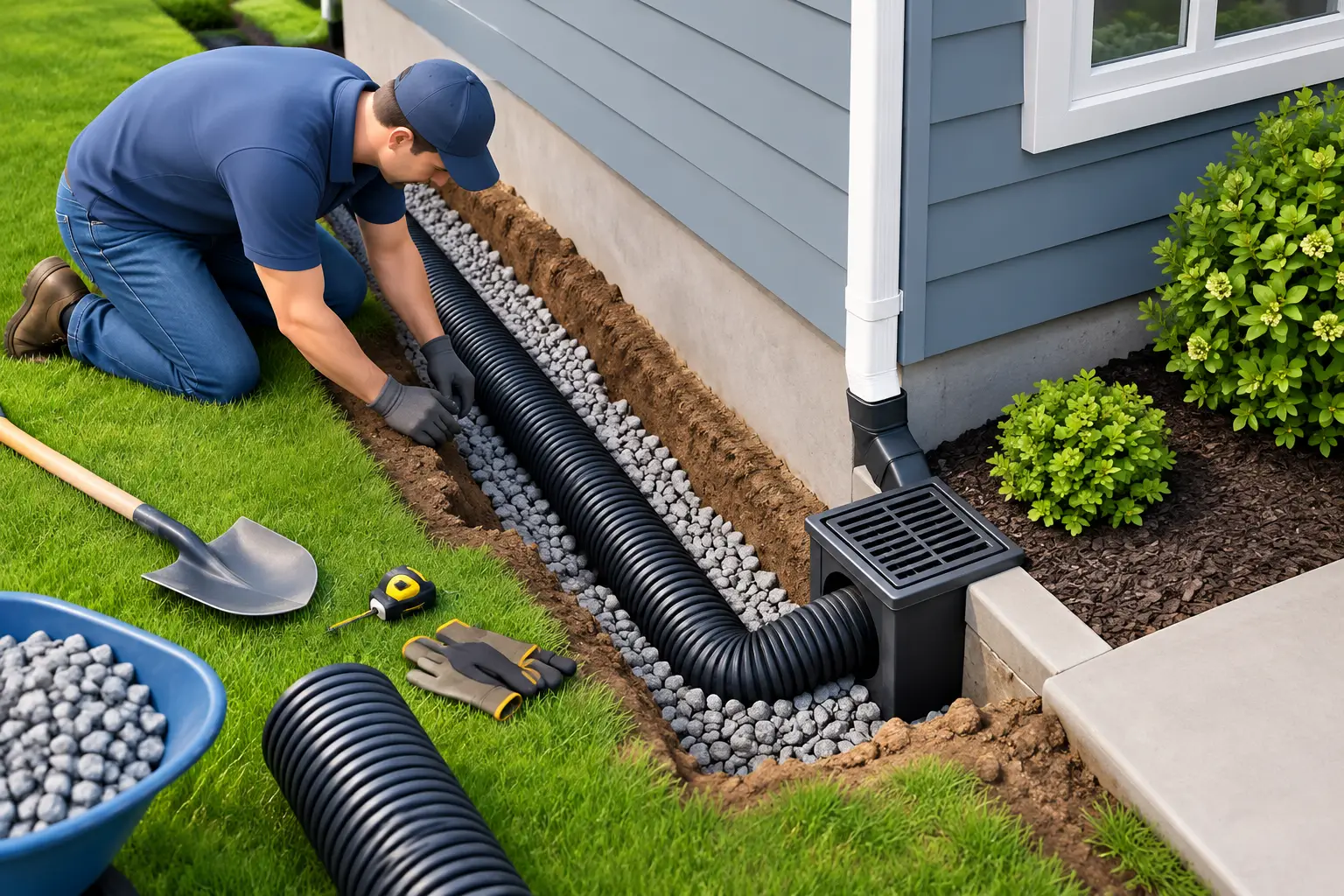
A wet basement floor often starts outside, not below ground. When rainwater pools beside your foundation, spills from overflowing gutters, or runs back toward the house, the pressure on basement walls and crawlspace areas can build with every storm. To repair exterior drainage correctly, the goal is not simply to move visible water. It is to control where water lands, where it travels, and where it safely exits your property.
For Virginia and Maryland homeowners, this matters because repeated moisture exposure can contribute to foundation cracks, soil movement, wood rot, mold growth, and damp crawlspaces. A surface-level fix may make the yard look better for a season. A permanent repair addresses the conditions putting water against the home in the first place.
When to Repair Exterior Drainage
Exterior drainage deserves attention when you see patterns, not just one puddle after an unusually severe storm. Water standing near the foundation for more than a day, mulch washing away, soil erosion, and soggy areas along the house are common warnings. So are downspouts that empty directly beside the wall or gutters that overflow during normal rainfall.
Inside the home, the signs can be more serious. A musty basement, damp lower walls, peeling paint, water stains, crawlspace humidity, or visible moisture on foundation walls may indicate that exterior water management is failing. These symptoms do not automatically mean the foundation itself needs structural repair, but they should not be dismissed as cosmetic either.
Pay close attention to changes that happen after rain. If a basement leak appears only during heavy storms, the source may be roof runoff, poor grading, clogged drainage components, or saturated soil. If the problem remains even during dry weather, there may be a more complex moisture or plumbing issue. An honest inspection helps separate those possibilities before money is spent on the wrong repair.
Why Water Near a Foundation Causes Damage
Soil holds water differently depending on its composition, slope, compaction, and previous disturbance. When the ground around a foundation becomes saturated, it becomes heavier and can press against basement walls. That pressure is especially concerning where walls are already cracked, bowed, or weakened.
Water can also affect the soil that supports the home. Some soils expand when wet and shrink as they dry. Repeated cycles can create uneven support beneath or beside a foundation, contributing to settlement, cracking, sticking doors, and sloped floors over time. Drainage does not cause every foundation problem, but uncontrolled water is frequently part of the underlying condition.
Crawlspaces face a different but related risk. Moist outdoor air and water entering through the perimeter can raise humidity below the home. Over time, that moisture can support mold growth, damage insulation, and contribute to rot in beams, joists, and subfloor framing. Keeping surface water away from the foundation is a first line of defense for the structure above it.
Start With the Water Coming Off the Roof
The roof collects a surprising amount of water. Even a moderate rainstorm can send hundreds of gallons through a gutter system. If gutters are clogged, undersized, loose, or pitched incorrectly, that water can spill straight down next to the foundation.
Cleaning gutters is basic maintenance, but it is not always the complete answer. Gutters should direct water to functioning downspouts, and downspouts should discharge far enough from the house that water cannot immediately flow back toward the wall. The right distance depends on the slope of the yard and where the water can safely drain without creating a new problem for a walkway, driveway, neighbor, or low area.
Extensions can help when the layout is simple and there is a clear downhill path away from the home. In tighter yards or on lots with poor slope, buried discharge lines or carefully designed drainage routes may be more appropriate. The important point is that a downspout should not simply relocate water from the roof edge to the base of the foundation.
Correct the Grade Around the House
Grading refers to the slope of the soil around the foundation. Proper grading encourages surface water to move away from the house. Poor grading does the opposite, channeling rainfall toward the basement or crawlspace perimeter.
In many cases, soil settles over the years, especially next to the foundation where it was disturbed during construction. Landscaping projects, edging, patios, and added mulch can also change how water flows. A shallow depression may not look alarming, but it can become a collection point during every storm.
Regrading can be effective when there is enough room to create a consistent slope away from the house. However, adding soil carelessly can create problems. Soil should not be piled too high against siding, trim, brick weep holes, or other building components. It can trap moisture, invite pest activity, and conceal areas that need to remain visible.
A drainage professional will look beyond the immediate low spot. Water may be reaching the foundation from an uphill yard, a neighboring grade, a driveway slope, or runoff concentrated between homes. Correcting only the final puddle may not solve the path that feeds it.
Repair Exterior Drainage at the Source
When gutters and grading are not enough, a more complete exterior drainage repair may be needed. The right system depends on the property, the water source, soil conditions, and the foundation’s current condition.
A surface drain may collect water in a low area and carry it to an appropriate outlet. A channel drain can help where water crosses a hard surface, such as near a driveway or patio. In other situations, a buried drainage line may be used to redirect roof runoff or water collected from a problem area. These systems need proper slope, clean outlets, and suitable placement to work reliably.
For homes with ongoing basement water intrusion, exterior waterproofing and drainage measures may be considered as part of a larger repair plan. This approach is more involved because it addresses water at the foundation wall and footing area. It is not necessary for every damp basement, and it should not be sold as a one-size-fits-all answer. But where exterior water is consistently reaching below grade, it can be the most direct route to a lasting solution.
The trade-off is straightforward: simple maintenance and grading improvements generally cost less and may resolve minor runoff issues. More extensive drainage or waterproofing work can require excavation and a larger investment, but it may be warranted when water has already caused repeated leaks, wall deterioration, or crawlspace moisture problems.
Avoid Fixes That Only Hide the Problem
A fresh coat of waterproof paint on an interior basement wall can cover stains, but it cannot stop water pressure outside the wall. Similarly, filling a small crack without addressing ongoing drainage can leave the home exposed to future movement or leakage.
Landscaping fabric, extra mulch, and decorative stone can improve appearance, yet they do not automatically create positive drainage. In fact, thick mulch beds or hardscape changes can direct water toward the home if they are not planned correctly. The test is simple: after a steady rain, observe where water starts, where it collects, and where it goes.
Do not overlook maintenance after a drainage repair. Keep gutters clear, check that downspout outlets remain open, and make sure soil has not settled into a low spot again. Drainage systems are built to manage water, but they still need occasional attention to keep doing their job.
Know When to Schedule a Professional Inspection
Call for an inspection when drainage problems are accompanied by foundation cracks, bowing walls, recurring basement leaks, standing crawlspace water, sagging floors, or signs of wood rot. Those conditions can be connected, and treating them separately without identifying the cause may lead to repeated repairs.
Foundation Works provides homeowners with a clear evaluation of drainage, moisture, and structural concerns. The focus should be on the actual source of the problem, whether that means improving surface drainage, addressing water intrusion, or recommending a structural repair when the home shows evidence of movement.
Water will always move downhill. The practical question is whether your property is directing it safely away from your home. If the answer is unclear after the next storm, a professional assessment can turn a worrying pattern into a repair plan built to protect your foundation for the long term.

