A damp spot along a basement wall may look minor after a hard rain. But when water keeps returning, leaves a white powdery residue, or creates a musty odor, it is a warning that moisture is finding a path into your home. Understanding what causes basement water seepage helps you act before water damages finishes, encourages mold growth, or contributes to foundation trouble.
Seepage is not always caused by a single visible crack. In many Virginia-area homes, the real problem begins outside with saturated soil, poor drainage, or water pressure building against the foundation. A permanent repair starts with identifying where the water originates, how it travels, and why the foundation is not shedding it effectively.
What Causes Basement Water Seepage?
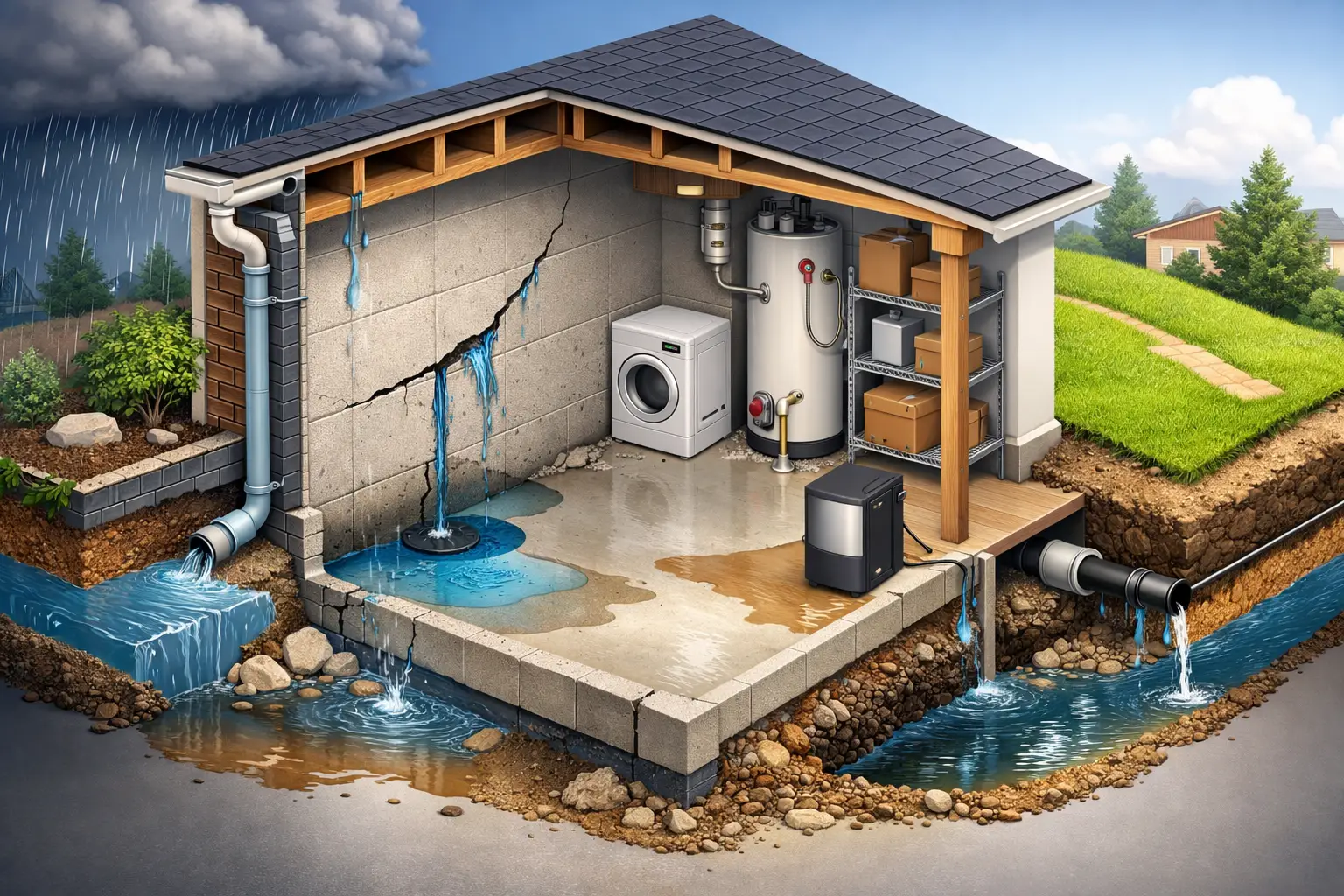
Basement seepage occurs when groundwater, rainwater, or surface runoff reaches the foundation and enters through weak points. Concrete is strong, but it is naturally porous. It can absorb and transmit moisture over time, especially when water sits against it for long periods.
The most common entry points are foundation cracks, cold joints where the wall meets the floor, gaps around utility pipes, window wells, and deteriorated mortar joints in block foundations. Those openings matter, but they are often symptoms rather than the root cause. If exterior water is not being moved away from the house, sealing one crack may only redirect the water to another weak spot.
1. Poor Yard Grading Sends Water Toward the House
The ground around your home should slope away from the foundation. When soil settles, landscaping is installed too high, or hardscape directs runoff inward, rainwater can collect beside basement walls instead of draining away.
This is particularly common around older homes, where backfilled soil has settled over decades. You may see puddles near the foundation after rain, mulch pushed against siding, or a wet basement wall on the same side of the home after every storm. Regrading can be a meaningful part of the solution, but it may not be enough when drainage problems are severe or the foundation has already developed water entry points.
2. Gutters and Downspouts Dump Too Much Water Near the Foundation
A roof sheds a surprising amount of water during a heavy storm. When gutters are clogged, undersized, leaking at seams, or missing altogether, that water falls directly beside the home. Downspouts that end a foot or two from the wall create a similar problem by concentrating roof runoff exactly where it can do the most damage.
Look for overflowing gutters, soil erosion below downspouts, wet landscaping beds, or water staining on siding. Extending downspouts and keeping gutters clear are practical first steps. However, extensions alone cannot correct a buried drain line that has failed, a yard that slopes toward the house, or groundwater rising beneath the basement floor.
3. Hydrostatic Pressure Pushes Groundwater Through Walls and Floors
Hydrostatic pressure is the force created when water-saturated soil presses against the foundation. After prolonged rain, snowmelt, or a period of high groundwater, that pressure can drive moisture through tiny pores in concrete and through cracks that looked harmless when the soil was dry.
This is why some homeowners only see water during major storms or in the spring. The wall may not have a dramatic opening, yet the basement floor perimeter becomes damp, water appears at the wall-floor joint, or paint bubbles and flakes. Interior drainage systems and sump pumps are often the right answer when groundwater pressure is the primary issue because they relieve water before it can build up beneath and around the foundation.
4. Cracks and Cold Joints Create Direct Water Paths
Concrete cracks for many reasons. Some are minor shrinkage cracks. Others can develop as the foundation settles, soil expands and contracts, or lateral soil pressure pushes against a wall. Water will use any available opening, even a narrow crack that is difficult to see from inside.
The cold joint, where the poured foundation wall meets the concrete basement slab, is another common leak location. It is a joint between two separate concrete pours, not necessarily a structural failure. Still, it is often the first place groundwater enters when drainage is overwhelmed.
A crack should not be judged by water alone. Its location, width, direction, movement, and relationship to other signs matter. Horizontal cracks, stair-step cracks in block walls, inward bowing, or repeated cracking deserve prompt professional evaluation because the issue may involve more than waterproofing.
5. Window Wells Hold Water Against Below-Grade Windows
Basement windows sit below ground level, so their window wells must drain properly. A well filled with leaves, compacted soil, or standing water can allow water to seep around the window frame or through aging seals. Missing or damaged window well covers can make the problem worse during storms.
If seepage is limited to the area below a window, the window well may be the obvious culprit. Yet it is still wise to check surrounding grading and the drain at the bottom of the well. Replacing caulk without restoring drainage can lead to the same leak during the next downpour.
6. Failed Footing Drains Leave Water With Nowhere to Go
Many homes have footing drains installed around the foundation to collect groundwater and route it away. Over time, these drains can clog with sediment, collapse, become blocked by roots, or fail because the discharge path no longer works.
When a footing drain stops doing its job, water accumulates around the foundation. The result may be recurring seepage on one wall, wet carpeting along the basement edge, or a sump pump that runs constantly without keeping up. Repairing or supplementing the drainage system is more involved than applying a wall coating, but it addresses the water load creating the problem.
7. Plumbing Leaks and Condensation Can Look Like Seepage
Not all basement moisture comes through the foundation. A leaking supply line, drain pipe, water heater, HVAC condensate line, or appliance connection can create wet areas that resemble groundwater intrusion. Condensation is also common when warm, humid air reaches cool basement walls, pipes, or ductwork.
The timing offers useful clues. Water that appears after rain points toward drainage or groundwater. Moisture present regardless of weather, especially near plumbing fixtures or mechanical equipment, may have an indoor source. Condensation usually appears as surface dampness rather than a concentrated flow from a crack or wall-floor joint.
The distinction matters because waterproofing will not repair a plumbing leak, and a dehumidifier will not stop groundwater pressure. An honest inspection should identify the actual source before recommending a repair.
8. Foundation Movement Can Worsen Existing Water Problems
Water and structural movement often feed each other. Saturated soil can place additional pressure on foundation walls. Expansive soils can swell when wet and shrink when dry, contributing to movement over time. As cracks widen or walls shift, water has more routes into the basement.
Watch for warning signs beyond moisture: doors that stick, new drywall cracks upstairs, uneven floors, cracks that grow, or basement walls that lean inward. These symptoms do not automatically mean your home is unsafe, but they do mean the problem should be evaluated as a foundation and drainage issue, not treated as a simple cosmetic leak.
Finding the Source of Basement Water Seepage
The location of the water is helpful, but it is not always the location of the source. Water can travel through soil, behind finished walls, beneath flooring, or along pipes before becoming visible. Start by noting when seepage happens, where it first appears, and whether it follows rain, snowmelt, or plumbing use.
Outside, inspect gutters, downspout discharge, yard slope, window wells, and any areas where water pools. Inside, look for efflorescence, peeling paint, rusted metal, damp insulation, mold-like odors, and discoloration at the floor edge. Take photos during and after storms. That information can make a professional assessment more accurate.
Avoid relying on interior paint, waterproof coatings, or quick crack patches as a universal fix. These products can be appropriate for limited conditions, but they do not remove water pressure or correct failed drainage. When the source is outside or below the slab, a permanent solution may require drainage improvements, crack repair, an interior water-management system, a sump pump, or structural reinforcement along with waterproofing.
A dry basement protects more than stored belongings. It protects framing, indoor air quality, finished living space, and the long-term value of your home. If water is returning after rain or you are seeing cracks and moisture together, Foundation Works can provide a free, no-pressure inspection to identify the cause and recommend a repair that addresses it for good.