
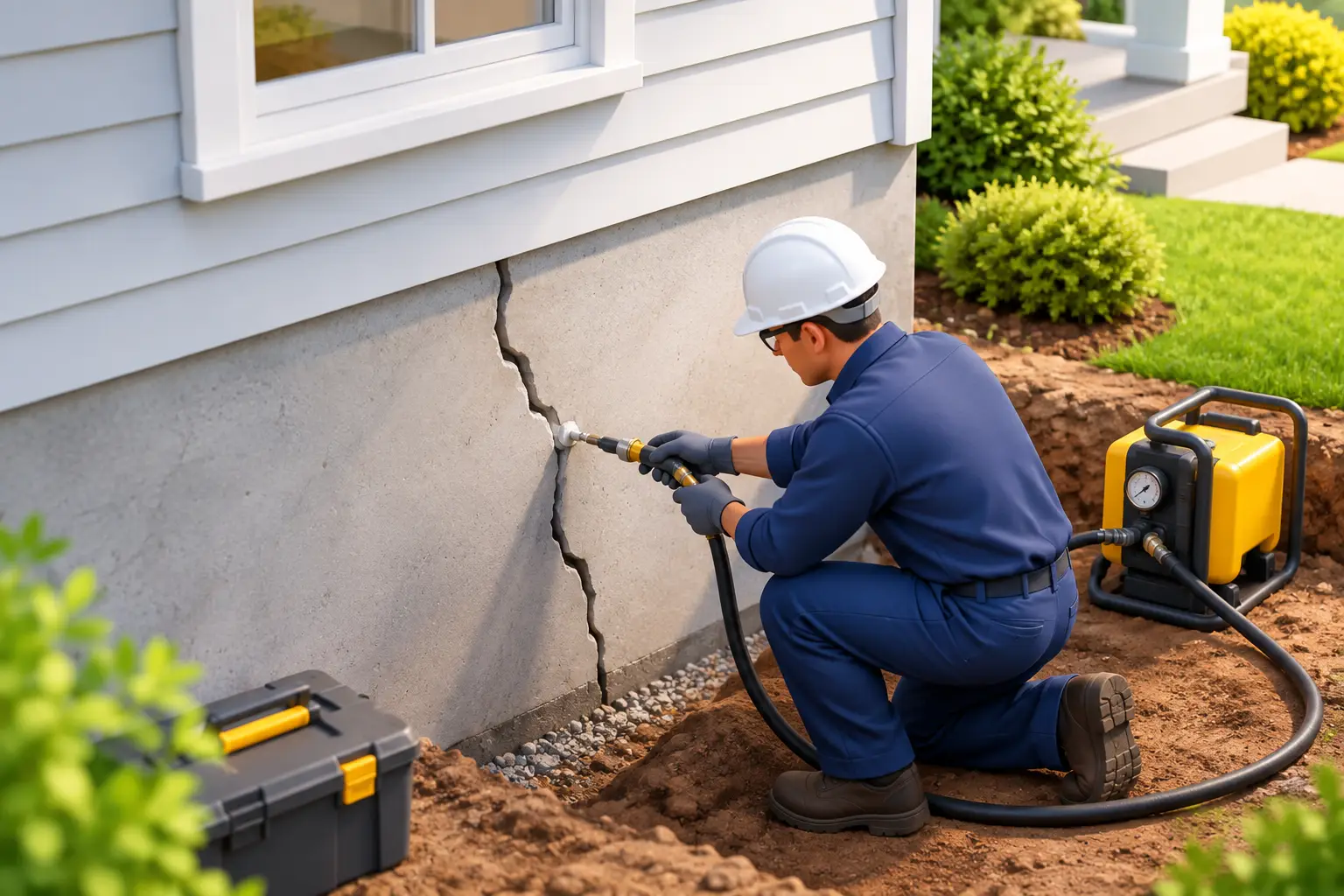
A crack above a basement window, a gap that suddenly catches your eye along a concrete wall, or a line widening near the corner of your home can be unsettling. Foundation cracks are common in Virginia and Maryland homes, but they are not all the same. Some are minor signs of concrete curing and seasonal movement. Others point to settlement, water pressure, poor drainage, or structural stress that needs prompt attention.
The difference is not always obvious from the surface. That is why the safest approach is to look at the crack’s pattern, location, width, and whether other changes are happening inside or outside the home. A proper inspection should identify the cause before anyone recommends a repair.
What Foundation Cracks Can Tell You
Concrete is strong under compression, but it can crack when soil shifts, moisture conditions change, or pressure builds against a wall. A crack is a symptom. Sealing it without understanding why it formed may hide the problem while movement or water intrusion continues behind the repair.
Hairline cracks are often caused by normal concrete shrinkage as a foundation cures. They are usually thin, stable, and not accompanied by water, wall movement, or changes elsewhere in the house. Even so, it is smart to take a clear photo and monitor them over time.
Cracks become more concerning when they widen, lengthen, leak, or appear with other warning signs. Doors that stick, windows that no longer open smoothly, sloping floors, gaps around trim, and new drywall cracks can all indicate that the structure is moving. In a crawlspace, sagging framing, damaged posts, or deteriorated beams may be part of the same problem.
Crack Patterns That Deserve Attention
The direction and location of a crack offer useful clues. No single pattern provides a complete diagnosis, but certain types call for a professional evaluation sooner rather than later.
Horizontal cracks in basement walls
Horizontal cracks are often associated with outside soil pressure. Saturated soil expands and presses against basement walls, especially where drainage is poor or roof runoff is allowed to collect near the foundation. Over time, that pressure can cause a wall to bow inward.
A horizontal crack, particularly one that is widening or accompanied by inward movement, should not be treated as a cosmetic issue. The wall may need stabilization, along with drainage or waterproofing work that reduces the pressure contributing to the problem.
Stair-step cracks in brick or block
Cracks that follow mortar joints in a stair-step pattern can be a sign of differential settlement. This means one area of the home is moving differently than another. Soil conditions, water around the foundation, inadequate support, or changes in load can all contribute.
Small, older stair-step cracks that have remained unchanged may not require structural repair. Active cracks, however, deserve a closer look. Signs of active movement include fresh edges, widening gaps, recurring cracks after patching, or corresponding cracks on interior walls.
Vertical and diagonal cracks
A narrow vertical crack may be caused by normal settling or concrete shrinkage, particularly in a newer home. A diagonal crack is more likely to reflect uneven movement, especially when it extends from a corner of a window, door, or foundation opening.
The key question is not simply whether a crack is vertical or diagonal. It is whether it is changing and whether it is paired with symptoms such as uneven floors, sticking doors, water entry, or visible separation between building materials.
Cracks with water intrusion
Water changes the urgency. A crack that leaks during rain or snowmelt can allow moisture into a basement or crawlspace, creating conditions for mold, wood rot, musty odors, and damaged finishes. It can also keep soil around the foundation wet, increasing the pressure and movement that caused the crack in the first place.
Caulking or applying a surface coating may temporarily reduce visible water, but it does not correct drainage problems, hydrostatic pressure, or a wall that is already moving. Permanent repairs address both the water path and the structural condition of the foundation.
Why Foundation Cracks Get Worse
Most serious crack problems start with water and soil. Northern Virginia and nearby Maryland communities experience heavy rain, humid summers, freeze-thaw cycles, and changing soil moisture. Clay-rich soils can expand when wet and shrink when dry. Those repeated changes place stress on a home’s foundation.
Poor grading is another common contributor. If the ground slopes toward the home, or downspouts discharge too close to the wall, water can saturate the soil around the foundation. Clogged gutters, failing drainage systems, and plumbing leaks can create similar conditions.
Settlement can also occur when soil beneath a footing loses support or was not adequately compacted. In older homes, years of gradual movement may eventually become visible through cracks, uneven floors, or separating masonry. The repair approach depends on what is moving, why it is moving, and whether the condition is ongoing.
When to Schedule an Inspection
You do not need to diagnose the crack yourself. Homeowners should schedule an inspection when a crack is wider than a hairline, appears suddenly, continues to grow, or allows water into the home. The same is true if a basement wall is bowing, a crawlspace floor system is sagging, or doors and windows begin sticking in the same area of the house.
Act quickly if you see a horizontal crack, a stair-step crack that is expanding, exposed reinforcement, crumbling concrete, or a wall that has visibly shifted. These conditions can become more expensive to repair as movement continues.
An honest inspection is also valuable when you are unsure. Not every crack requires major work. A qualified foundation professional should be able to distinguish between cosmetic cracking and a condition that needs structural repair, waterproofing, drainage correction, or crawlspace support work. That clarity helps you make a sound decision without pressure.
What a Permanent Repair May Involve
There is no one-size-fits-all fix for foundation cracking. Surface crack repair can be appropriate when the crack is stable and the goal is to seal out moisture. But when the wall is moving, the repair needs to stabilize the structure rather than merely cover the evidence.
For example, a bowing basement wall may require a designed stabilization system, while settlement may call for support installed to address the affected portion of the foundation. Water-related cracking may require waterproofing and drainage improvements so pressure does not continue building outside the wall. In crawlspaces, the right scope may include addressing moisture, damaged wood, or inadequate support beneath sagging floors.
The trade-off is straightforward: the least expensive visible patch is not always the least expensive decision over time. Repairs that address the root cause can better protect your home’s safety, usable space, and resale value. They also reduce the chance that you will need to revisit the same issue after the next heavy storm or seasonal soil change.
What to Do Before Help Arrives
If you find a concerning crack, take photos from several angles and note the date. Include a ruler or tape measure in one photo so you can track changes. If water is present, document when it appears and whether it follows rainfall, snowmelt, or plumbing use.
Keep gutters clear, make sure downspouts direct water away from the foundation, and avoid piling soil or mulch high against exterior walls. Do not attempt to force a bowed wall back into place or rely on patching materials to solve an active structural issue.
Foundation Works provides free, no-obligation inspections for homeowners who need a clear answer about a crack, a wet basement, or signs of structural movement. A timely evaluation can separate a minor maintenance concern from a problem that needs a permanent solution.
Your home does not need to look dramatic to deserve attention. When a crack changes, leaks, or appears alongside other warning signs, getting a professional assessment early gives you the best chance to protect the structure before a small concern becomes a larger repair.

