A crack that follows the mortar joints in a brick wall can feel alarming because it often looks like it is climbing across the wall. Homeowners commonly ask, what causes stair step cracks and whether the problem is cosmetic or a warning that the foundation is moving. The honest answer is that stair step cracking can have several causes, but it always deserves a closer look – especially when the crack is widening, spreading, or appearing alongside sticking doors, sloped floors, or basement moisture.
Brick and concrete block are rigid materials. They do not flex much when the soil, foundation, or framing beneath them shifts. Instead, stress is released along the mortar joints, creating the familiar diagonal, stair-shaped pattern. The pattern itself is a clue, not a diagnosis. Finding the source of movement is what determines whether a repair is needed and what a permanent fix should involve.
What Causes Stair Step Cracks?
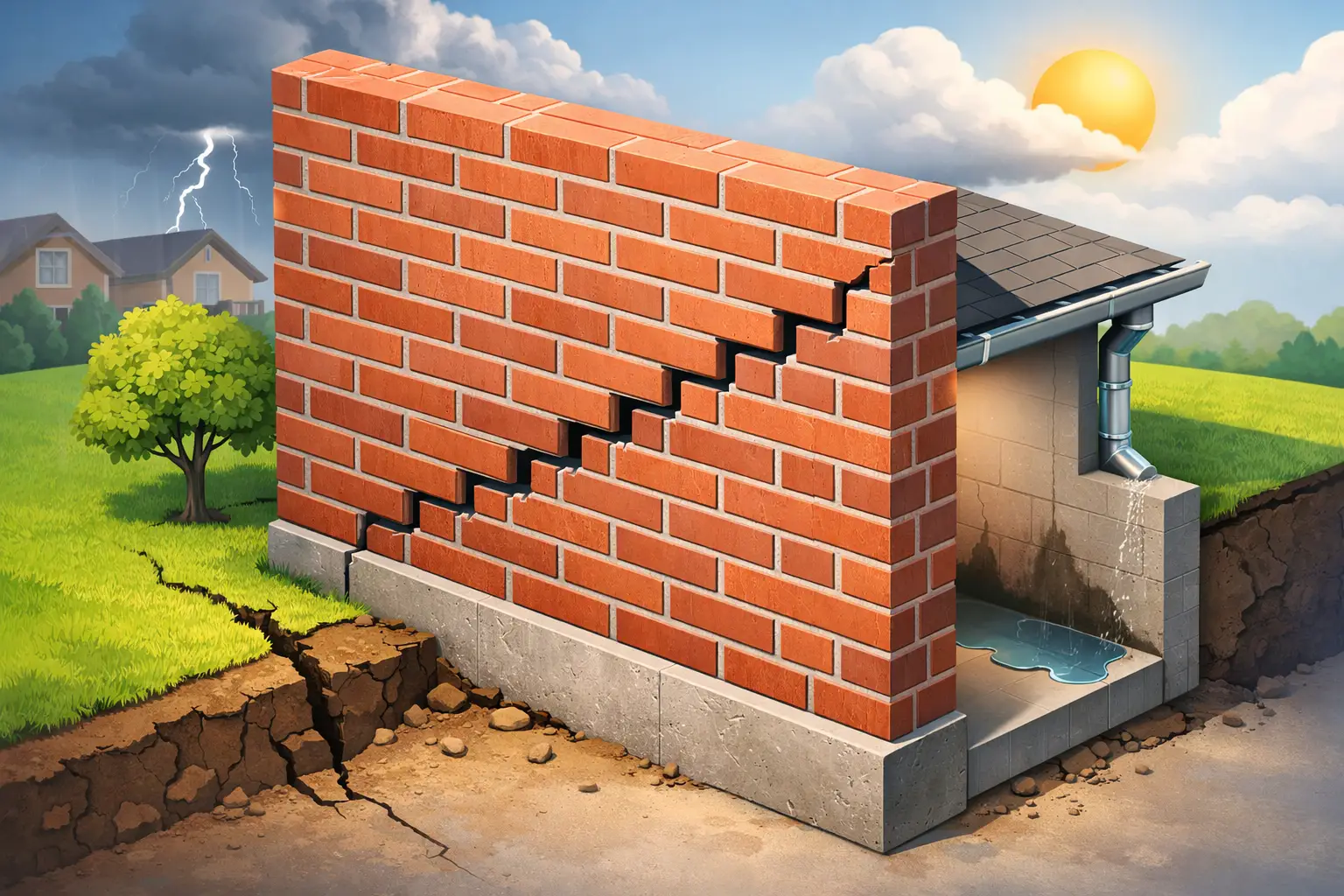
The most common cause is differential settlement. This means one portion of the foundation settles, rises, or moves more than another portion. Even small changes can place significant stress on brick veneer, masonry walls, and block foundations.
Soil conditions are often behind that movement. During wet periods, expansive clay soils can absorb water and swell. During dry weather, those same soils can shrink and pull away from the foundation. Poorly compacted fill soil may compress over time. Water leaking near the foundation can soften supporting soil or carry it away. In Northern Virginia, Maryland, and Washington, DC-area homes, changing seasons, clay-heavy soils, and aging drainage systems can all contribute to this cycle.
Settlement is not the only possibility. A stair step crack may also result from foundation wall movement, frost-related soil pressure, improper drainage, or structural framing issues that transfer unusual loads into the masonry. That is why simply filling the crack with mortar or caulk rarely solves the real problem. If movement continues, the crack usually returns.
How Foundation Settlement Creates a Stair Step Pattern
Imagine one corner of a home dropping slightly while the rest remains stable. The brick wall above it cannot stretch to match that change. Stress concentrates at the mortar joints, which are generally weaker than the bricks themselves. The crack then travels diagonally from joint to joint, forming a staircase pattern.
The direction of the crack can offer useful information. A crack that starts near the corner of a window, door, or foundation opening and angles outward may indicate stress concentrating around that opening. A crack that becomes wider toward the top or bottom may suggest a particular direction of movement. But visual patterns alone cannot confirm the cause. A trained inspector must consider the crack’s location, width, age, surrounding conditions, drainage, and any changes inside the home.
A single hairline crack in an older brick veneer may be related to normal material aging or minor past movement. A crack that is actively growing is different. Freshly separated mortar, broken brick faces, gaps around windows, and repeat cracking after patching are stronger signs that the home may still be moving.
Water and Drainage Problems Can Trigger Movement
Water is one of the most common contributors to foundation trouble. Gutters that overflow, downspouts that discharge beside the house, grading that slopes toward the foundation, and leaking plumbing can saturate soil near the home. Saturated soil loses strength, increasing the risk of settlement and movement.
The opposite condition can also cause problems. Extended dry periods may dry and shrink certain soils, leaving less support beneath sections of the foundation. Trees planted close to the home can intensify this issue by drawing moisture from the soil. The result may be uneven support from one side of the house to the other.
Water management matters because it protects more than the basement. It helps maintain more consistent soil conditions around the entire foundation. Depending on the property, a lasting plan may include regrading, extended downspouts, drainage improvements, waterproofing, or a combination of these measures. Drainage correction alone may be enough when movement has not caused structural damage. If settlement is ongoing or substantial, the foundation may need stabilization as well.
Stair Step Cracks in Brick Veneer vs. Block Foundation Walls
Not all stair step cracks carry the same level of urgency. The material and location matter.
A crack in exterior brick veneer may indicate movement in the foundation, but brick veneer is typically not the structure holding up the home. It is a protective exterior layer tied to the framing behind it. Even so, cracking can allow water into the wall system and may point to a larger problem below.
A stair step crack in a concrete block basement or crawlspace wall is more concerning because the wall may be part of the home’s foundation system. If the crack is accompanied by inward bowing, horizontal cracks, water intrusion, or crumbling block and mortar, it may indicate outside soil pressure is pushing the wall inward. That condition can worsen as the soil becomes saturated and expands.
The repair approach depends on the cause. A settling foundation may require engineered underpinning or pier systems to stabilize it at suitable bearing soil. A bowing block wall may need structural reinforcement to resist lateral soil pressure. Waterproofing and drainage may be part of the solution, but they do not replace structural repair when a wall is already moving.
Signs the Crack Needs Prompt Attention
A professional evaluation is a smart next step whenever you see a new stair step crack. It becomes more urgent when the crack appears with other warning signs. Watch for the following:
- Cracks wider than about 1/8 inch, widening over time, or showing visible separation
- Cracks that extend through brick or block rather than following only mortar joints
- Doors and windows that suddenly stick, drag, or no longer latch properly
- Uneven, sagging, or sloping floors inside the home
- Gaps between walls and ceilings, trim pulling away, or cracks in interior drywall
- Water leaks, musty odors, mold growth, or standing water near the foundation
- Basement walls that bow inward, lean, or have horizontal cracking
These symptoms do not automatically mean the house is unsafe. They do mean the issue should not be ignored. Early diagnosis can often prevent a smaller repair from becoming a more extensive structural project.
What Not to Do When You Find a Crack
Avoid assuming that cosmetic patching is a repair. Repointing mortar can improve appearance and help limit water entry, but it cannot stabilize a foundation or stop outside pressure from moving a block wall. Patching before identifying the cause can also make it harder to track whether the crack is still active.
Do not rely on crack width alone, either. A narrow crack can still matter if it is new, growing, or connected to multiple signs of movement. Conversely, some older cracks may be stable. The key question is not just how the crack looks today. It is whether the home is moving and why.
You can document the condition while arranging an inspection. Take clear photos, note the date, and look for changes around nearby windows, doors, floors, and walls. Check whether gutters are clogged, downspouts terminate too close to the house, or the ground slopes toward the foundation. These observations can help identify the source, but they should not substitute for a full assessment.
A Permanent Repair Starts With the Root Cause
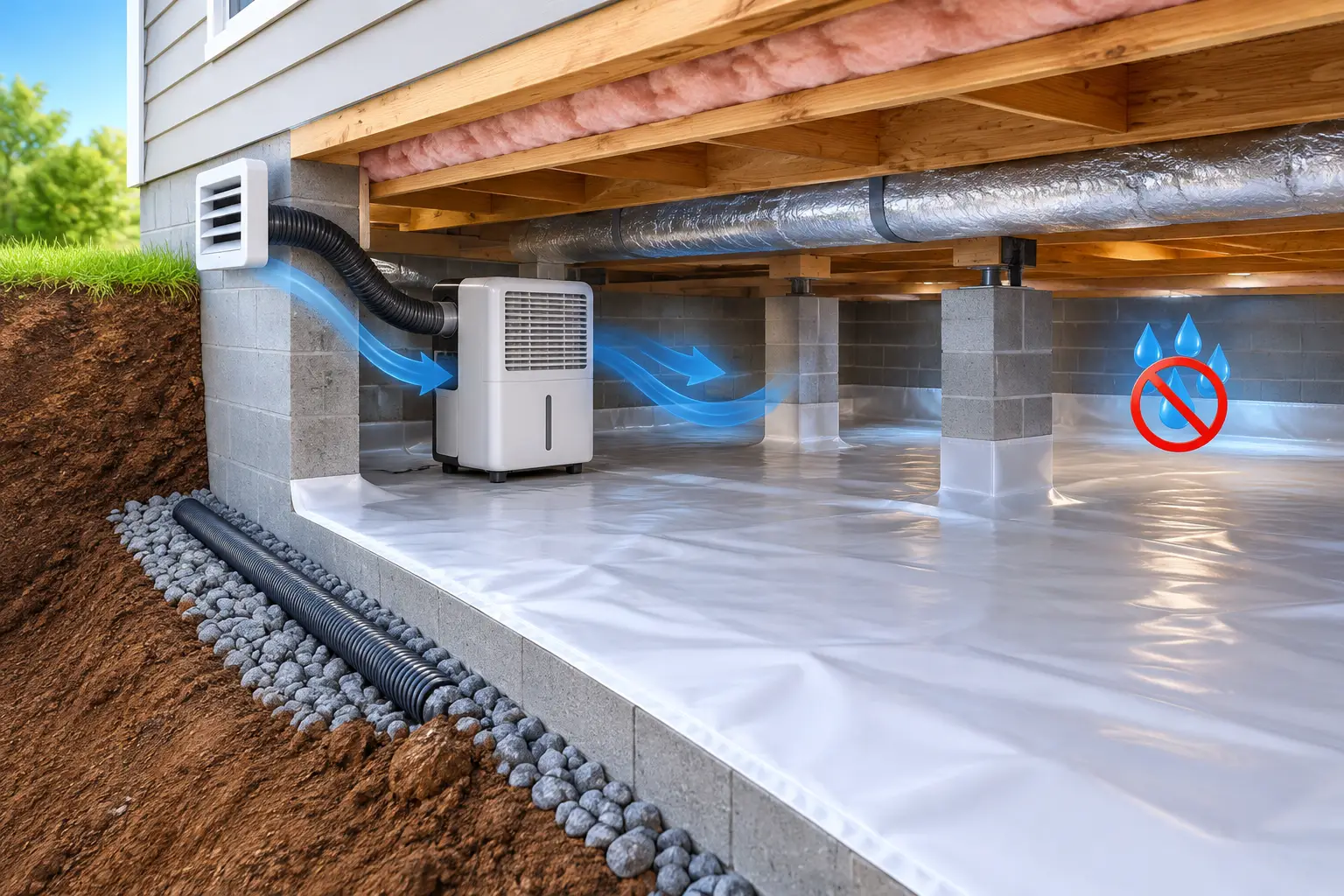
There is no one-size-fits-all fix for stair step cracks. A home settling because of weak soil needs a different solution than a block wall bowing from hydrostatic pressure. A crack related to drainage may need water control improvements before structural conditions worsen. Homes with deteriorated crawlspace beams, joists, or wood rot may require repairs to restore proper support under the floor system.
That is why an inspection should examine the full picture: exterior masonry, foundation elevation, interior symptoms, soil and drainage conditions, basement or crawlspace framing, and signs of ongoing moisture. The goal is not to sell the biggest repair. It is to identify the right repair and explain why it is needed.
Foundation Works provides homeowners with engineering-based evaluations and permanent repair options for foundation settlement, wall movement, drainage issues, and crawlspace structural damage. If you have noticed a stair step crack, do not wait for it to spread across more of the wall. A clear, honest inspection can replace uncertainty with a practical plan to protect your home, your investment, and your family’s safety.