
A hairline crack in an older home is not automatically an emergency. But when cracks, sticking doors, uneven floors, and moisture problems begin showing up together, they can be signs of foundation settlement that deserve a closer look. Settlement means part of the foundation is moving downward because the soil beneath it is no longer providing even support.
For homeowners in Virginia, Maryland, and Washington, DC, changing moisture levels, poor drainage, expansive clay soils, and aging construction can all contribute to movement. The key is not to panic over one cosmetic flaw. It is to recognize patterns early, before a manageable repair becomes a major structural project.
10 Signs of Foundation Settlement Homeowners Should Know
1. Stair-step cracks in brick or block walls
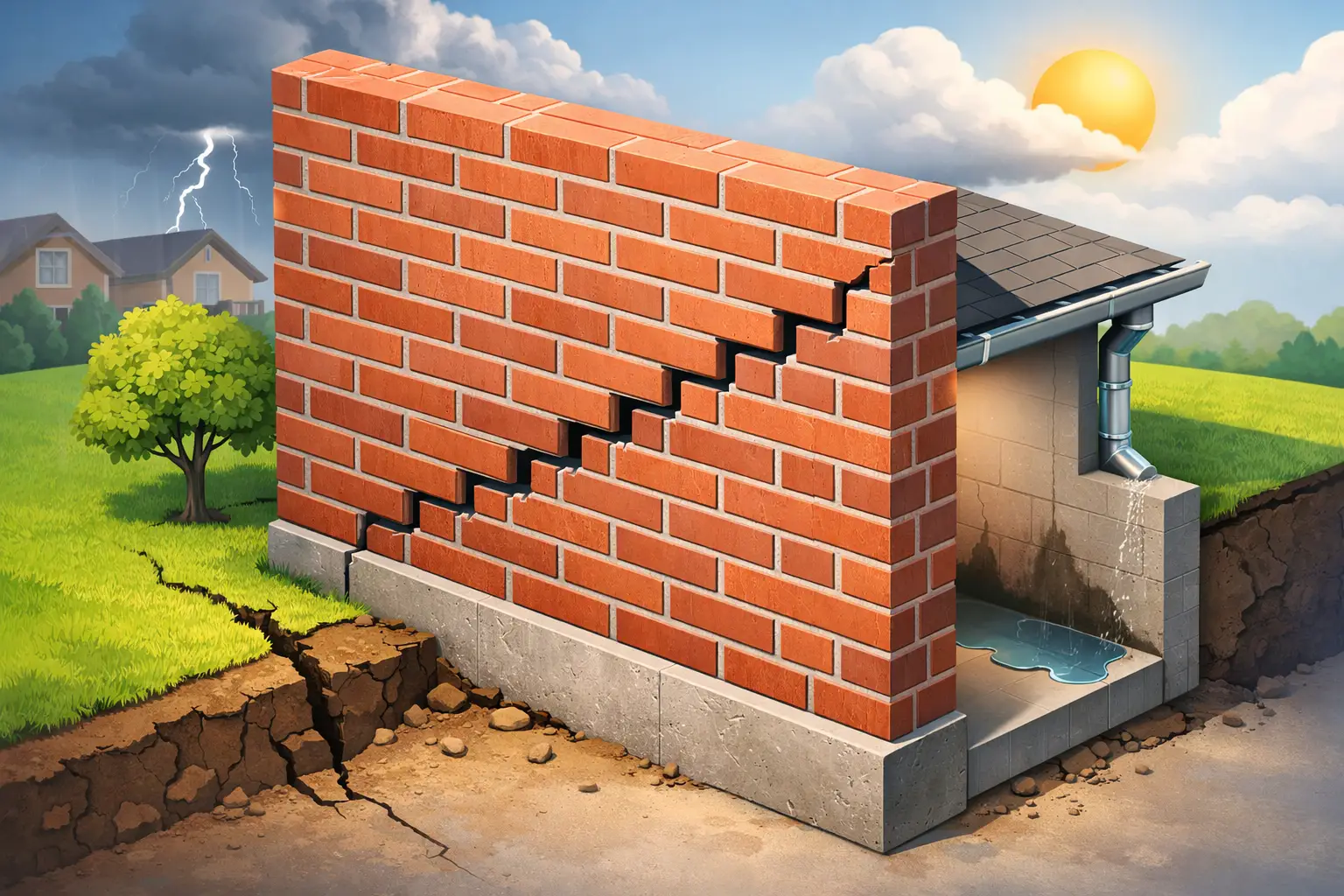
Cracks that follow the mortar joints in a stair-step pattern are among the clearest exterior warning signs. They often appear when one section of the foundation drops more than another, placing stress on brick veneer or concrete block walls.
A single thin crack may be old and stable. A crack that widens, lengthens, or appears alongside indoor symptoms should be inspected. Pay particular attention if the crack is wider at one end, has shifted out of alignment, or allows water into the basement or crawlspace.
2. Interior drywall cracks that keep returning
Drywall can crack for ordinary reasons, including seasonal temperature changes and normal framing movement. Foundation-related cracks are more concerning when they run diagonally from the corners of doors and windows, extend across ceilings, or reopen after being patched.
Repeated patching only covers the evidence. If movement continues below the home, the crack will often return. An honest inspection can separate normal cosmetic cracking from structural movement that needs repair.
3. Doors and windows that suddenly stick
A door that has always closed properly but now rubs the frame, swings open on its own, or will not latch can signal that the opening has shifted. Windows may become hard to raise, leave uneven gaps, or develop cracks in the surrounding trim.
Humidity can make wood doors swell temporarily, so this symptom alone does not prove settlement. However, several sticking doors or windows on the same side of the house, especially when paired with wall cracks or sloping floors, is a reason to investigate.
4. Sloping, sagging, or bouncy floors
Floors should feel stable underfoot. A noticeable slope, a soft spot, or a bounce in the floor can point to foundation settlement, failing support beams, weakened floor joists, or moisture damage in a crawlspace.
The right repair depends on the cause. A settling footing may need engineered support, while a sagging floor system could require new beams, supplemental piers, or joist repair. Treating the floor surface without correcting the framing or foundation below will not provide a permanent fix.
5. Gaps around trim, cabinets, or exterior walls
When parts of a house move at different rates, rigid finishes begin to separate. You may notice gaps between crown molding and the ceiling, baseboards and floors, countertops and walls, or exterior trim and siding.
These gaps can also result from normal building movement, particularly in newer construction. Their location and progression matter. Growing gaps near other settlement symptoms deserve professional evaluation rather than another round of caulk.
6. A chimney pulling away from the house
A leaning chimney or a visible gap where the chimney meets the home is a serious warning sign. Chimneys are heavy and often rest on their own foundation support, which can settle independently from the main structure.
Do not assume this is a simple masonry issue. A shifting chimney can create safety concerns and may indicate inadequate soil support, drainage problems, or movement under the foundation. Prompt assessment is the safest approach.
7. Cracks in the foundation itself
Vertical cracks in poured concrete foundations are common and may be relatively minor if they are thin, dry, and stable. Horizontal cracks, diagonal cracks, or cracks that are widening can indicate more significant pressure or settlement.
The direction, width, location, and condition of the crack all matter. For example, a horizontal basement wall crack may be driven by outside soil pressure rather than settlement. Either way, sealing the crack alone does not address why the wall moved or why water may be entering.
8. Basement walls that bow, tilt, or move inward
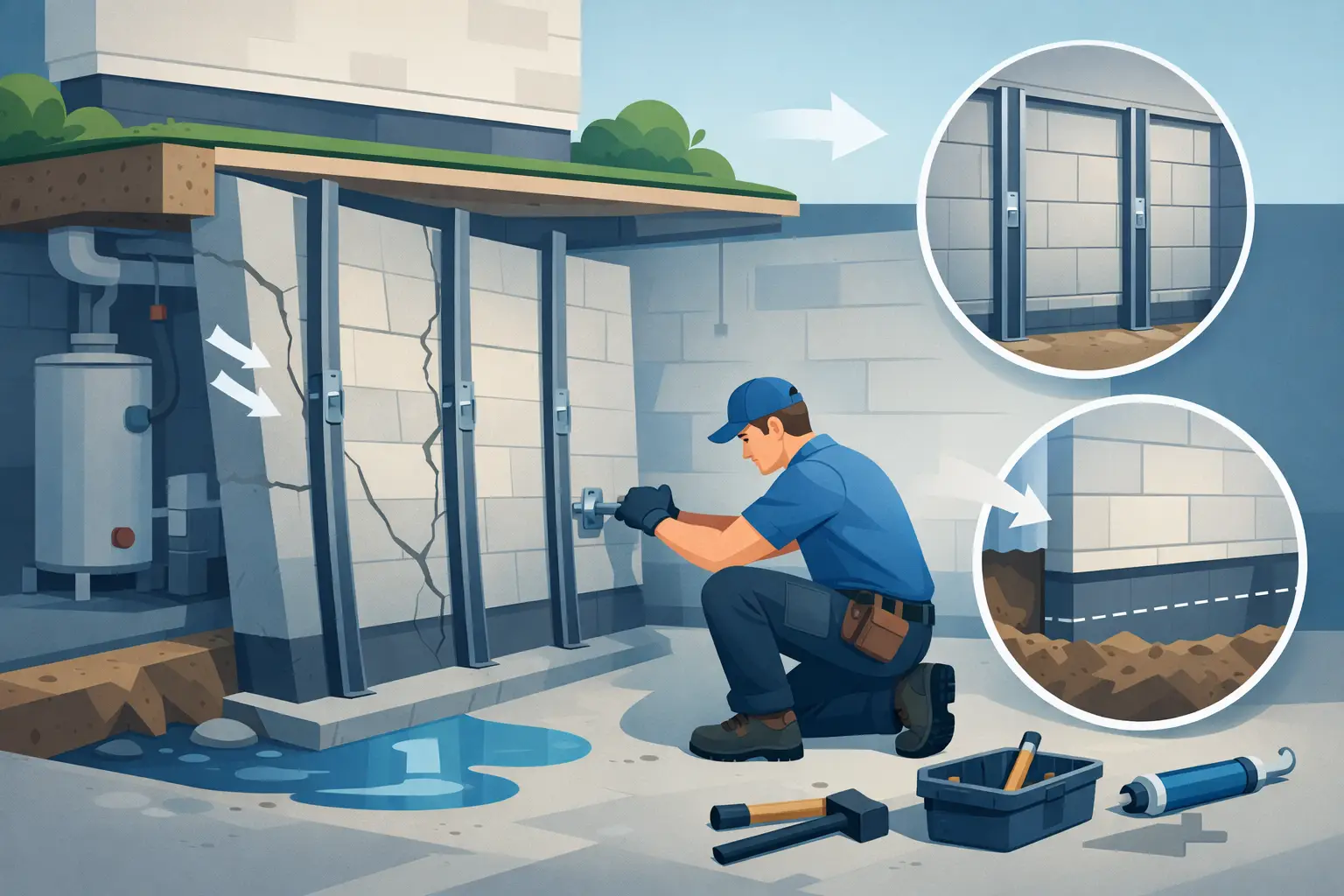
Bowing basement walls usually point to lateral soil pressure from saturated soil, poor drainage, or freeze-thaw cycles. While this is not always settlement in the strict sense, it is a structural problem that can occur alongside foundation movement.
Look along the wall rather than at one spot. A bowed wall can have a horizontal crack, inward displacement, or a noticeably uneven surface. These conditions call for timely structural repair, particularly if the movement is progressing.
9. Water in the basement or crawlspace
Standing water, damp walls, musty odors, mold growth, or wet insulation are not just comfort issues. Water changes the soil conditions around and below a foundation. It can soften supporting soil, increase hydrostatic pressure against walls, and contribute to wood rot in floor framing.
The source may be poor grading, clogged gutters, short downspouts, plumbing leaks, groundwater, or an unsealed crawlspace. Effective repair starts by identifying the water path. Waterproofing, drainage improvements, and crawlspace encapsulation may be part of the solution, but the right scope depends on what is causing the moisture.
10. Cracks and symptoms that are getting worse
Progression is one of the most useful clues a homeowner can track. Take clear photos of cracks with a ruler or coin beside them and note the date. Watch for widening cracks, new damage, doors that become harder to close, or floors that feel increasingly uneven.
Not every foundation issue moves quickly. Some conditions remain stable for years, while others accelerate after long wet periods, drought, nearby excavation, or drainage failures. Documentation helps a foundation professional understand whether the home has an active movement problem.
What Causes Foundation Settlement?
Foundation settlement happens when soil loses the ability to support the structure evenly. In Northern Virginia and surrounding areas, clay-rich soils can expand when wet and shrink during dry spells. That repeated change can create uneven support beneath footings.
Water management is often a major factor. Roof runoff that dumps beside the house, negative grading that slopes toward the foundation, broken underground drains, and persistent crawlspace moisture can all change soil conditions. Tree roots, poorly compacted fill soil, plumbing leaks, and construction on a sloped lot may also play a role.
That is why a proper diagnosis should look beyond the visible crack. The goal is to determine whether the home needs foundation stabilization, wall reinforcement, framing repair, drainage correction, moisture control, or a combination of these measures.
When to Schedule a Foundation Inspection
Schedule an inspection promptly when you see several symptoms at once, notice a crack growing, find water entering below grade, or observe a bowed wall, shifting chimney, or significant floor slope. These conditions are not good candidates for a wait-and-see approach.
If you find one small, stable crack with no related symptoms, it may be reasonable to document it and monitor it. The trade-off is that homeowners cannot see the soil, footings, or concealed framing from the finished living space. A professional assessment provides clarity before you spend money on cosmetic repairs that may not last.
Foundation Works provides free, no-obligation inspections for homeowners who need an honest answer about what they are seeing. A qualified evaluation should explain the cause, identify whether repair is necessary, and recommend a solution built for long-term stability rather than a temporary cover-up.
Your home does not need to look dramatic to warrant attention. Catching movement while the warning signs are still small can protect your family, preserve your property value, and give you more control over the repair options ahead.