
A musty odor under the house is not just an inconvenience. It is often the first sign that crawlspace moisture is feeding mold growth, putting wood framing, indoor air quality, and your home’s value at risk. This crawlspace mold prevention guide explains what causes the problem, what homeowners can safely monitor, and when a permanent moisture-control plan is the right next step.
Crawlspaces are naturally vulnerable because they sit below the living area, close to wet soil, and often receive little airflow. In Virginia and the Maryland metropolitan region, humid summers, heavy rain, and changing seasonal temperatures can keep a crawlspace damp long after a storm has passed. If that moisture is allowed to remain, mold has exactly what it needs to grow.
Why Mold Starts in a Crawlspace
Mold needs moisture, a food source, and time. A crawlspace provides all three when conditions are not controlled. Wood joists, beams, subflooring, paper-faced insulation, and construction debris can all provide organic material. The real issue is usually not the presence of a few mold spores. Spores exist almost everywhere. The issue is sustained dampness that allows them to colonize surfaces.
Common sources of crawlspace moisture include groundwater entering through the foundation, rainwater collecting near the home, plumbing leaks, high outdoor humidity, and exposed earth. Sometimes the source is obvious, such as standing water after rain. Other times, the crawlspace looks mostly dry but has consistently elevated humidity that condenses on cool ducts, pipes, and framing.
That distinction matters. A dehumidifier may help manage humid air, but it will not solve water entering through foundation walls or a drainage problem outside. Likewise, replacing wet insulation without controlling the moisture source only sets up the same failure again.
Crawlspace Mold Prevention Starts With Water Control
The most reliable way to prevent mold is to keep bulk water and humid air from reaching crawlspace materials in the first place. Prevention is not about covering up odors or applying a surface treatment to stained wood. It is about identifying the path moisture takes into the home and stopping it.
Check the ground around the foundation
Water should drain away from the foundation, not collect beside it. Look for low spots near exterior walls, overflowing gutters, short downspouts, or soil that slopes toward the house. During a hard rain, walk the perimeter and watch where water gathers. That simple observation often reveals why a crawlspace stays wet.
Downspouts should carry roof runoff well away from the foundation. Gutters should be clean and secure so water does not spill directly beside the home. If grading has settled over time, restoring a positive slope away from the house can reduce the amount of water reaching the crawlspace.
Address water intrusion at the foundation
Water stains on foundation walls, damp block, puddles, and mud tracks are warning signs that water is entering below grade. Depending on the home and the source of water, a permanent solution may require an interior drainage system, a sump pump system, waterproofing measures, or a combination of these approaches.
The right repair depends on site conditions. A home with occasional condensation needs a different plan than a home with groundwater pressure after every storm. An honest inspection should distinguish between those situations rather than recommend the same product for every crawlspace.
Fix plumbing leaks promptly
A slow drip from a supply line, drain line, water heater connection, or HVAC condensate line can keep a localized area wet for months. Check exposed plumbing periodically, especially near bathrooms, kitchens, laundry areas, and mechanical equipment. A leak that seems minor above ground can create major damage below it because crawlspaces dry slowly.
Use a Crawlspace Mold Prevention Plan That Controls Humidity
Once water entry is addressed, humidity control becomes the next line of defense. Mold can grow when relative humidity remains high, even without visible standing water. As a practical target, homeowners should aim to keep crawlspace relative humidity below 60 percent. Consistently lower levels provide a better margin of safety.
A small humidity monitor can help you spot patterns. Take readings at different times of day and after rain. If humidity rises sharply in warm weather or remains elevated for days, the crawlspace is telling you that outside air, ground moisture, or hidden water intrusion is still affecting the space.
Ventilation is not always the answer. In a humid climate, open foundation vents can bring moisture-laden summer air into a cooler crawlspace, where it can condense on framing and ducts. Older homes were often built with vented crawlspaces, but leaving vents open year-round may worsen moisture conditions. The best approach depends on the home’s design, drainage, insulation, and current moisture levels.
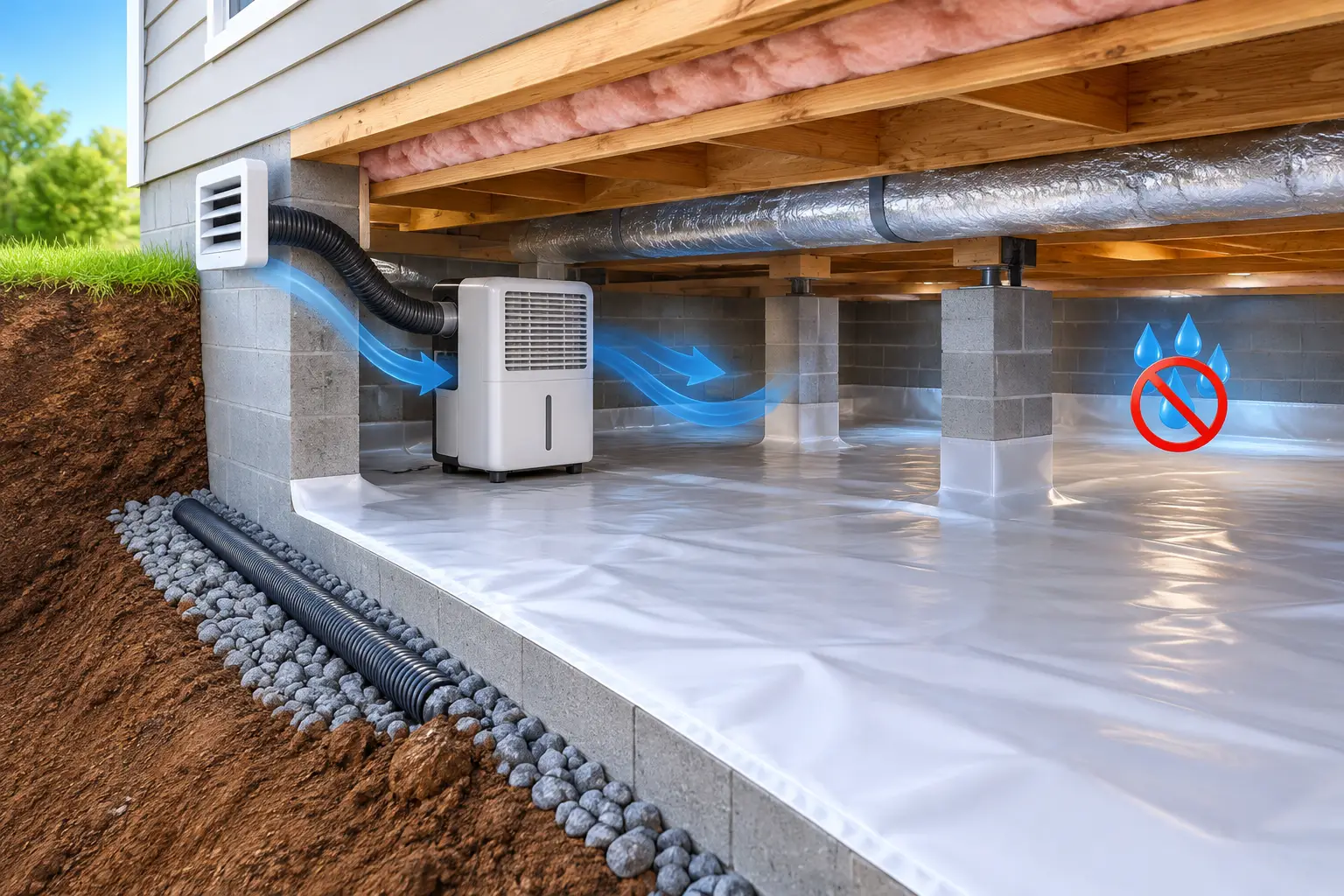
For many homes, a properly designed encapsulation system provides more dependable control. Encapsulation typically covers exposed soil and walls with a durable vapor barrier, seals outside air pathways, and works with drainage and dehumidification where needed. It is not merely plastic on the ground. The details – sealed seams, wall attachment, support-pier treatment, drainage planning, and humidity control – determine whether the system performs over time.
Protect the Wood Structure, Not Just the Air
Mold in a crawlspace is often a moisture symptom, but the stakes are higher when wood remains damp. Prolonged moisture can contribute to wood rot, weakened beams and joists, deteriorated subflooring, and sagging floors above. You may notice soft or uneven floors, doors that no longer close properly, or gaps forming along interior trim.
Do not assume dark discoloration automatically means the structure has failed. Some staining is surface-level, while other conditions involve active fungal growth or moisture-related wood deterioration. A qualified inspection should evaluate the framing itself, identify whether moisture is still active, and determine whether structural repair is necessary.
This is where a root-cause approach protects your investment. Cleaning or sealing affected surfaces without correcting groundwater, humidity, or drainage can leave the wood exposed to the same damaging conditions. Permanent fixes begin by making the crawlspace dry and stable enough for the structure to perform as intended.
Warning Signs You Should Not Ignore
Homeowners rarely inspect a crawlspace every week, so it helps to recognize the signs that moisture may be moving beyond the crawlspace. A persistent musty smell indoors is one of the most common. Because air can move upward through a home, odors and moisture from below may affect rooms above.
Other concerns include visible mold on framing or insulation, condensation on pipes or ductwork, wet insulation, standing water, rusted metal supports, peeling floor finishes, and floors that feel soft or uneven. Higher indoor humidity can also be a clue, particularly when it appears during humid weather or after rainfall.
If you see water, visible growth, or signs of structural movement, do not wait for the next season to see if it improves. Moisture problems tend to compound. Wood remains wet, mold spreads to available materials, and a repair that could have focused on moisture control can become a larger structural project.
What You Can Do Now
Start with practical observation. Check gutters and downspouts, look for grading that directs water toward the house, and inspect accessible plumbing for leaks. If it is safe to enter the crawlspace, use a flashlight to look for standing water, damp soil, wet insulation, condensation, or visible changes to wood. Avoid disturbing suspicious material or walking on damaged framing.
Keep a record of what you find, including whether conditions worsen after rain. Photos and humidity readings can help establish a pattern. They also give a professional inspector useful context when identifying the source of the problem.
When the crawlspace has repeated moisture, mold, wood damage, or floor symptoms, a professional evaluation is the sensible next step. Foundation Works provides no-pressure inspections designed to identify whether the issue is drainage, groundwater intrusion, humidity, failing materials, or a structural concern connected to prolonged moisture.
Your crawlspace is out of sight, but it supports every room above it. Addressing moisture before it damages framing is one of the most practical ways to protect your home, your family’s comfort, and the value you have worked hard to build.