
A soft spot beneath the living room carpet, a musty odor that returns after every rain, or a door that suddenly sticks can all point to trouble below the home. These Virginia crawlspace repair examples show why the visible symptom is only part of the story. A lasting repair begins by finding what is allowing moisture, movement, or weak framing to develop in the first place.
Virginia homes face a difficult mix of humid summers, heavy seasonal rain, clay-rich soils, and older construction. That combination can leave crawlspaces damp for long periods, especially when grading, gutters, drainage, or ventilation are not doing their job. The right repair is never one-size-fits-all. It should match the condition of the framing, foundation, soil, and water source.
Virginia Crawlspace Repair Examples Homeowners Recognize
Standing water after rain
A homeowner notices puddles in the crawlspace several days after a storm. The insulation is damp, the soil stays muddy, and the air upstairs smells earthy. Simply placing a dehumidifier in the crawlspace may improve the odor temporarily, but it will not stop water from entering.
In this situation, the repair scope often starts outside. Poor surface grading, overflowing gutters, short downspout extensions, or water collecting near the foundation can all send runoff directly toward the crawlspace. Once the exterior water source is addressed, an interior drainage solution and sump pump may be needed to collect and discharge groundwater before it spreads across the crawlspace floor.
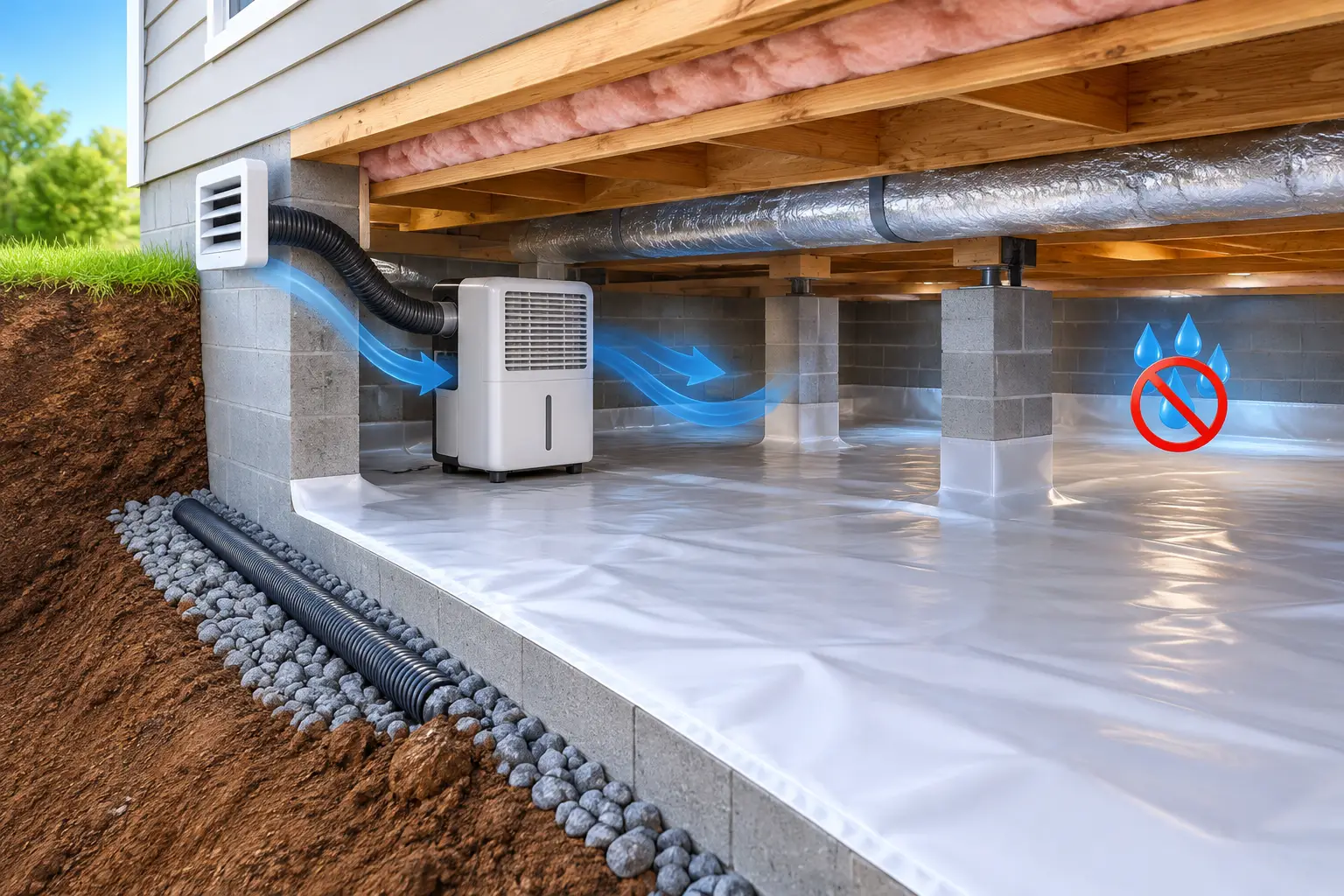
After the water problem is controlled, crawlspace encapsulation can isolate the home from damp earth and reduce humidity. The vapor barrier must be properly sealed at seams, walls, and penetrations. Otherwise, humid air and ground moisture can continue entering the space around the edges.
Sagging floors over a damp crawlspace
A floor that slopes toward the center of a room is not always a foundation settlement issue. In many Virginia homes, the cause is below the floor system: undersized or deteriorating beams, weakened joists, failing support posts, or moisture-damaged wood.
Consider a home where the kitchen floor feels uneven and cabinets appear slightly out of level. An inspection may reveal that a central beam has deflected over time and the supporting posts are resting on inadequate footings. If moisture has also softened the wood, adding a temporary jack without correcting the damaged components can create a false sense of security.
A permanent approach may include engineered supplemental beams, properly sized support posts, and new concrete footings designed to carry the load. Damaged joists may need reinforcement or replacement where necessary. The crew can then carefully lift the floor system toward level, but full restoration is not always the goal. In older homes, attempting to force every floor perfectly level can damage finishes, drywall, or plumbing. The goal is stable, properly supported framing.
Wood rot and mold on floor framing
A homeowner opens the crawlspace door and sees dark staining on joists, damp insulation hanging down, and white or greenish growth on wood surfaces. These are warning signs that moisture has been present long enough to affect the crawlspace environment.
Surface treatment alone is not a complete repair when the wood is still wet or the humidity remains high. The first question is why the crawlspace is staying damp. It could be groundwater, plumbing leaks, open vents allowing humid summer air inside, missing vapor protection, or a combination of conditions.
Once the moisture source is corrected, compromised wood framing should be evaluated for strength. Some areas may be cleaned and preserved if the wood remains structurally sound. Sections weakened by rot may require repair or replacement. Encapsulation, drainage improvements, and humidity control help protect the repaired framing from repeating the same cycle.
Failing crawlspace supports and cracked piers
Brick piers and older wood posts are common in aging crawlspaces. Over time, a pier may crack, shift, or sink into soft soil. A wood post can decay at the base where it contacts damp conditions. Upstairs, the signs may include bouncing floors, widening gaps above interior doors, or trim separating from the wall.
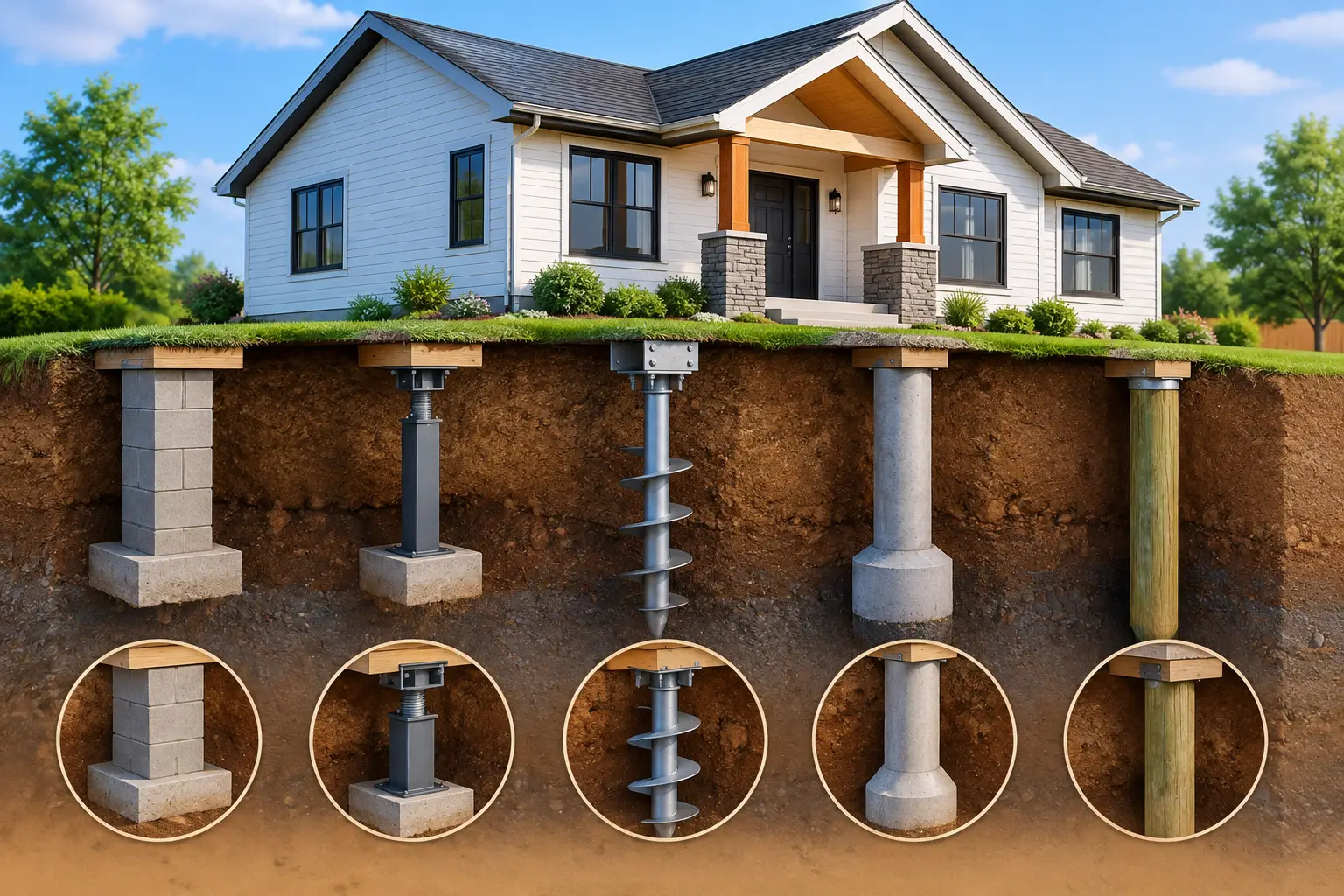
This type of repair requires more than placing another block beneath the beam. The support system has to transfer the home’s weight to stable bearing material. Depending on what the inspection finds, the repair may involve new concrete footings, steel support posts, beam reinforcement, or a combination of these measures.
The trade-off is important: adding supports can stabilize a floor, but supports installed on weak soil or shallow pads may settle again. Engineering-based diagnosis matters because the repair must account for the home’s load and the conditions beneath it.
A dry crawlspace that still has high humidity
Not every crawlspace problem includes standing water. Some spaces appear dry at a glance but stay humid enough to create condensation on ducts, insulation, and framing. This is especially common during Virginia’s warm, humid months, when outside air enters through open vents and cool crawlspace surfaces cause that moisture to condense.
In this example, a homeowner may not see puddles but may notice musty rooms, buckling hardwood floors, or excessive indoor humidity. The appropriate solution can include sealing the crawlspace from outside air, installing a durable vapor barrier, and adding controlled dehumidification. If there is no water entry or drainage issue, a sump pump may not be necessary. That is why an honest inspection should separate what the home needs from what it does not.
What Connects These Crawlspace Repair Examples
The visible damage varies, but the pattern is often the same. Water or humid air enters the crawlspace, the space cannot dry properly, and the framing or support system begins to suffer. When the condition continues, a moisture problem can become a structural problem.
Homeowners should pay attention to several warning signs at once. Musty odors, condensation, damp insulation, sagging floors, sticking doors, cracked interior finishes, and increased allergy symptoms can be connected to crawlspace conditions. One sign alone may have a simple explanation. Several signs together deserve a professional evaluation.
A thorough inspection should look at exterior drainage, foundation walls, soil conditions, vapor protection, plumbing, wood framing, beams, joists, piers, and floor supports. It should also explain whether the damage is cosmetic, active, or structural. No homeowner should be pressured into a large repair based only on a quick look through a crawlspace access door.
Why the Repair Order Matters
Repairing damaged wood before stopping moisture is backwards. Installing a vapor barrier without addressing standing water may trap a problem beneath it. Adding support posts without proper footings can leave the home vulnerable to future settlement.
The strongest crawlspace repair plans follow a logical order: control water entry, manage groundwater where needed, correct damaged structural components, then seal and condition the crawlspace for long-term moisture control. The exact sequence can change based on site conditions, but the root cause must lead the plan.
For homeowners in Northern Virginia and surrounding communities, this is particularly important because soil and drainage conditions can vary from one neighborhood to the next. A repair that worked for a nearby home may not be the correct answer for yours.
Foundation Works provides free, no-obligation inspections to help homeowners understand what is happening beneath the house and what a permanent repair should involve. The purpose is not to make a crawlspace sound more complicated than it is. It is to identify active risks before damp air, weak supports, or failing wood turn into larger repairs.
If your floors feel different underfoot or your crawlspace smells damp after rain, treat that change as useful information. A timely inspection can clarify the cause, protect the structure above, and give you a clear path forward before the damage spreads.