A hairline crack in a basement wall can become a wet floor after one hard Virginia rain. That does not automatically mean the foundation is failing, but it does mean water has found a path into your home. Concrete crack injection is often a highly effective repair for that specific problem – provided the crack is evaluated correctly and the repair matches the conditions causing it.
The key question is not simply, “Can this crack be filled?” It is whether the wall is stable, whether the crack is allowing water through, and whether pressure from soil, poor drainage, or foundation movement is still affecting the structure. A permanent repair starts with those answers.
What Concrete Crack Injection Actually Does
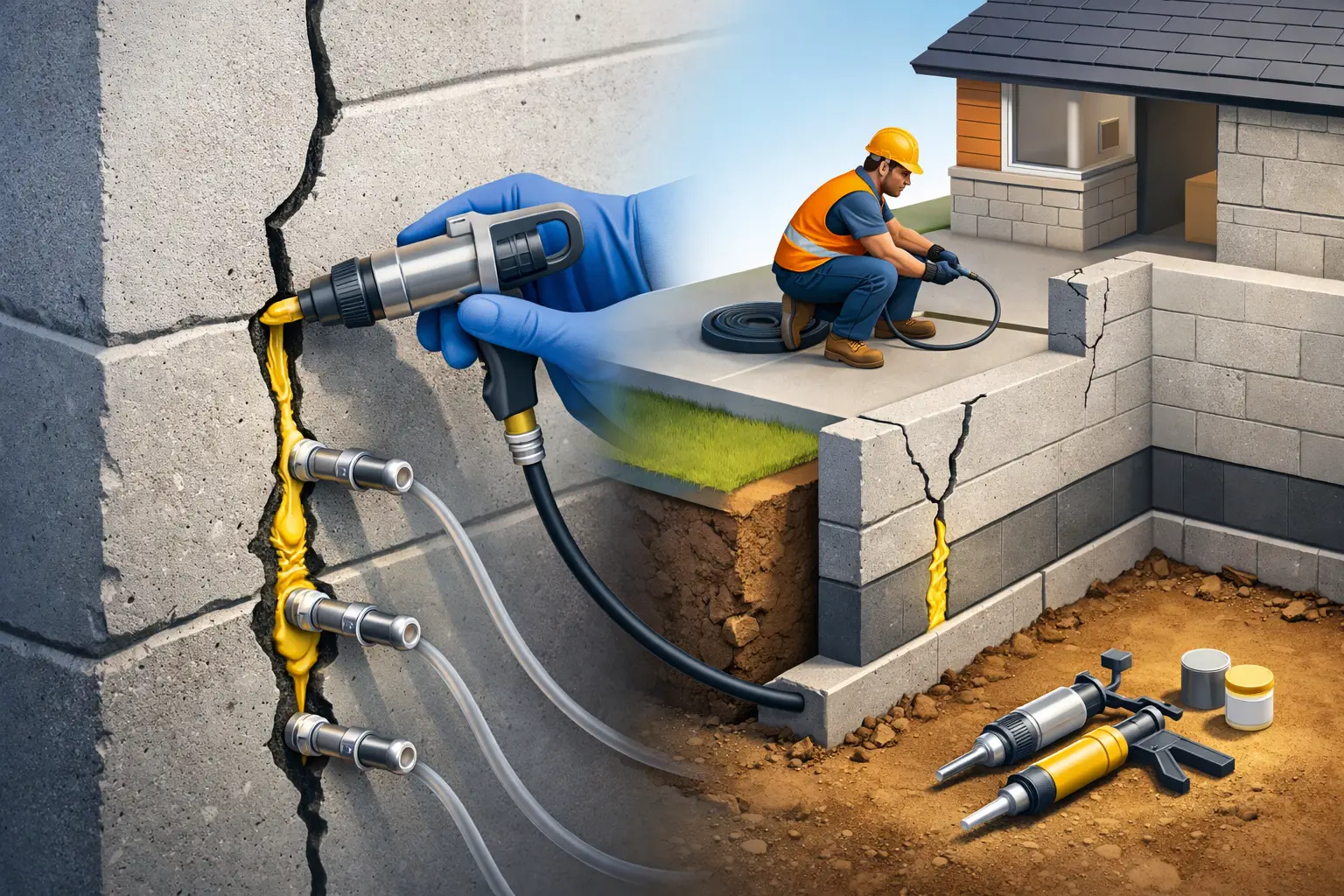
Concrete crack injection repairs a crack from within the wall rather than covering it at the surface. A trained installer places injection ports along the crack, seals the exterior face of the crack, and injects a specialized material under controlled pressure. The material travels through the crack’s full depth to create a continuous seal or bond.
For leaking foundation cracks, polyurethane resin is commonly used because it reacts with moisture and expands into narrow openings. This flexibility helps it block water where a foundation wall experiences minor movement or seasonal changes. For dry, stable structural cracks, epoxy may be used to bond the concrete back together. Epoxy creates a rigid repair, which makes it useful only when the crack is not actively moving.
The difference matters. The wrong material can leave a homeowner with a repair that looks finished but does not solve the actual issue. A surface patch may hide the crack for a while, yet water can continue traveling behind it and emerge somewhere else along the wall.
When Crack Injection Is the Right Repair
Injection is typically a strong solution for a vertical or diagonal crack in a poured concrete foundation wall that is otherwise stable. These cracks often develop as concrete cures, soils settle slightly, or normal seasonal moisture conditions place stress on the foundation. If water appears at the same crack during rain, snowmelt, or periods of saturated soil, injection can stop that direct leak path.
It is especially useful when the crack is accessible from the interior basement wall. Most repairs can be completed from inside, avoiding unnecessary excavation when the wall itself does not require exterior structural work.
Concrete crack injection may be appropriate when:
- The crack is narrow and runs vertically or diagonally through a poured concrete wall.
- The basement leak is clearly tied to one identifiable crack.
- The wall is not bowing, leaning, or shifting inward.
- There is no meaningful difference in elevation from one side of the crack to the other.
- A professional inspection finds the foundation is stable enough for an injection repair.
A properly injected crack can stop water intrusion and help protect finished basements, stored belongings, insulation, and framing near the wall. It can also prevent the repeat cycle of wet drywall, musty odors, and mold-friendly conditions that often follows a neglected foundation leak.
When Injection Alone Is Not Enough
Not every crack should be treated as a simple leak. Some cracks are symptoms of active structural pressure or foundation movement. Filling those cracks without correcting the force behind them is cosmetic work, not a permanent fix.
Horizontal cracks in a basement wall deserve immediate attention because they can signal pressure from saturated soil outside the home. A wall that is bowing, tilting, or showing stair-step cracking may need stabilization before any crack sealing is considered. Similarly, a wide crack with one side pushed inward or outward from the other can indicate movement that injection will not stop.
Water also has more than one route into a basement. If moisture is entering where the floor meets the wall, coming through multiple wall areas, or appearing after every storm regardless of visible cracks, the problem may involve drainage conditions, hydrostatic pressure, or broader waterproofing needs. Injecting one crack can still be worthwhile, but it should not distract from the actual source of the water.
An honest inspection should distinguish between a stable crack that needs sealing and a wall that needs structural restoration. Homeowners should be cautious of anyone who recommends the same repair for every crack without looking for signs of movement, exterior water pressure, or soil-related distress.
How a Professional Crack Injection Repair Works
A dependable repair is methodical. First, the crack is examined for its direction, width, location, moisture level, and evidence of continued movement. The wall should also be checked for bowing, loose concrete, efflorescence, previous repairs, and related water damage.
The repair area is then cleaned so the surface seal can adhere properly. Injection ports are installed at measured intervals along the crack, and a temporary surface paste is applied over the crack between the ports. This paste holds the injection material inside the wall while it penetrates the crack.
Starting at the lowest port, the technician injects the chosen resin until it reaches the next port or indicates that the void has filled. The process continues upward. This bottom-to-top approach is particularly important for a leaking crack because it helps fill the full crack path rather than only treating the opening visible on the wall surface.
Once the material cures, the ports and surface seal are removed or finished as appropriate. The final appearance is usually far cleaner than repeated patching, but appearance is not the measure of success. The goal is a full-depth repair that stops water from using the crack as an entry point.
Why the Cause of the Crack Still Matters
Concrete is strong under compression, but it can crack when it shrinks, settles, or faces uneven pressure. Some cracking is common in aging homes and remains stable for years. Other cracking keeps changing because the conditions around the foundation have not been corrected.
Pay attention to changes. A crack that grows wider, becomes longer, begins leaking for the first time, or appears alongside sticking doors, sloped floors, and gaps around windows should be evaluated promptly. Those combined symptoms can point to settlement or structural movement beyond one basement wall.
Outside conditions matter as well. Clogged gutters, short downspouts, grading that slopes toward the house, and saturated soil near the foundation can increase the water load against basement walls. Correcting drainage does not erase an existing crack, but it reduces the pressure that contributes to leaks and can help protect the repaired wall over time.
What Homeowners Should Avoid
Store-bought crack fillers and hydraulic cement can be tempting because they are inexpensive and easy to apply. They may reduce a minor surface seep temporarily, but they rarely fill the entire depth of a foundation crack. If the wall is wet, the crack is moving, or water pressure is present behind the wall, a surface-only patch often separates or leaks around the edges.
Painting over a crack is not a repair either. Waterproof coatings can improve the appearance of a wall, but they cannot tell you whether the crack is stable or whether water is being redirected behind the coating. Covering the evidence may also make future diagnosis harder.
Do not wait for water damage to become the reason to act. A basement leak can affect flooring, drywall, furnishings, and indoor air quality long before it feels like a major foundation concern. Addressing a known crack early is generally simpler than repairing a finished space after repeated moisture exposure.
Get the Right Answer Before Choosing the Repair
The best repair is the one that fits the wall, the crack, and the conditions around your home. For some homeowners, that will be a targeted concrete crack injection that stops a single leak. For others, the inspection may reveal a need to address drainage, water intrusion across a larger area, or a wall under structural pressure.
Foundation Works provides no-pressure inspections for homeowners who need a clear answer about what a foundation crack means and what it will take to fix it for good. If you have noticed water at a wall crack, new movement, or changes in your basement, an early professional evaluation can protect your home before a small opening turns into a larger repair.