A bedroom door that suddenly rubs the jamb or a front door that will not latch can be more than an everyday nuisance. Homeowners often ask, “why are doors sticking in house?” because a door that once worked normally may be the first visible clue that something in the home has shifted, swelled, or weakened.
Sometimes the cause is temporary humidity. Other times, a sticking door points to moisture exposure, sagging floor framing, foundation settlement, or movement around the opening. The key is not to panic, but not to ignore a change that keeps getting worse.
Why Are Doors Sticking in Your House?
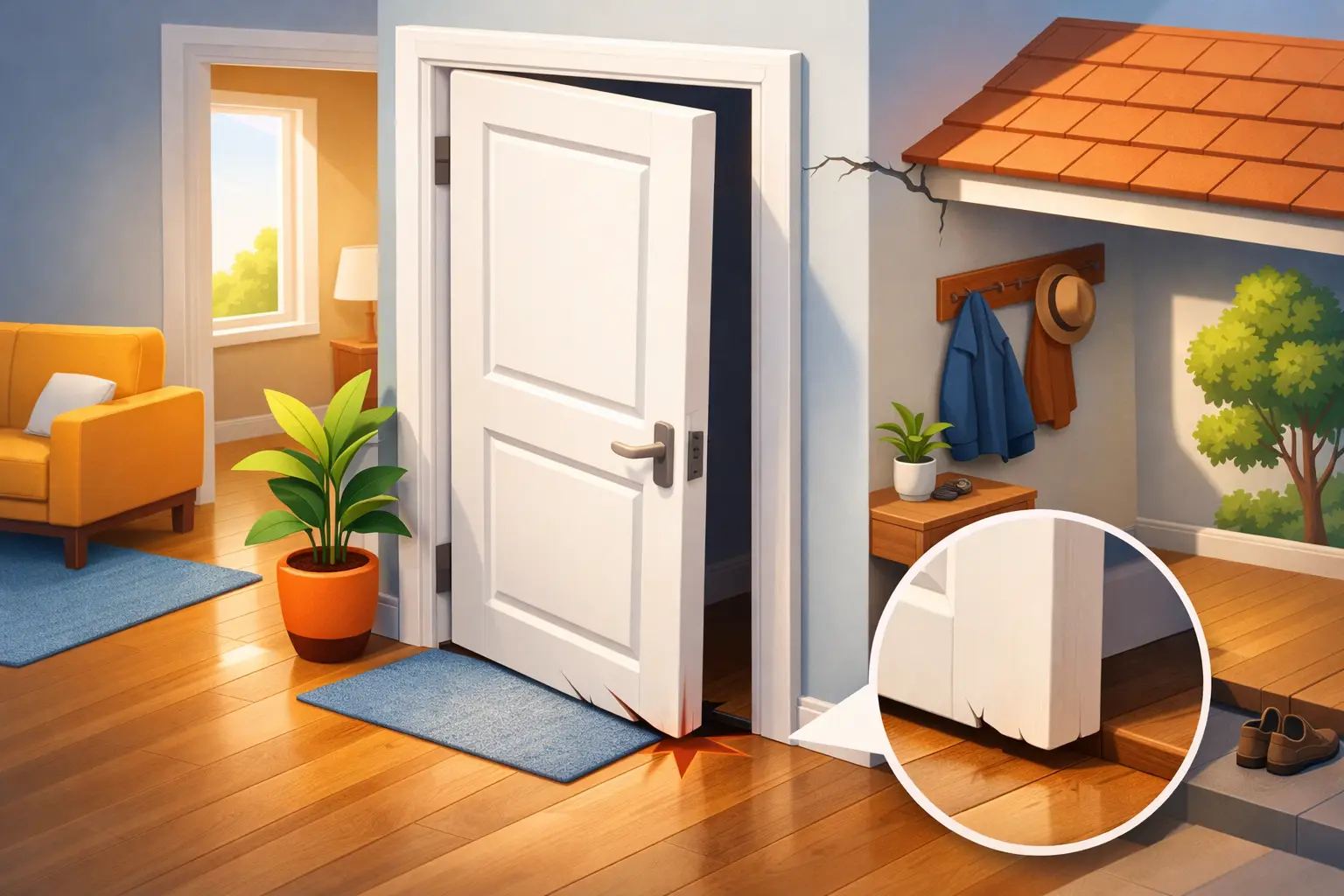
A door sticks when the door slab no longer fits cleanly within its frame. That can happen because the door expands, the frame moves, the floor rises or drops, or the hinges lose their position. The location of the rubbing often provides a useful first clue.
If the door rubs along its top edge, the frame may have shifted slightly or the door could be swelling from high indoor humidity. If it catches near the bottom, a sagging floor, an uneven threshold, or a door that has dropped at the hinges may be involved. A door that binds along one side or suddenly will not latch can signal movement in the wall or framing around the opening.
One sticky door is not automatic proof of a foundation problem. Several doors sticking at the same time, especially alongside new cracks or uneven floors, deserve a closer look.
Seasonal Humidity Can Swell Wood Doors
Virginia and Maryland homeowners know how quickly weather can change. During humid months, wood doors absorb moisture and expand. A door may stick after a stretch of wet weather, then work normally again when conditions become drier.
This is especially common with solid wood doors, older doors, or doors near poorly ventilated bathrooms, basements, and crawlspaces. Excessive indoor humidity can also make an existing alignment issue more noticeable.
Seasonal swelling is usually less concerning when the problem is limited to one door, appears only during very humid periods, and resolves on its own. But if the door remains difficult to close through changing seasons, do not assume humidity is the whole story. Persistent moisture beneath the home or within the walls can affect far more than a door.
Loose Hinges and Normal Wear Can Change the Fit
Doors are heavy, and hinges carry that weight every day. Loose hinge screws can let a door sag just enough to scrape the jamb or strike plate. Worn hinges, damaged screws, thick layers of paint, and a shifted strike plate can create the same frustrating result.
These are often straightforward maintenance issues. Look for visible gaps that are uneven around the door, screws that spin without tightening, or a door that sits lower on the latch side than it once did. If tightening the screws and checking the hinges corrects the issue, structural movement is less likely.
Still, repairs should match the cause. Repositioning a strike plate may help a latch catch, but it will not stop a wall opening from changing shape. Shaving a door edge may make it close today while hiding a movement problem that continues tomorrow.
When Sticking Doors May Signal Structural Movement
A home is a connected structure. Foundations support walls, walls support framing, and framing supports floors and door openings. When one part of that system moves, doors and windows can show the effects because their frames need to stay square to operate correctly.
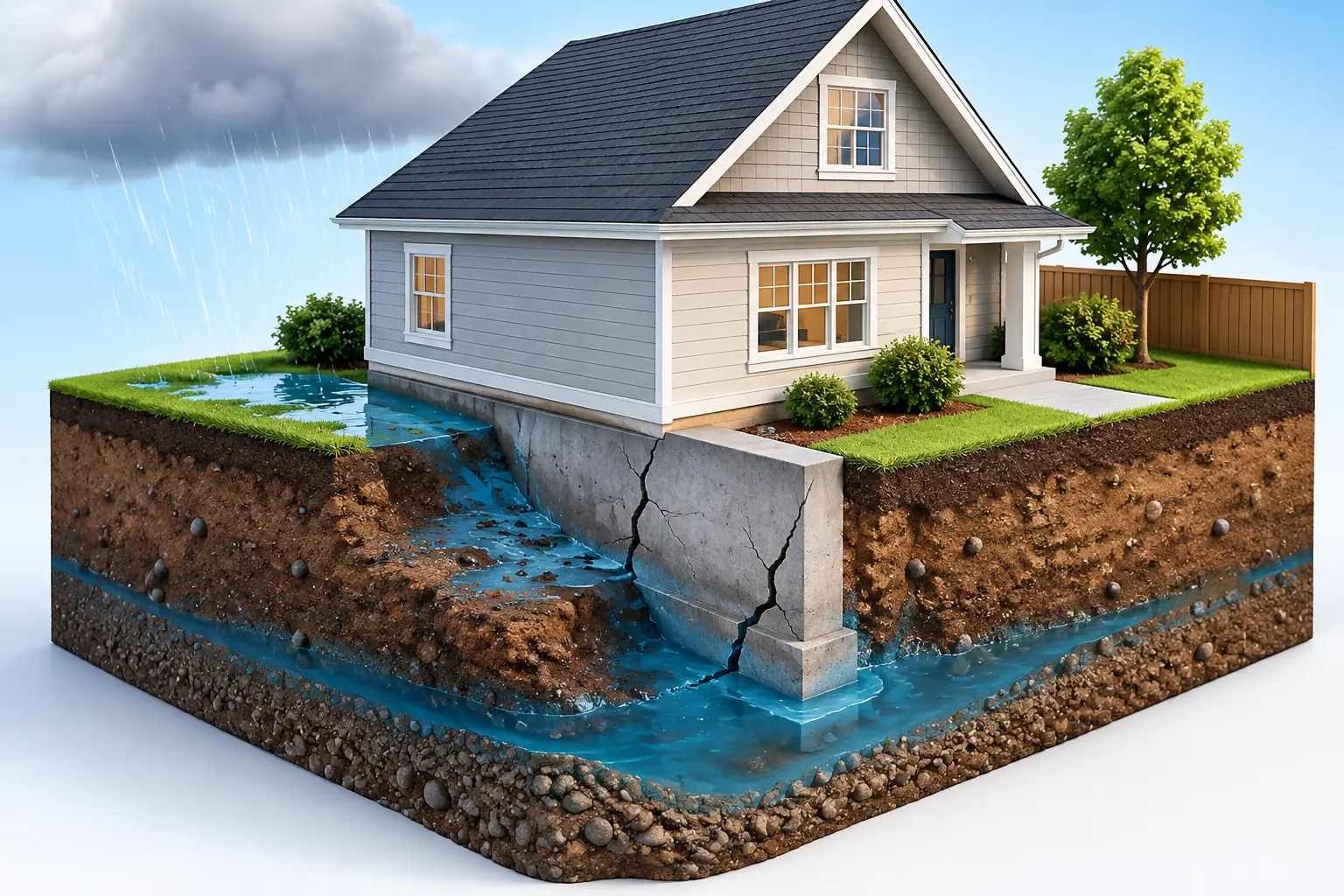
Foundation settlement occurs when soil beneath a home shifts, compresses, dries out, or becomes saturated. A section of the foundation can move downward or unevenly, putting stress on the framing above. In crawlspace homes, weakened beams, damaged joists, or support problems can also allow floors to sag and alter the shape of nearby door openings.
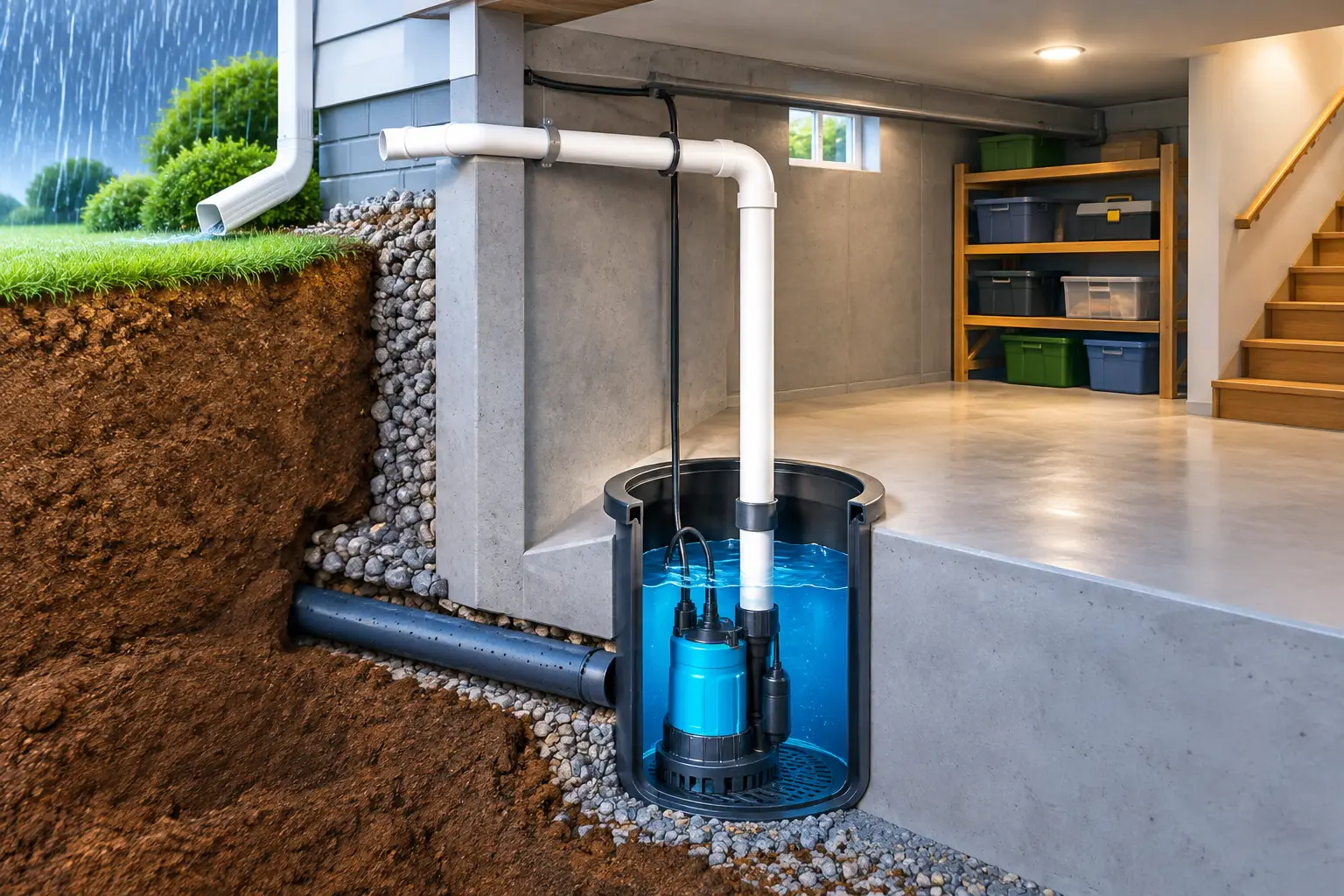
Water is often part of the larger picture. Poor drainage around the foundation, plumbing leaks, recurring basement moisture, or damp crawlspace conditions can affect soils and wood framing. Over time, moisture may contribute to wood rot, reduced structural support, and floor movement that homeowners notice first as a sticking interior door.
Pay attention when sticking doors appear with other warning signs, including:
- Cracks extending from the corners of doors or windows
- Doors that swing open or closed on their own
- Sloping, bouncy, or sagging floors
- Gaps between trim and walls, floors, or ceilings
- New window problems, especially windows that are hard to open
- Standing water, musty odors, or visible moisture in a basement or crawlspace
Any one symptom may have a simple explanation. A pattern of symptoms is more meaningful. The concern rises when changes are new, worsening, concentrated in one area of the home, or following heavy rain, drought, or water damage.
Check the Pattern Before You Alter the Door
Before planing, sanding, or cutting a sticking door, take a few minutes to observe what has changed. Open and close the door slowly. Note where it rubs. Check whether the gap around the top and sides is even, and see whether the latch aligns with the strike plate.
Then step back and consider the rest of the house. Are other doors sticking? Is the floor near the door uneven? Are cracks appearing above the opening or along nearby walls? If the door is in an area over a crawlspace, inspect that space only if it is safe and accessible. Look for obvious dampness, damaged insulation, deteriorated wood, or standing water, but do not rely on a quick visual check as a structural diagnosis.
It can also help to note when the problem started. A door that sticks only after humid weather has a different pattern than one that became difficult to close after a long dry spell, a major storm, or the appearance of cracks in the drywall. Photos and simple notes can help establish whether movement is active.
Why Cutting the Door Is Not Always the Right Fix
Trimming a swollen door can be reasonable when humidity is clearly the cause and the door frame is stable. The trade-off is that a door trimmed during a wet season may develop an oversized gap when dry conditions return. More importantly, repeated trimming is not a solution if the opening itself is moving.
The same is true of cosmetic crack repairs. Caulk and paint can improve appearance, but they do not correct settlement, failing floor supports, or moisture conditions that continue to damage framing. A permanent repair begins with identifying why the door frame changed shape in the first place.
For homes with foundation movement, the appropriate solution depends on the specific cause, the affected area, soil conditions, drainage, and the home’s framing. For crawlspace-related concerns, stabilizing sagging floors and addressing moisture sources may be necessary together. Treating just one symptom can leave the underlying problem in place.
Know When to Request a Professional Inspection
Call for a professional evaluation when sticking doors are joined by cracks, sloped floors, recurring water intrusion, sagging framing, or noticeable changes that worsen over time. This is particularly important in older homes and homes with basements or crawlspaces, where hidden moisture and structural issues may develop out of sight.
A thorough inspection should distinguish between a simple door adjustment and a condition that needs structural or moisture-control work. Homeowners deserve a clear explanation of what is happening, what is not happening, and whether repairs are actually necessary. Foundation Works provides honest, no-obligation inspections designed to identify the root cause before recommending a repair scope.
A sticking door is easy to dismiss until it becomes one more sign in a growing list. Watch the pattern, protect the home from moisture, and address meaningful changes early, while the options are usually simpler and the damage is easier to control.