
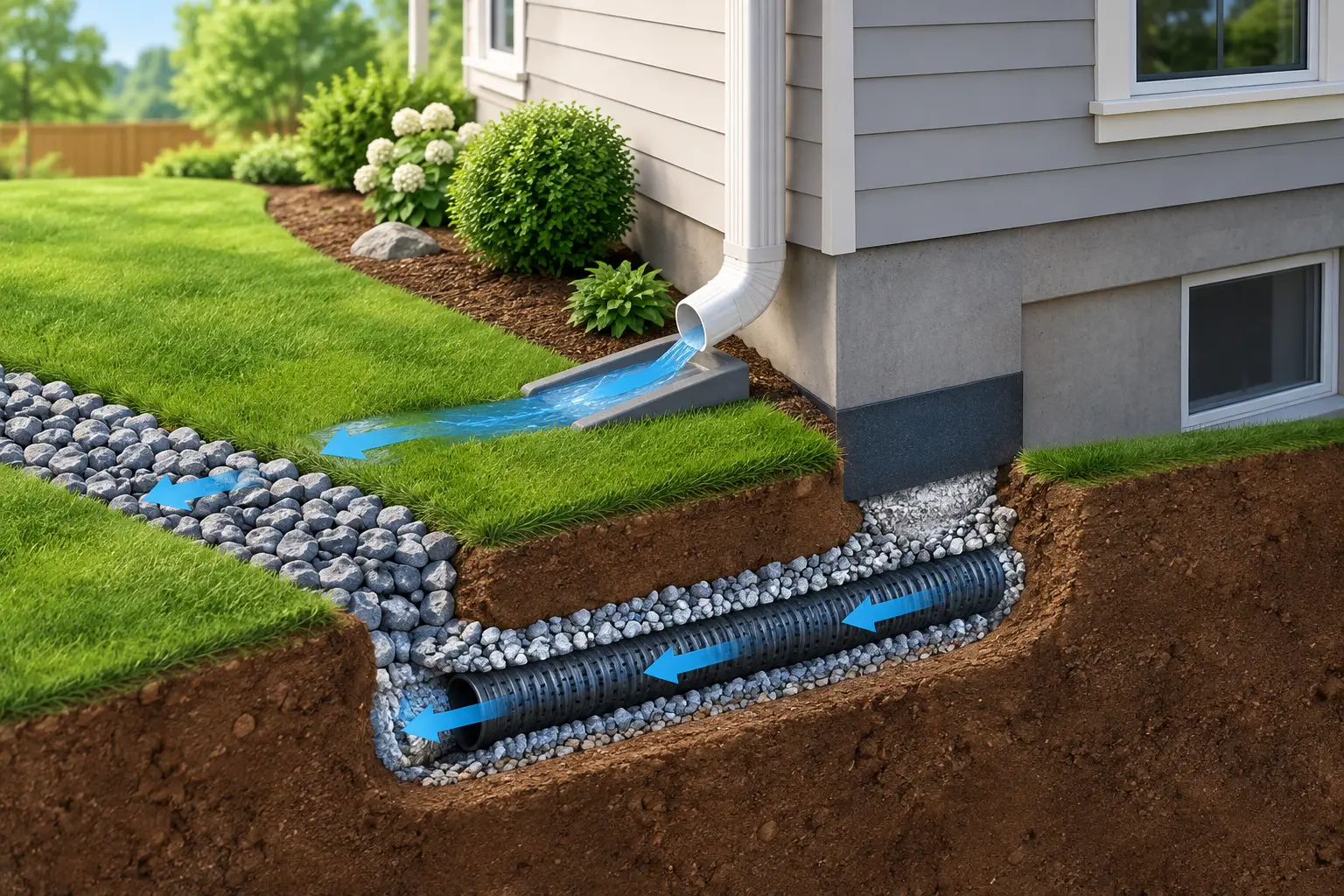
A heavy Virginia rain should leave water moving away from your home, not collecting beside the foundation, spilling over gutters, or finding its way into a basement or crawlspace. Knowing how to manage foundation runoff protects more than a dry floor. It helps protect the soil that supports your home, the condition of its framing, and the long-term value of the property.
Water is one of the most common causes of foundation and moisture problems. It can soften supporting soil, create hydrostatic pressure against basement walls, worsen existing cracks, and feed mold and wood rot below the home. The good news is that runoff problems are often visible and correctable when they are addressed at the source.
Start With the Warning Signs Around Your Foundation
You do not need to wait for a flooded basement to take runoff seriously. Walk the outside of your home during a steady rain, then return after the rain stops. Look for water that ponds within several feet of the foundation, soil that stays muddy long after surrounding areas dry, or mulch and soil washed away from flower beds.
Inside, warning signs can include damp basement walls, a musty crawlspace odor, white mineral residue on masonry, peeling paint, mold growth, or standing water. Sticking doors, widening cracks, and uneven floors may point to a structural issue that has been affected by ongoing moisture, although these symptoms can have more than one cause.
Pay attention to where the water begins. A roof discharge problem needs a different solution than a low yard, a failed drain line, or water entering through a foundation crack. Permanent fixes begin with an accurate diagnosis, not a tube of sealant applied to the first damp spot you find.
How to Manage Foundation Runoff at the Source
The most effective runoff plan controls water from the roof, the surface of the yard, and the soil immediately around the house. These parts work together. Improving only one can help, but water will still find the weakest path if another part of the system fails.
Keep gutters and downspouts working
Gutters should collect roof runoff without overflowing, pulling away from the fascia, or dumping water directly at a corner of the foundation. Clean leaves, twigs, and roof grit from gutters often enough to keep water moving freely. In wooded areas, that may mean more than one cleaning each year.
Check that downspouts are securely connected and discharge well away from the home. Water should continue downhill after it leaves the downspout, not run back along the foundation wall. Extensions can be useful when installed with enough slope and a clear outlet. Avoid directing discharge toward a neighbor’s property, a driveway that drains back toward the house, or a low area that simply creates a new pond.
If gutters overflow in one spot despite being clean, the issue may be gutter pitch, undersized capacity, a damaged section, or roof water that exceeds the system during intense storms. That is worth correcting rather than accepting repeated washout at the foundation.
Restore positive grading
The ground next to the home should slope away from it. This is called positive grading. When soil settles, mulch builds up, landscaping changes, or erosion removes fill, the slope can reverse and turn the foundation into the lowest point in the yard.
As a general rule, the soil should drop about 6 inches over the first 10 feet away from the house where site conditions allow. The exact approach depends on lot size, hardscaping, drainage routes, and local conditions. The objective is simple: surface water needs a path away from the foundation.
Use clean fill soil to correct low areas, then protect the surface with appropriate landscaping material. Do not pile soil high enough to cover siding, weep holes, vents, or other parts of the structure that need to remain exposed. Those shortcuts can create hidden moisture and pest problems.
Correct landscape features that trap water
Decorative edging, dense shrubs, raised beds, patios, and walkways can unintentionally form a basin around the house. A patio that has settled toward the foundation or a walkway with cracks and low spots can channel hundreds of gallons of rainwater toward one wall.
Look for landscape borders that block drainage and for planting beds that retain water against the home. Sometimes the correction is modest, such as reshaping a bed or changing a downspout outlet. In other cases, settled concrete, a low driveway edge, or a poorly designed landscape needs a more substantial drainage plan.
Use Drainage Systems When Grading Alone Is Not Enough
Some properties cannot move water away with surface grading alone. Tight lots, hillside homes, clay-heavy soil, and low-lying areas can all require a planned drainage system. The right solution depends on where the water is coming from and where it can safely go.
A surface drain can collect water that moves across a driveway, patio, or low section of the yard. A buried drainage line may carry roof water farther from the foundation. A properly designed French drain can intercept subsurface water before it reaches a vulnerable area. These systems need proper slope, suitable materials, and a dependable discharge point. A drain that ends too close to the house or empties into an already saturated area does not solve the real problem.
Basement and crawlspace water can also require interior moisture-control measures, particularly when exterior access is limited or groundwater pressure is significant. However, interior drainage should not be treated as a reason to ignore obvious exterior runoff. Reducing the amount of water reaching the foundation lowers the burden on every other system.
Protect the Soil Supporting Your Home
Runoff does more than create puddles. Repeated saturation can change the behavior of the soil around and beneath a foundation. In parts of Virginia and Maryland, clay soils may expand when wet and shrink as they dry. These cycles can contribute to movement, especially where moisture levels are uneven from one side of the home to the other.
Erosion creates a separate concern. Fast-moving water can wash away soil near footings, expose parts of the foundation, and leave voids beneath slabs, steps, or walkways. If you see gullies, exposed foundation material, sinking concrete, or soil disappearing after storms, do not simply cover the area and assume the issue is resolved. The runoff path must be corrected before soil is replaced.
Consistent moisture conditions around the foundation are generally better than repeated extremes. That does not mean watering the soil heavily. It means preventing concentrated roof runoff, fixing leaks promptly, and keeping surface drainage from saturating one area while another stays excessively dry.
Do Not Rely on Surface Sealers for Active Water Problems
A waterproof coating or crack sealer may be part of a repair plan, but it is rarely a complete answer when water continues to collect outside. Pressure from saturated soil can force water through cracks, joints, and porous masonry. Covering an interior stain without correcting drainage may hide the symptom temporarily while moisture continues to work behind the wall.
The same caution applies to foundation cracks. Small hairline cracks are not always structural emergencies, but cracks that widen, grow, leak, or appear with wall movement deserve a professional evaluation. Bowing basement walls, horizontal cracks, displaced masonry, or recurring water intrusion are not do-it-yourself drainage projects. They may require engineering-based structural repair alongside a runoff solution.
Build a Simple Seasonal Runoff Routine
Runoff management is ongoing home maintenance, especially before spring rains and after major storms. A quick inspection can catch problems before they become expensive repairs. Check the roofline for gutter overflow, walk the perimeter for settled soil and erosion, and look inside the basement or crawlspace for new dampness or odors.
After a major rainfall, take photos of pooling water and note how long it remains. Those details are useful if a drainage or foundation professional needs to assess the property. They also help distinguish a one-time storm event from a recurring pattern.
Avoid waiting for visible damage to become severe. Water issues tend to compound: wet soil adds pressure, pressure exploits weak points, and moisture encourages deterioration in areas you may not see every day.
When to Schedule a Foundation Inspection
Call for a professional assessment when runoff is persistent, water enters the basement or crawlspace, grading repeatedly washes away, or you see cracks and movement alongside moisture problems. A thorough inspection should identify whether the primary issue is roof runoff, surface drainage, groundwater, a foundation defect, or a combination of causes.
Foundation Works provides honest, no-pressure evaluations for homeowners who need clarity on water intrusion and structural concerns. The goal is not to sell a one-size-fits-all fix. It is to identify the source of the water and recommend a repair scope that protects the home for the long term.
A dry path around your foundation after the next storm is more than a convenience. It is one of the clearest signs that your home is being protected where it matters most.

