
A wet basement floor is not just a cleanup problem. When water collects beside or beneath your home, it can increase soil pressure against foundation walls, worsen cracks, create mold conditions, and damage finishes or stored belongings. Proper sump pump installation gives groundwater and stormwater a controlled path out of the lowest part of your basement or crawlspace before it becomes a bigger foundation and moisture problem.
For homeowners in Virginia and Maryland, this matters because heavy rain, dense soils, aging drainage systems, and seasonal groundwater changes can all send water toward the foundation. A sump pump can be an essential part of a long-term waterproofing plan, but only when the system is sized, placed, and discharged correctly.
When Sump Pump Installation Is Necessary
A sump pump is designed to remove water that reaches a collection basin, called a sump pit, below the basement or crawlspace floor. It is not meant to cover up every source of moisture. The first question is always why water is reaching that area in the first place.
Standing water after rain is a clear warning sign, but the need for a pump is not always that obvious. You may notice a damp line along the basement wall, a musty odor that returns after storms, white mineral deposits on concrete, peeling paint, or carpet that feels damp near an exterior wall. In a crawlspace, wet soil, rusting metal components, wood rot, or sagging floor framing may point to ongoing moisture exposure.
Some homes need a sump pump because the water table rises near the foundation. Others need one because exterior grading directs runoff toward the house, footing drains are overwhelmed, or water finds its way through cracks and joints during severe weather. If the underlying drainage issue is ignored, a pump may run more often than it should and still leave important problems unresolved.
That is why an inspection should look beyond the puddle. The goal is to determine whether water is coming through the walls, up through the floor, collecting at the footing, or entering from an exterior drainage failure. The right repair plan may include a sump pump, interior drainage, foundation waterproofing measures, or corrections that reduce the amount of water reaching the home in the first place.
What a Proper Sump Pump System Includes
A reliable system is more than a pump dropped into a hole. Every component has a job, and weak details can lead to overflow, short cycling, or water returning to the foundation.
The sump pit and drainage path
The pit must be deep and wide enough for the pump to operate without constantly switching on and off. It should be set at the low point where water naturally collects. In many basement waterproofing systems, interior drainage channels direct water from the perimeter of the foundation into this pit.
The basin should also have a secure cover. A covered pit helps keep debris out of the pump, limits humidity, and reduces safety concerns in a finished or frequently used basement.
The pump, float, and check valve
The pump must have enough capacity for the property’s expected water volume. Bigger is not automatically better. An oversized unit may cycle too frequently, while an undersized unit may not keep up during a hard rain. The correct choice depends on the drainage design, vertical lift, discharge distance, and how quickly water enters the pit.
A float switch tells the pump when to turn on and off. This simple component is one of the most common points of failure, so it must move freely and be tested after installation. A check valve on the discharge line prevents pumped water from flowing backward into the pit when the unit shuts off.
A safe discharge location
Water has to leave the house and stay away from it. A discharge line that ends too close to the foundation can send the same water back into the soil beside the basement wall. In freezing weather, an improperly installed line can also freeze, block flow, and leave the pump with nowhere to send water.
The discharge route should move water to an appropriate location where it drains away from the home without creating erosion, flooding a neighboring property, or violating local requirements. This part of the job deserves as much attention as the pump itself.
Reliable power and alarm protection
A sump pump needs dependable power. The outlet should be properly configured for the equipment, and the cord should not be routed through an unsafe extension connection. Because outages often happen during major storms, homeowners should also discuss backup and alarm options based on their risk level and how quickly they can respond to a failure.
A high-water alarm can provide early notice when water rises unexpectedly. That warning can make the difference between a service call and a flooded basement.
Why Installation Details Protect the Foundation
Water pressure outside a basement wall is not static. Saturated soil becomes heavier, and water can build pressure against concrete and block walls. Over time, that pressure may contribute to inward wall movement, leaking cracks, or deterioration at joints and penetrations.
A sump pump reduces the amount of water collecting beneath and around the foundation from the inside drainage system. It does not repair structural damage already present, and it cannot stop a wall from moving if hydrostatic pressure, poor exterior drainage, or soil conditions are left unaddressed. However, it can be a critical part of reducing the moisture conditions that allow damage to progress.
This distinction matters. A homeowner may be tempted to replace an old pump after a flood and consider the problem solved. If the basement wall has horizontal cracks, bowing, repeated seepage, or signs of settlement, the property needs a closer evaluation. Permanent repairs begin with identifying the root cause, not treating one visible symptom.
Common Sump Pump Installation Mistakes
The most expensive mistakes are often hidden until the next major storm. A pump can appear to work during a quick test but fail under real water volume if the pit is too small, the float catches on the basin, or the discharge line is restricted.
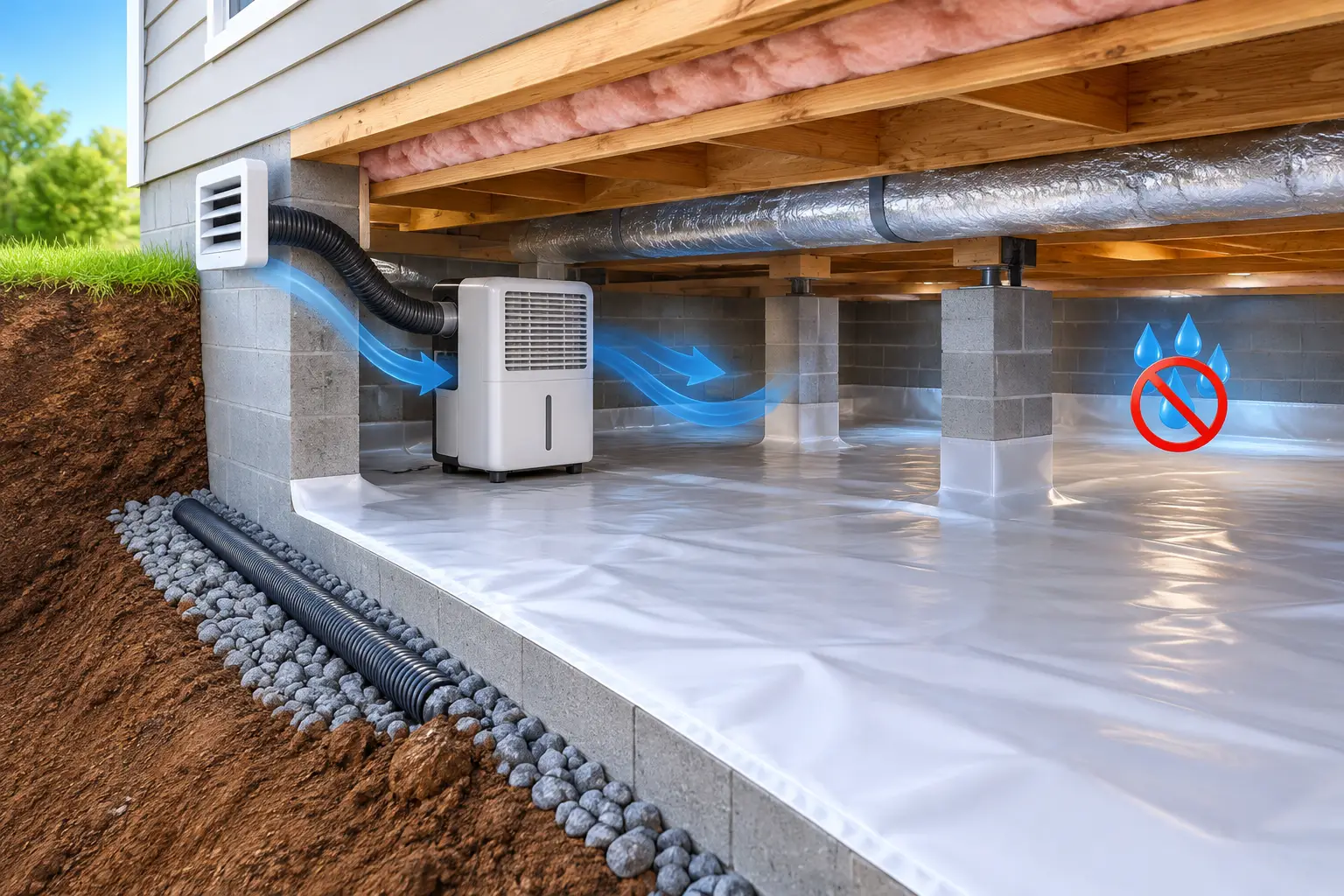
Other common problems include routing discharge water directly beside the home, connecting a drainage system without confirming where water is entering, and allowing sediment to build up inside the pit. In crawlspaces, a pump system may also be less effective if exposed soil and uncontrolled humidity continue feeding moisture into the area.
DIY work can be appropriate for basic maintenance, such as cleaning debris from a pit or testing a unit according to the manufacturer’s instructions. Installation is different. It involves drainage behavior, electrical safety, discharge planning, and the condition of the foundation itself. If water intrusion is recurring, professional diagnosis is the safer investment.
How to Maintain a Sump Pump After Installation
A sump pump is easy to forget when it is doing its job, which is exactly why routine checks matter. Test the system before the wet season and after any major work around the basement or crawlspace. Slowly pour water into the pit until the float activates, then confirm that the pump turns on, water leaves through the discharge line, and the unit shuts off normally.
Keep the pit clear of loose debris, inspect the discharge outlet for blockage, and make sure water still drains away from the foundation. If the pump runs continuously, makes unusual noises, fails to turn on, or cycles on and off every few seconds, do not wait for the next storm. Those are signs that the system needs attention.
It is also wise to check the basement or crawlspace after heavy rain. New damp spots, wall seepage, or water entering outside the sump area may mean the drainage plan needs to be reassessed.
Get the Right Solution for the Water Problem
Sump pump installation should fit the home, the water source, and the condition of the foundation. Foundation Works evaluates moisture and drainage concerns with the full structure in mind, so homeowners can distinguish between a straightforward pump need and a larger problem involving water intrusion, foundation movement, or deteriorating crawlspace materials.
If your pump is failing, your basement takes on water during storms, or you see early signs of moisture damage, a no-obligation inspection can provide clear answers. Acting before the next heavy rain gives you more options and helps protect the home you have worked hard to maintain.