
A floor that feels soft underfoot, dips toward the center of a room, or suddenly makes furniture sit unevenly is more than an inconvenience. It can be a sign that critical framing below the home is no longer carrying its load safely. Knowing when beam replacement is necessary helps homeowners act before a sagging-floor problem turns into wider structural damage.
In homes with crawlspaces or basements, beams support floor joists, walls, appliances, furniture, and the people living above. When a beam weakens, cracks, rots, or shifts, the damage rarely stays limited to one area. Floors may slope, doors may stick, drywall may crack, and nearby joists may begin to fail under loads they were not meant to carry alone.
When Is Beam Replacement Necessary?
Beam replacement is necessary when the beam has lost enough structural capacity that it cannot be safely restored with support, reinforcement, or localized repair. That decision should be based on the beam’s condition, the cause of the damage, the amount of deflection, and whether related framing has also been affected.
Not every sagging floor means the entire beam must be removed. In some cases, a beam remains sound but lacks adequate support because a column has settled, a footing is undersized, or an adjustable support has shifted. A properly designed permanent support system may correct the issue without full replacement. In other cases, installing new supports under a severely deteriorated beam only transfers stress to damaged wood and delays the real repair.
The difference matters. Replacing a beam that can be safely reinforced can add unnecessary cost. Leaving a failing beam in place can put the home at risk. A professional structural inspection identifies the practical, permanent path forward.
Warning signs below and above the floor
Homeowners often notice symptoms upstairs first, even though the source is in the crawlspace or basement. Watch for these signs, especially if they are worsening:
- Floors that sag, slope, bounce, or feel uneven from room to room
- Cracks in drywall, particularly above door frames or where walls meet ceilings
- Interior doors that stick, swing open on their own, or no longer latch properly
- Gaps between baseboards and floors, or between cabinets and walls
- Visible cracking, splitting, rot, insect damage, or heavy bowing in the beam itself
- Temporary posts, stacked blocks, or makeshift shims placed beneath framing
One symptom alone does not confirm beam failure. Homes naturally settle over time, and minor cosmetic cracks can have unrelated causes. But several signs occurring together, particularly with visible beam damage or moisture in the crawlspace, deserve prompt attention.
Why Beams Fail in Virginia and Maryland Homes
Wood framing is durable when it stays dry, properly supported, and protected from pests. Most beam failures begin when one of those conditions changes. The visible sag is the result, not the root cause.
Moisture and wood rot
Crawlspace humidity, standing water, plumbing leaks, and poor exterior drainage can expose beams to moisture for months or years. Once wood stays damp, fungal decay can break down its fibers. The beam may look intact from a distance but become soft, flaky, darkened, or crumbly when examined closely.
Moisture also creates conditions that attract wood-destroying insects. If rot or insect damage is present, replacing the beam without correcting water entry, drainage, or crawlspace moisture can lead to the same failure again. Permanent structural work must include a plan to keep the repaired framing dry.
Inadequate supports or settling footings
A beam may be in reasonable condition but sag because its supporting columns are too far apart, poorly installed, or resting on inadequate footings. Soil movement and settlement can allow a footing to sink, leaving the beam unsupported at a critical point. In older homes, temporary supports or undersized posts are sometimes found where permanent structural support should have been installed.
This is why a repair plan should examine what is below the beam, not just the beam itself. A new beam on unstable footings is not a permanent fix.
Overloading and framing changes
Renovations can change how loads travel through a home. Removing a wall, adding heavy finishes, or altering framing without proper support may place more weight on an existing beam than it was designed to carry. Long spans can also deflect gradually over time, even without rot.
The appropriate correction may involve beam replacement, sistering or reinforcement, additional supports, or a combination of these measures. The right approach depends on the framing layout and the load the beam must carry.
What a Proper Beam Inspection Should Determine
A reliable diagnosis does more than confirm that a floor is sagging. It identifies why it is sagging and whether the structure can be repaired safely without replacement.
During an inspection, the framing should be evaluated for the beam’s size, span, species and condition where visible, amount of sag, support spacing, post condition, footing stability, joist connections, moisture exposure, and signs of rot or insect damage. The inspector should also look at the rooms above for patterns that show where loads are moving or where framing has dropped.
Access can be a challenge in tight or damp crawlspaces, but that does not make the issue less serious. Limited visibility is a reason for a careful evaluation, not a reason to guess. Homeowners should be wary of anyone who recommends a full replacement based only on a quick look from a crawlspace entrance, or who proposes adding posts without addressing damaged wood and wet conditions.
What Beam Replacement Can Involve
When replacement is the right solution, the damaged beam is typically supported temporarily while the compromised section or full beam is removed and a properly sized replacement is installed. New permanent supports and footings may be added where needed to distribute the load safely. Damaged joists, rim framing, or subfloor areas may also need repair if deterioration has spread.
The goal is not simply to make the floor look level. It is to restore a dependable load path from the floor system down to stable support. In many cases, floors can be lifted gradually to reduce stress on drywall, finishes, and plumbing connections. However, not every floor should be forced perfectly level in a single step. Older homes may have long-standing settlement, and a thoughtful repair plan balances correction with the condition of surrounding materials.
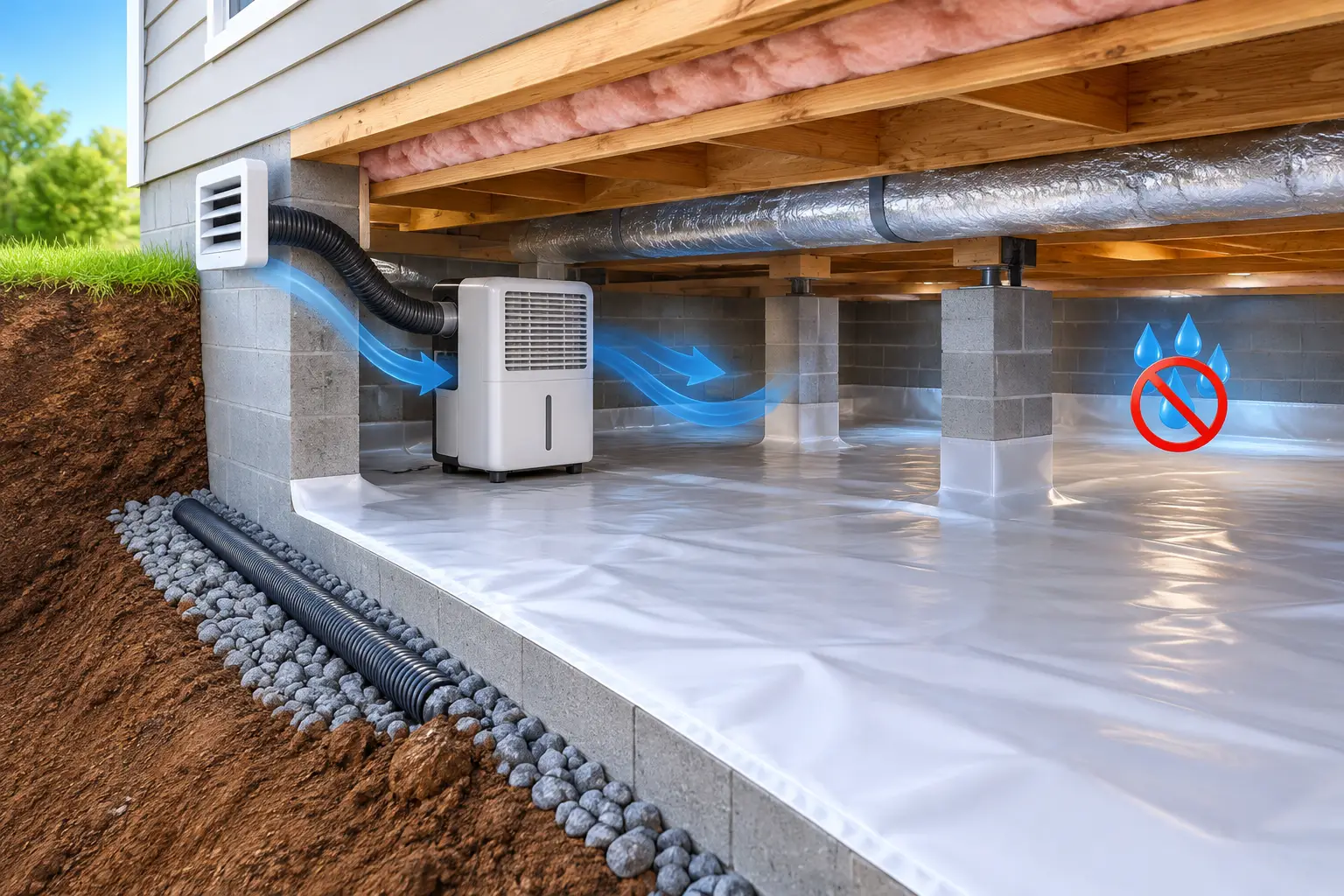
After structural work, the moisture source must be addressed. That may mean improving drainage around the foundation, controlling crawlspace humidity, repairing a leak, or correcting water intrusion. Structural restoration and moisture control work best together because dry framing is far more likely to stay sound.
Do Not Rely on Cosmetic Fixes
Filling drywall cracks, adding new flooring, or placing a jack under a low spot may hide symptoms without correcting the failure underneath. Temporary shims and improvised posts can be especially risky because they may concentrate heavy loads on weak soil or unstable masonry.
A sagging beam is also not a good do-it-yourself project. Structural loads are substantial, and lifting or removing support in the wrong sequence can damage framing or create a safety hazard. The cost of waiting can increase quickly when rot spreads to joists, subflooring, walls, and finished areas of the home.
Foundation Works provides honest, engineering-based evaluations for homeowners who are concerned about failing beams, sagging floors, and crawlspace moisture. The purpose of an inspection is not to sell the largest possible repair. It is to determine whether replacement, reinforcement, new supports, moisture correction, or a combined solution will protect the home for the long term.
If your floors are changing, your doors are sticking, or you can see damaged framing below the house, trust the warning sign. A timely professional inspection can replace uncertainty with a clear repair plan and help protect the home your family depends on.