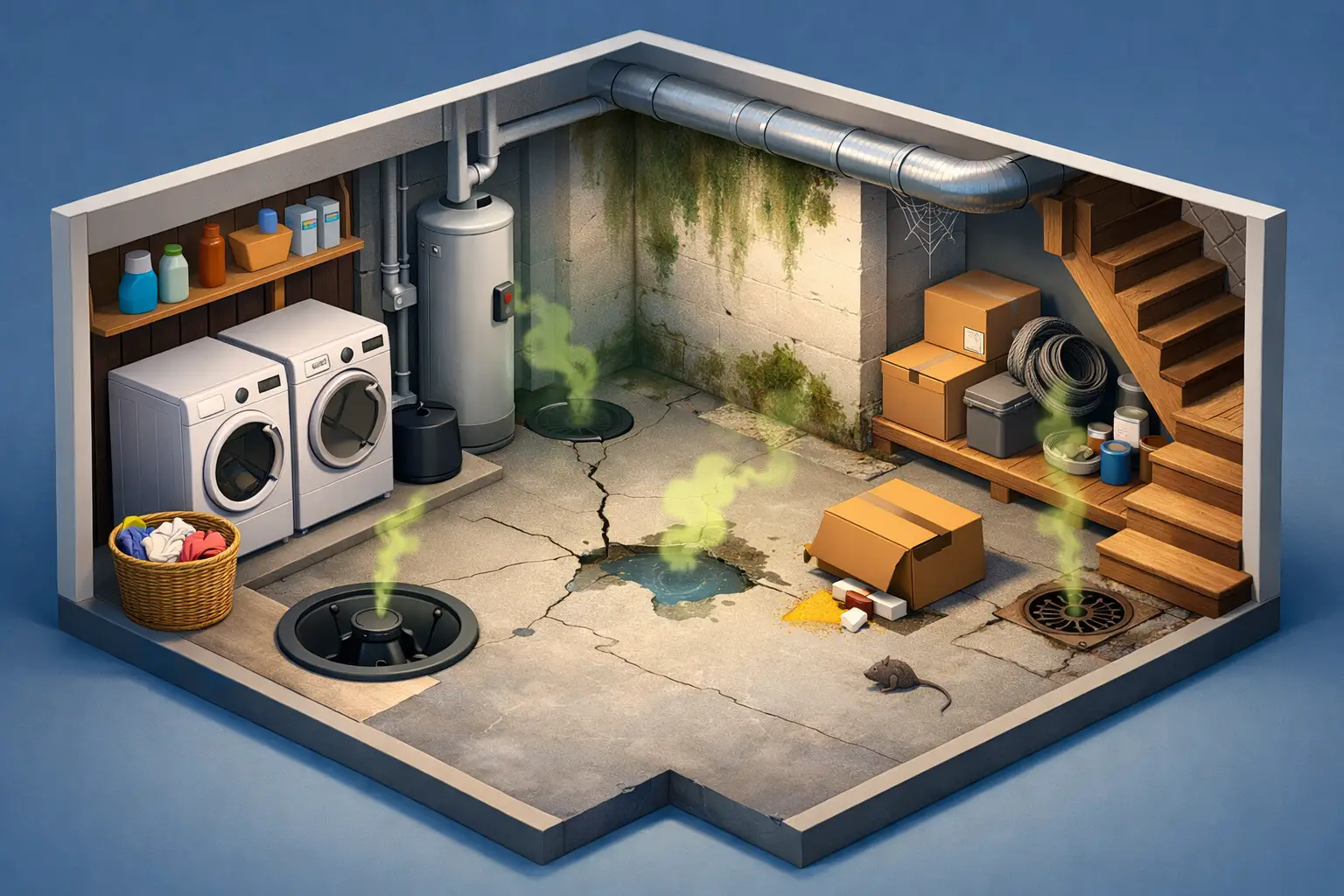
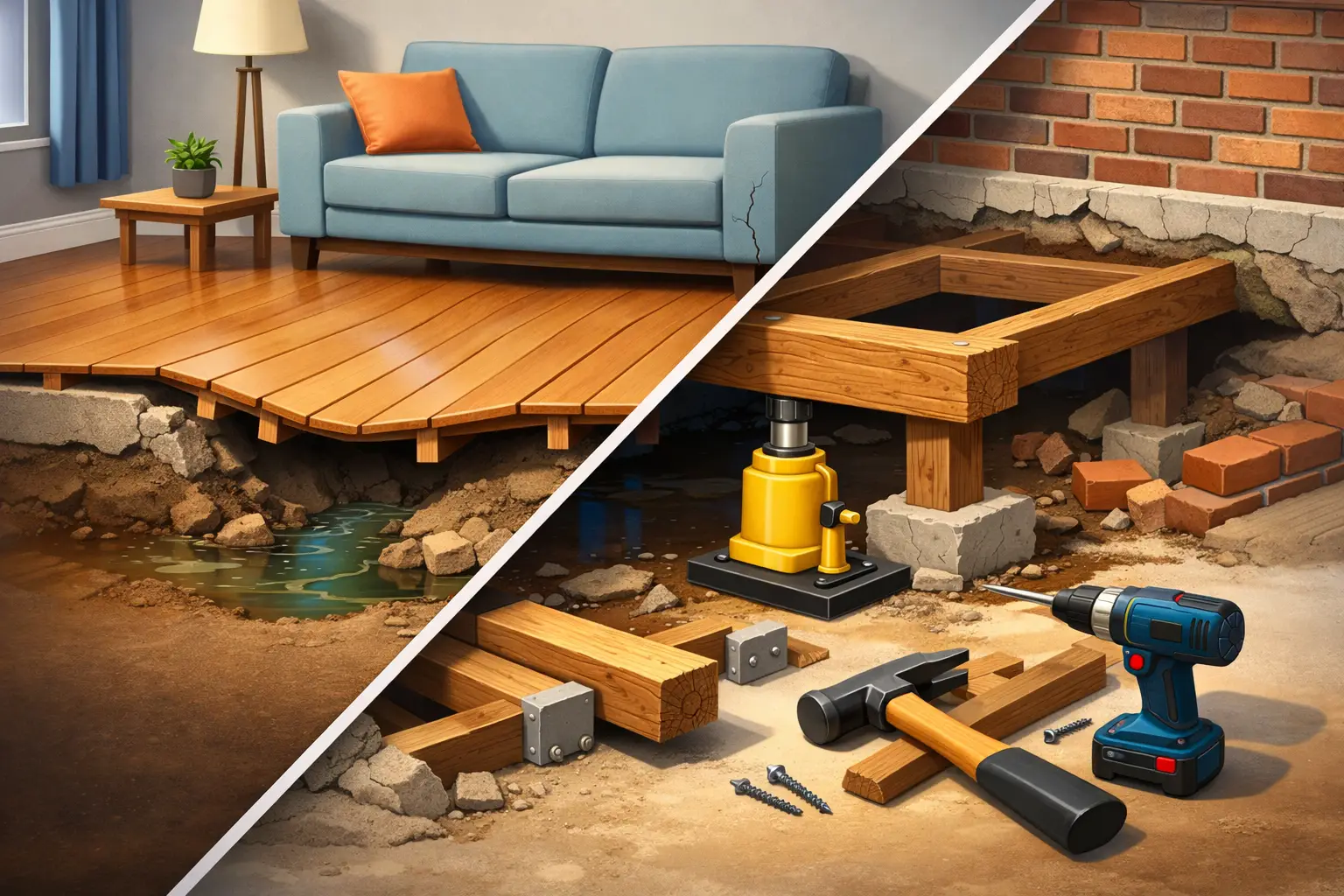
A floor that once felt level can slowly begin to dip, slope, bounce, or feel soft underfoot. If you are asking, “why are my floors sagging,” the answer is rarely just a flooring problem. Hardwood, tile, carpet, and vinyl may reveal the symptom, but the cause is usually below them: weakened joists, a failing support beam, excessive crawlspace moisture, foundation movement, or inadequate support beneath the home.
Sagging floors deserve prompt attention because structural damage tends to worsen when the underlying cause remains active. The good news is that a careful inspection can identify what is moving, why it is moving, and whether the issue requires repair now or monitoring over time.
Signs Your Floor Has a Structural Problem
Not every uneven floor means a major repair is needed. Older homes can have minor variations from original construction, settled framing, or natural wood movement. A concern becomes more serious when the floor’s condition is changing or when it appears alongside other warning signs.
You may notice a visible low spot in the middle of a room, furniture that rocks on a previously flat surface, or a floor that feels springy when people walk across it. Doors may start sticking, gaps can appear between baseboards and flooring, and interior walls may develop diagonal cracks near door or window corners. In a crawlspace or basement, you may see cracked or undersized support posts, bowed beams, split joists, rusted metal supports, or damp insulation hanging from the framing.
A sudden change is especially worth investigating. Floors do not usually sag overnight without a reason. A plumbing leak, stormwater intrusion, a broken support component, or soil movement can accelerate damage that had been developing quietly for years.
Why Are My Floors Sagging? The Most Common Causes
Excess moisture and wood rot
For homes with crawlspaces, moisture is one of the most common reasons floor systems weaken. Humid air, groundwater, poor exterior drainage, leaking pipes, and unsealed crawlspace vents can keep framing lumber damp for long periods. Wood absorbs moisture, loses strength, and becomes vulnerable to fungal decay. Termites and other wood-destroying insects are also more likely to thrive where moisture is present.
The rim joist, sill plate, main beam, and floor joists can all be affected. What begins as dampness may progress to soft, deteriorated wood that can no longer carry normal household loads. Covering the floor with new carpet or leveling compound will not solve this problem. The moisture source must be controlled, and damaged structural components may need repair or replacement.
Failing beams, joists, or support posts
Your floor framing works as a system. Joists span between supports, beams carry the joists, and posts transfer the load to footings and soil below. If any part of that chain is undersized, cracked, improperly installed, deteriorated, or missing adequate support, the floor above can deflect.
In older homes, original framing may not meet current loading expectations. Previous renovations can also create trouble. Removing a wall, adding heavy finishes, or installing large appliances without proper structural planning may overload framing that was never designed for the added weight.
Support posts are another frequent issue. A post resting directly on soil, a thin concrete slab, or an inadequate footing can sink over time. Once the post settles, the beam drops with it, and the floor above follows.
Foundation settlement or shifting soil
Sagging floors sometimes point to a foundation problem rather than a framing problem. Soil can compress, wash away, expand, or shrink depending on moisture conditions and soil type. If a footing settles, the supported portion of the home can drop and create sloping floors, wall cracks, and doors that no longer close correctly.
This is why diagnosis matters. Adding a new post under a low beam may temporarily lift the floor, but it will not be a permanent fix if the footing beneath that post is continuing to sink. Foundation settlement may require stabilization before floor framing can be safely restored.
Poor drainage around the home
Rainwater should move away from your foundation, not collect beside it. Clogged gutters, short downspouts, negative grading, and failing drainage systems can saturate soil near the home. That water can enter a basement or crawlspace, contribute to wood rot, and change the soil conditions supporting the foundation.
In Northern Virginia, Maryland, and Washington, DC-area homes, seasonal rain, clay-heavy soils, and aging drainage systems can create a damaging cycle. Wet soil expands, dry soil contracts, and repeated movement places stress on the structure. Addressing drainage is often part of protecting a floor repair for the long term.
Plumbing leaks and hidden water damage
A slow leak beneath a kitchen, bathroom, laundry room, or water line can cause a localized sagging area. Because the leak may be hidden inside a wall or beneath the subfloor, homeowners sometimes first notice a soft spot, loose tile, cupped hardwood, or a musty odor.
This kind of damage can be limited if found early. If it has been active for a long time, however, the subfloor, joists, insulation, and nearby support framing may all need attention. The plumbing repair stops the water, but structural restoration addresses what the water has already damaged.
Why Floor Leveling Alone Is Not Always the Answer
It is understandable to want the fastest visible solution. Self-leveling products, shims, new flooring, or a cosmetic patch may improve appearance in limited situations. But a floor that is actively sagging needs a structural answer, not a surface disguise.
For example, leveling a floor over rotted joists adds material on top of a weakened system. Raising a beam without correcting a sinking footing can shift the problem downward. Sealing a crawlspace wall without managing groundwater or humidity may leave the framing exposed to continued moisture.
A permanent repair plan starts by separating the symptom from the cause. Is the floor low because wood framing has deteriorated? Is a beam dropping because a post lacks a proper footing? Is the foundation settling? Or is water creating several connected problems at once? The right repair depends on those answers.
What a Professional Inspection Should Evaluate
A thorough structural inspection should look beyond the room where the floor feels uneven. The inspector should examine accessible crawlspace or basement framing, including joists, beams, posts, sill plates, and connections. They should also check for signs of water entry, wood rot, insect damage, inadequate supports, drainage concerns, and foundation movement.
Measurements are useful because they establish the degree and location of deflection. A floor that is slightly out of level but stable may call for a different approach than one that is continuing to drop. Honest recommendations should explain whether the condition is cosmetic, repairable through supplemental support, or tied to a larger foundation or moisture issue.
Depending on the findings, repairs may include installing properly sized support posts on engineered footings, reinforcing or replacing damaged beams and joists, repairing rotten sill plates, stabilizing settling foundation areas, or improving crawlspace drainage and moisture control. Crawlspace encapsulation, dehumidification, and waterproofing can be essential when damp conditions are driving wood deterioration.
Can Sagging Floors Be Repaired?
In many cases, yes. The repair can range from relatively straightforward support upgrades to more involved structural restoration. The condition of the wood, the extent of settlement, access beneath the home, and whether moisture is ongoing all affect the scope.
There is also a practical trade-off to consider when lifting a floor. Bringing a significantly sagged floor back to level too quickly can stress finishes above it, including drywall, trim, tile, and plumbing connections. A qualified contractor may recommend controlled lifting, targeted reinforcement, or stabilization first, based on what the structure can safely tolerate.
The goal is not simply to make a floor look flat for a short time. It is to restore reliable support, stop the conditions causing damage, and protect the home’s value. That is the difference between a cosmetic correction and a lasting structural repair.
When to Schedule an Inspection
Schedule an inspection soon if the sagging is getting worse, the floor feels soft or bouncy, you see cracks in walls or ceilings, or you find dampness, mold, standing water, or deteriorated wood in the crawlspace or basement. Do not wait for a low spot to become a major failure.
Foundation Works provides no-obligation inspections for homeowners who need clear answers about sagging floors, moisture damage, and structural concerns. A professional evaluation can tell you whether your floor needs immediate repair, moisture control, additional support, or simply a watchful eye. Acting while the problem is still manageable gives you more repair options and helps protect the home your family depends on.