That damp, stale odor is more than an annoyance when you walk downstairs. If you are asking, “why does my basement smell,” your home may be signaling a moisture, drainage, or structural condition that deserves attention. Air fresheners can cover the odor for a day, but they cannot correct the conditions creating it.
A basement should not smell earthy, musty, sour, or sewage-like. Some causes are minor and easy to correct. Others point to water entering around the foundation, excess humidity, decaying building materials, or plumbing problems. The right solution starts with identifying the source instead of treating the smell alone.
Why Does My Basement Smell Musty?
Musty odors most often come from moisture. Basements sit below grade, surrounded by soil that can hold water after rain, snowmelt, or seasonal changes. When moisture finds its way through cracks, joints, window wells, or porous foundation walls, it raises indoor humidity and creates the conditions that produce that familiar basement smell.
Even a basement with no visible standing water can have a moisture problem. Water vapor can pass through concrete, humid outdoor air can enter through gaps, and damp soil along the foundation can keep walls and floors cool and wet. Over time, cardboard, carpet backing, wood framing, insulation, and stored belongings can absorb that moisture and begin to smell.
Mold and mildew are common contributors. They may grow behind finished walls, beneath flooring, inside damp insulation, or on stored items where they are not immediately visible. A musty smell does not prove there is widespread mold growth, but it is a reason to investigate rather than assume the odor is harmless.
Common Sources of Basement Odors
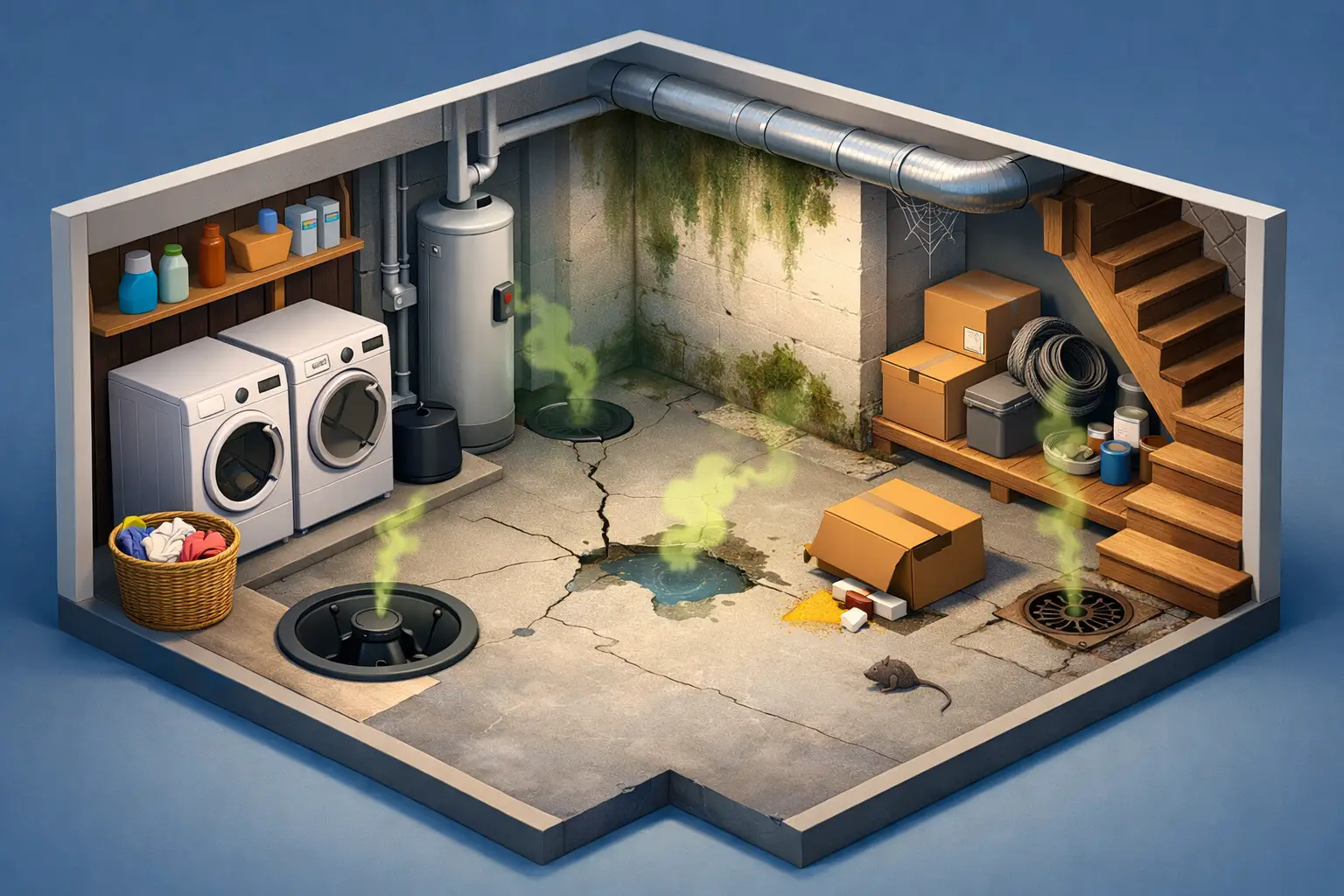
The character of the odor can offer a useful clue. A damp, earthy smell usually points toward moisture. A sharp sewage smell may indicate a plumbing or drain issue. A chemical or fuel-like odor requires faster attention, particularly if your basement contains mechanical equipment.
Water intrusion around the foundation
Rainwater should move away from your home, not collect beside it. Clogged gutters, short downspouts, poor grading, damaged drain systems, and overflowing window wells can send water directly toward basement walls. That repeated exposure can lead to leaks, damp concrete, efflorescence, peeling finishes, and persistent odors.
In Virginia and Maryland, heavy storms and changing seasonal conditions can make drainage weaknesses harder to ignore. You may notice the odor becomes stronger after rain or during humid summer weather. That pattern is a strong sign that water management outside the home needs to be evaluated.
High humidity and condensation
Warm, humid air meeting cool basement walls or pipes creates condensation. It can leave surfaces damp without a major leak ever appearing. If windows sweat, pipes drip, or stored belongings feel clammy, excess humidity may be feeding the odor.
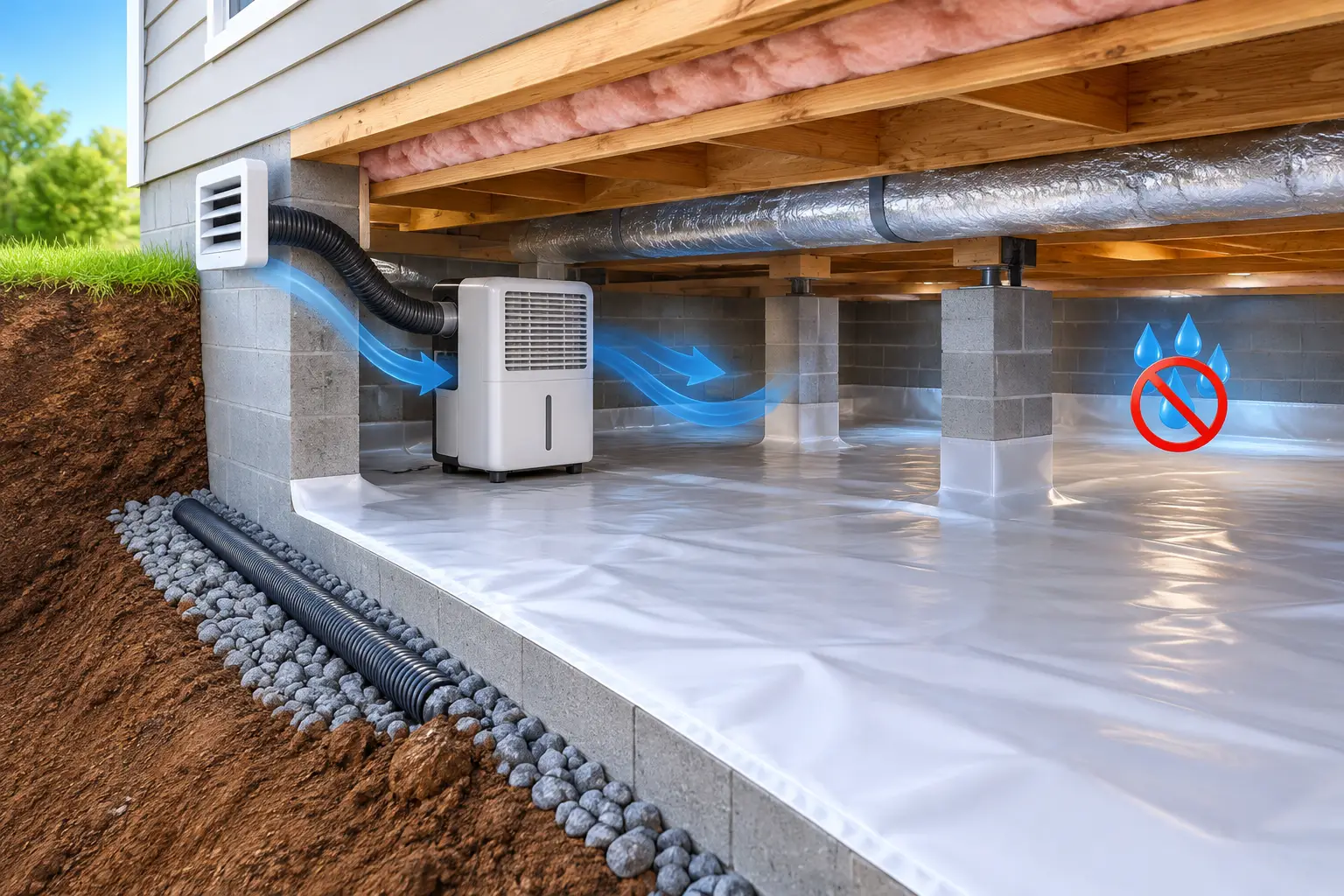
A dehumidifier can help control indoor moisture, especially during humid months. But it is not always a permanent answer. If it fills rapidly, runs constantly, or the smell returns when it is off, there may be ongoing moisture entering through the foundation or from poor exterior drainage.
Damp or damaged materials
Basement finishes can hide a problem for months or years. Drywall, carpet, wood trim, insulation, and paneling can retain moisture after a small leak or flood. Wood floor joists and beams above the basement may also absorb moisture, leading to wood rot and a stronger earthy odor.
Look for soft trim, stained drywall, bubbling paint, warped flooring, rust on metal fixtures, or white powdery deposits on masonry. These signs help distinguish a one-time humidity issue from a condition that is affecting the home itself.
Floor drains, plumbing, and sewer gases
If the odor resembles sewage, rotten eggs, or stale drain water, check rarely used floor drains first. The water in a drain trap can evaporate, allowing sewer gases to enter the basement. Carefully adding water to an infrequently used drain may restore the trap seal.
If the smell persists, is strong near a bathroom, laundry area, or utility room, or is accompanied by slow drains or damp spots, it may be a plumbing concern. Do not assume every basement odor is a foundation issue. A proper diagnosis should rule out drainage and plumbing sources before repairs are recommended.
Stored items and organic debris
Wet cardboard, old rugs, fabric, paper, and firewood can hold moisture and create odors. Removing damaged belongings may improve the air quickly, but it should not be the end of the investigation. If replacement boxes or furnishings develop the same smell, the basement environment is still too damp.
When a Smell May Point to a Bigger Problem
Odor becomes more urgent when it appears with visible water, foundation cracks, bowing walls, flaking concrete, or floor and wall movement. Moisture and structural problems often overlap. Water pressure in the soil can place stress on basement walls while also forcing water through cracks and joints.
Pay attention if you see multiple warning signs, including:
- Water on the floor after rain or around the wall perimeter
- Cracks that widen, leak, or run horizontally across foundation walls
- Bowed, inward-moving, or deteriorating basement walls
- Sagging floors, soft spots, or wood rot above the basement
- A musty smell that returns despite cleaning and dehumidifying
These conditions do not automatically mean your foundation is failing. They do mean the home needs a closer look before moisture damage becomes more expensive to correct. Cosmetic sealing on the inside of a wall may hide staining, but it will not stop the external water pressure or drainage problem causing the leak.
What You Can Do Before Scheduling an Inspection
Start by making the odor easier to track. Remove wet cardboard, rugs, and other moisture-holding items. Check whether gutters are clear and whether downspouts release water well away from the foundation. After the next rain, inspect the basement walls, floor edges, window wells, and utility areas for dampness.
Keep the basement reasonably ventilated and use a dehumidifier if humidity is high. Store belongings in plastic bins rather than cardboard and keep them elevated off the floor. These steps can reduce immediate moisture exposure, but they should not replace repairs when water is entering the structure.
Avoid relying on fragrance products or repeated surface cleaning as a long-term solution. Strong cleaners may temporarily reduce odor on exposed surfaces, yet moisture can remain behind finished walls, under flooring, or within framing. The goal is not to make the basement smell better for the weekend. It is to keep it dry enough that odors and moisture damage do not return.
A Lasting Fix Starts With the Source
The best repair depends on where the water originates and how it travels. Some homes need improved exterior drainage. Others need basement waterproofing measures, crack repair, crawlspace moisture control, or structural reinforcement for walls affected by soil pressure. A careful inspection should identify the actual cause, explain the evidence, and separate necessary work from cosmetic concerns.
Foundation Works provides homeowners with engineering-based evaluations of basement moisture and foundation conditions, with recommendations built around permanent solutions rather than quick cover-ups. If the odor is paired with leaks, cracks, wall movement, or recurring dampness, a free inspection can provide clarity before the problem spreads.
Your basement does not need to be a place you avoid because of the smell. Treat the odor as an early warning, find the moisture source, and correct the condition that is allowing it to return.