
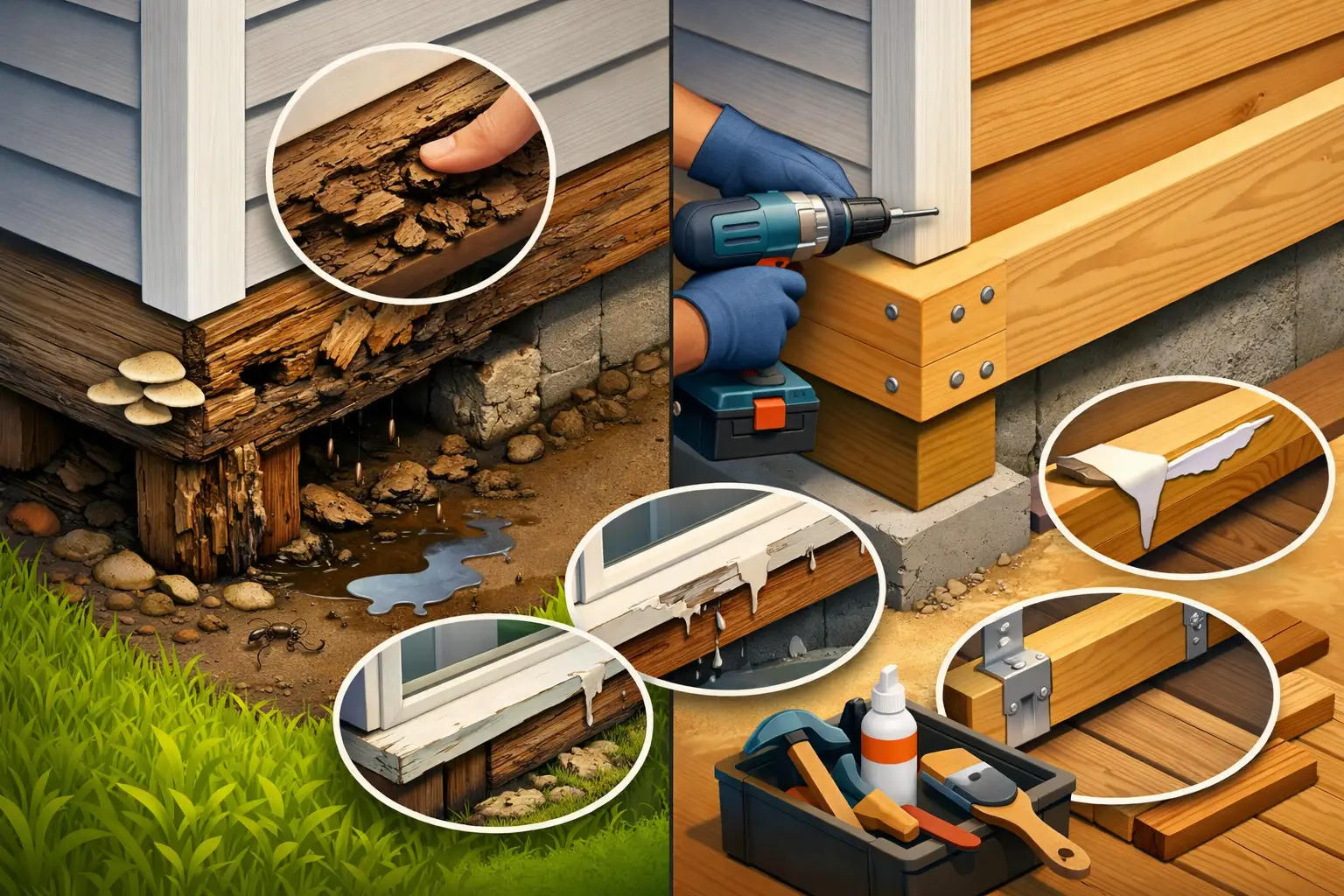
A floor that feels soft near an exterior wall, a musty crawlspace, or a porch beam with peeling paint can point to the same hidden problem: wood rot. It is not simply an appearance issue. When moisture-damaged framing begins to lose strength, it can affect the floors, walls, and foundation-supported structure above it.
For homeowners, the most costly part of wood rot is often what cannot be seen. The visible damage may be limited to a trim board or sill plate, while ongoing water intrusion is weakening floor joists, beams, or subflooring behind the scenes. The right repair starts by finding where the moisture is coming from – then correcting both the water problem and the damaged wood.
What Causes Wood Rot in a Home?
Wood rot develops when wood stays wet long enough for fungi to break down its fibers. Wood does not rot because it gets wet once during a heavy storm. It rots when repeated leaks, poor drainage, high humidity, or trapped moisture prevent it from drying.
Crawlspaces and basements are especially vulnerable because they are close to the soil and often have limited airflow. A leaking plumbing line, a damp foundation wall, standing water beneath the home, or humid outside air entering an unsealed crawlspace can all create the conditions rot needs.
Exterior areas are also common trouble spots. Missing flashing around a window, failed caulking, overflowing gutters, roof leaks, and soil piled too high against siding can direct water into structural wood. In older homes across Virginia and Maryland, years of minor moisture exposure can leave significant damage before a homeowner notices a clear symptom.
The key point is simple: replacing rotten wood without stopping the moisture source invites the same failure to return. A durable repair plan addresses water management, moisture control, and structural restoration together.
Warning Signs of Wood Rot
Some signs are easy to spot, while others show up as changes in how the home feels. A careful inspection is warranted if you notice several symptoms at once.
Soft, crumbly, darkened, or cracked wood is an obvious warning sign. Wood that flakes apart when pressed with a screwdriver has likely lost much of its structural capacity. Peeling paint, blistered finishes, or persistent staining on trim, porch posts, and fascia may also indicate water is getting behind the surface.
Inside the home, pay attention to floors that slope, bounce, or feel weak underfoot. Doors that suddenly stick, cracks above interior door frames, and gaps between flooring and baseboards can occur when floor framing has shifted or sagged. These symptoms can also be caused by foundation settlement, so they should be evaluated rather than assumed to be rot.
In a crawlspace or basement, a damp, earthy odor is often an early clue. You may see fungal growth, wet insulation, rusted metal components, or water marks on foundation walls. If exposed floor joists have dark staining, deep splits, or areas that appear compressed near a beam, professional evaluation should not wait.
Not every dark spot is active rot, and not every floor dip means structural failure. But wood that is visibly deteriorating or framing that is no longer carrying loads properly needs a clear diagnosis. Cosmetic repairs can hide the warning signs while the underlying damage continues.
Why Wood Rot Can Become a Structural Problem
Floor systems rely on connected components: joists span between supports, beams carry those joists, and posts transfer weight down to footings and soil. When moisture damages one component, the load does not disappear. It shifts to nearby wood and connections that may not be designed to carry the extra strain.
A rotten rim joist, for example, can weaken the outer edge of a floor system. Decayed joist ends near a damp foundation wall may reduce support where it is needed most. A failing beam or post in a crawlspace can contribute to sagging floors, drywall cracks, and doors that no longer operate normally.
There is also a safety and value concern. The longer moisture remains uncontrolled, the more extensive the repair scope can become. What begins as a localized section of deteriorated wood may eventually require replacement of multiple framing members, reinforcement of the floor system, and crawlspace moisture corrections.
That does not mean every case calls for major structural work. The scope depends on the location of the damage, the amount of sound wood remaining, the load carried by the affected member, and whether the water source is active. An honest inspection distinguishes surface deterioration from damage that requires structural repair.
How Permanent Wood Rot Repairs Work
A permanent repair is not a quick coat of sealant over damaged lumber. First, the affected area must be assessed to identify the extent of decay and determine whether nearby framing has been compromised. In crawlspaces, that includes examining beams, joists, sill plates, subflooring, posts, and connections.
Damaged structural wood is then repaired or replaced as appropriate for the load it carries. Depending on the condition of the floor system, repairs may include sistering or replacing weakened joists, installing properly supported beams, restoring damaged sill areas, or adding engineered support where the existing structure has lost capacity.
The next step is eliminating the moisture condition that allowed rot to develop. This can involve correcting drainage that sends water toward the foundation, addressing water intrusion, or controlling crawlspace humidity through encapsulation and related moisture-management measures. The correct solution depends on how water is entering and moving around the home.
For example, a crawlspace with high humidity but no standing water may need a different approach than one with recurring groundwater seepage. Likewise, a rotten exterior sill caused by missing flashing requires repair at the exterior water entry point. One-size-fits-all recommendations are not a substitute for diagnosis.
Foundation Works approaches wood rot as part of the home’s larger structural and moisture system. The goal is to restore reliable support and remove the conditions that threaten the repaired area, not simply cover the damage until the next inspection or home sale.
What Homeowners Should Do Before an Inspection
If you suspect wood rot, avoid probing deeply into a sagging floor or relying on a temporary patch as a long-term repair. Do not ignore standing water in a crawlspace, either. Continued moisture can accelerate damage and may affect more framing than is visible from the access opening.
You can make an inspection more productive by noting where and when you see moisture. Does water appear after heavy rain? Is a particular room’s floor soft or uneven? Are gutters overflowing near the affected area? Photos of visible staining, leaks, or floor gaps can help document changes over time.
It is also useful to clear safe access to the crawlspace or basement entrance. A professional can then inspect the framing, foundation walls, and moisture conditions directly. The findings should explain what is damaged, why it happened, and which repairs are necessary versus optional.
Do Not Let Hidden Moisture Decide the Repair Scope
Wood rot rarely improves on its own. Dry weather may make the symptoms less noticeable, but it does not restore wood fibers that have already decayed or correct a drainage and moisture problem beneath the home.
If you have noticed soft wood, musty odors, sagging floors, or recurring crawlspace dampness, schedule a free, no-obligation inspection. A clear evaluation can tell you whether you are dealing with a limited repair or an active structural moisture issue – and give you a practical path to protect your home before the damage spreads.

