
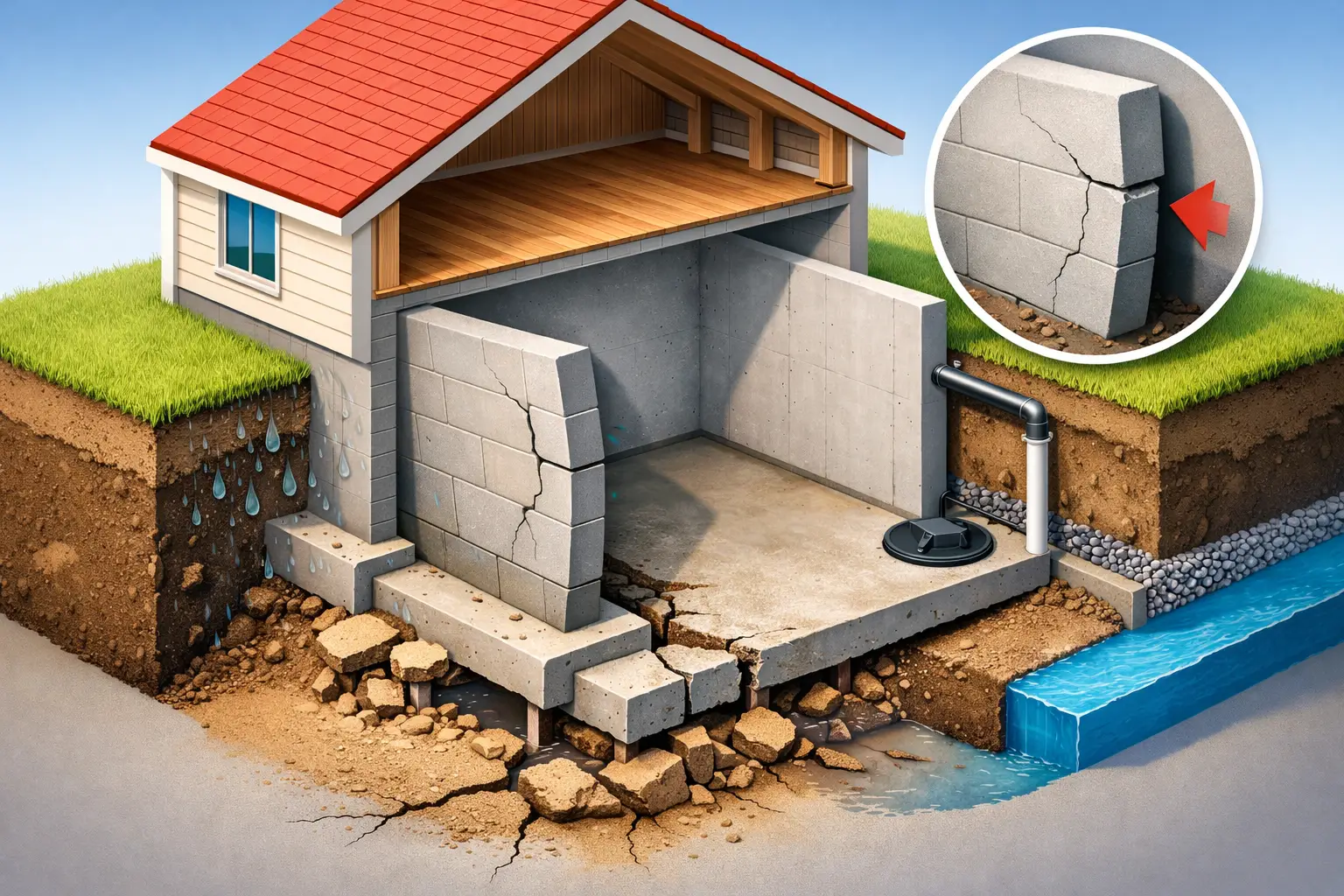
A basement wall rarely bows without a reason. If a wall is curving inward, leaning at the top, or developing long horizontal cracks, your home may be under pressure from the soil outside it. Bowing walls are a structural warning sign, not a cosmetic issue to cover with paint or paneling. The earlier the cause is identified, the more repair options you may have and the better protected your home, family, and investment will be.
Why Bowing Walls Happen
The ground around your foundation is not static. Rain, melting snow, poor drainage, and naturally wet soil can all increase pressure against basement walls. This force is called hydrostatic pressure. When water builds up in the soil, it pushes against the foundation with much more force than dry soil alone.
Clay-heavy soils, which are common in parts of Virginia and Maryland, can make the issue worse. Clay absorbs water, expands, and creates added lateral pressure against foundation walls. As the soil dries, it contracts. That repeated cycle can put stress on a basement wall season after season.
Water is not the only cause. Backfilled soil that was not properly compacted, heavy equipment near the foundation, sloping grades, clogged gutters, and undersized or failing drainage systems can all contribute. In some homes, the wall itself may have been built with materials or reinforcement that cannot withstand years of outside pressure.
The key question is not simply whether the wall has moved. It is why it moved and whether that movement is active. An engineering-based inspection looks at the wall, surrounding soil conditions, drainage patterns, cracks, floor framing, and other symptoms to identify the root cause before recommending a repair.
Warning Signs of Bowing Walls
Many homeowners first notice a crack and assume it is normal settling. Small vertical hairline cracks can sometimes be cosmetic, but horizontal cracks and inward movement deserve prompt attention. A bowing wall can worsen gradually for years, then move more quickly after a period of heavy rain or saturated soil.
Watch for these signs in your basement or crawlspace:
- Horizontal cracks running across concrete block, brick, or poured concrete walls
- Walls that curve inward at the middle or tilt inward near the top
- Stair-step cracking in block or brick foundation walls
- Cracks that widen over time, leak during rain, or show crumbling mortar
- Basement doors or windows that stick, shift, or no longer close properly
- Water stains, damp walls, standing water, or a musty odor near the affected area
A wall does not need to look dramatically curved to be a concern. Even a small amount of inward movement can indicate significant outside pressure. Measuring the extent of deflection and documenting cracks helps determine whether the problem is stable, progressing, or already severe.
Why Horizontal Cracks Are Different
Crack direction often offers an early clue about the forces affecting a foundation. Vertical cracks may result from shrinkage or minor settlement, although they should still be evaluated if they leak or widen. Horizontal cracks often point to pressure pushing laterally against the wall.
On concrete block walls, the crack may follow a mortar joint. On poured concrete walls, it may run through the concrete itself. Either way, a horizontal crack paired with inward movement should be treated as a structural issue until a qualified inspection shows otherwise.
What Can Happen If You Wait
Ignoring bowing walls can turn a manageable repair into a far more disruptive project. Continued soil pressure may widen cracks, allow water intrusion, loosen blocks, and weaken the wall’s ability to support the structure above it. In advanced cases, a wall can partially fail or require extensive rebuilding.
There are financial consequences as well. Visible foundation movement can complicate a future home sale, create concerns during inspections, and make buyers question the condition of the property. Addressing the issue with a permanent repair system and clear documentation can help protect long-term real estate value.
Waiting is not always a deliberate choice. Homeowners often hope a crack will stop changing or assume water is the only problem. But sealing a crack without relieving the pressure that caused it is a short-term measure at best. The wall needs support, and the water or drainage conditions around it need attention when they are part of the cause.
Repair Options for Bowing Walls
There is no one-size-fits-all repair for a bowed foundation wall. The right solution depends on the wall material, amount of movement, soil conditions, access around the home, and whether the wall is still structurally sound enough to stabilize. A professional assessment should distinguish between a wall that can be permanently reinforced and one that needs more extensive restoration.
Wall Anchors and Tieback Systems
Wall anchors or tieback systems can be an effective option when there is usable soil outside the foundation. These systems connect the basement wall to stable soil farther away from the home, counteracting the pressure pushing the wall inward. They are designed to permanently stabilize the wall and, in appropriate conditions, may allow gradual improvement in wall alignment.
This approach requires enough exterior space for installation. Properties with tight lot lines, patios, or obstacles may need a different solution.
Carbon Fiber Reinforcement
For walls with limited inward movement, carbon fiber reinforcement can provide a low-profile stabilization option. High-strength straps are bonded to the wall to help prevent additional movement. This can be especially useful where homeowners want to preserve usable basement space.
Carbon fiber is not the right answer for every bowed wall. It does not correct severe displacement, and it cannot solve ongoing drainage problems by itself. The wall and the conditions outside it must be evaluated together.
Structural Restoration and Drainage Corrections
When damage is advanced, structural restoration may be necessary to restore the wall’s integrity. This can involve repairing or rebuilding affected sections before a permanent stabilization system is installed. It is more involved than reinforcing an early-stage problem, which is one reason fast action matters.
Drainage corrections may also be part of the repair plan. Directing roof runoff away from the foundation, correcting grade issues, and managing groundwater can reduce the pressure that led to the problem. Permanent foundation repair should not ignore the moisture conditions surrounding the home.
What to Expect From a Professional Inspection
A trustworthy inspection should give you clarity, not pressure. The goal is to determine whether the wall is cosmetic, needs monitoring, or requires structural repair. That starts with examining crack patterns, measuring wall movement, reviewing water intrusion, and looking for related signs such as sagging floors, sticking doors, or exterior drainage issues.
You should receive a clear explanation of what is happening, what could happen if it is left untreated, and which repair approach fits your home. If the concern is minor, an honest contractor should say so. If the wall needs immediate attention, you deserve a repair scope that addresses the underlying forces rather than simply hiding the symptoms.
Foundation Works provides homeowners with free, no-obligation inspections and engineering-based solutions for structural and moisture problems. A proper diagnosis can help you avoid both unnecessary work and the cost of waiting too long.
When to Schedule an Inspection for Bowing Walls
Schedule an inspection promptly if you see a horizontal crack, inward wall movement, recurring basement leaks, or changes that appear to be getting worse. Do not wait for a wall to look dramatically bowed. Early stabilization is generally less invasive than addressing a severely compromised foundation wall.
If recent heavy rain has made cracks leak, caused water to enter the basement, or revealed new movement, treat that as a reason to act quickly. Take photos of the area, note when you first noticed the change, and avoid storing heavy items against the affected wall until it has been evaluated.
Your home should feel like a place of security, not a source of uncertainty every time it rains. A clear assessment now can give you a practical path forward and help keep a small warning sign from becoming a major structural repair.

