Water that appears along a basement wall after a hard rain is rarely a problem to ignore. It may start as a damp spot, a musty smell, or a small puddle near the wall-floor joint. Over time, repeated moisture can damage finishes, encourage mold growth, rot crawlspace framing, and add stress to the soil around your home. A properly designed french drain installation moves groundwater away from vulnerable areas before it becomes a larger waterproofing or foundation concern.
The right drainage solution depends on where the water is coming from, how it moves across the property, and how the home was built. A drain alone cannot correct every wet basement or crawlspace problem. But when groundwater, poor grading, or runoff is the source, it can be a critical part of a permanent moisture-control plan.
When French Drain Installation Makes Sense
A French drain is designed to collect water moving through the soil and direct it to a safe discharge point. It is most useful when water repeatedly collects near the foundation, saturates the soil after storms, or finds its way into a basement or crawlspace despite routine gutter maintenance.
Homeowners often notice the warning signs before they know the cause. These can include recurring water along basement walls, efflorescence – the chalky white mineral deposit left behind as moisture evaporates – damp insulation, a persistent crawlspace odor, or soft, muddy ground near the foundation. Water stains and peeling paint on lower walls can also point to a moisture problem, although they do not identify the source by themselves.
Drainage is especially important on properties where the yard slopes toward the home, downspouts release water too close to the foundation, or dense clay soils hold rainwater against the structure. Many homes across Northern Virginia and nearby Maryland communities face these conditions. Heavy seasonal rain and sloped lots can create a predictable pattern of water pressure around below-grade walls.
A wet area does not automatically mean a French drain is necessary. A disconnected downspout, blocked gutter, damaged exterior grade, plumbing leak, or crack may be the actual issue. That is why an inspection should trace the water path rather than start with a preselected repair.
What a French Drain Does for Your Foundation
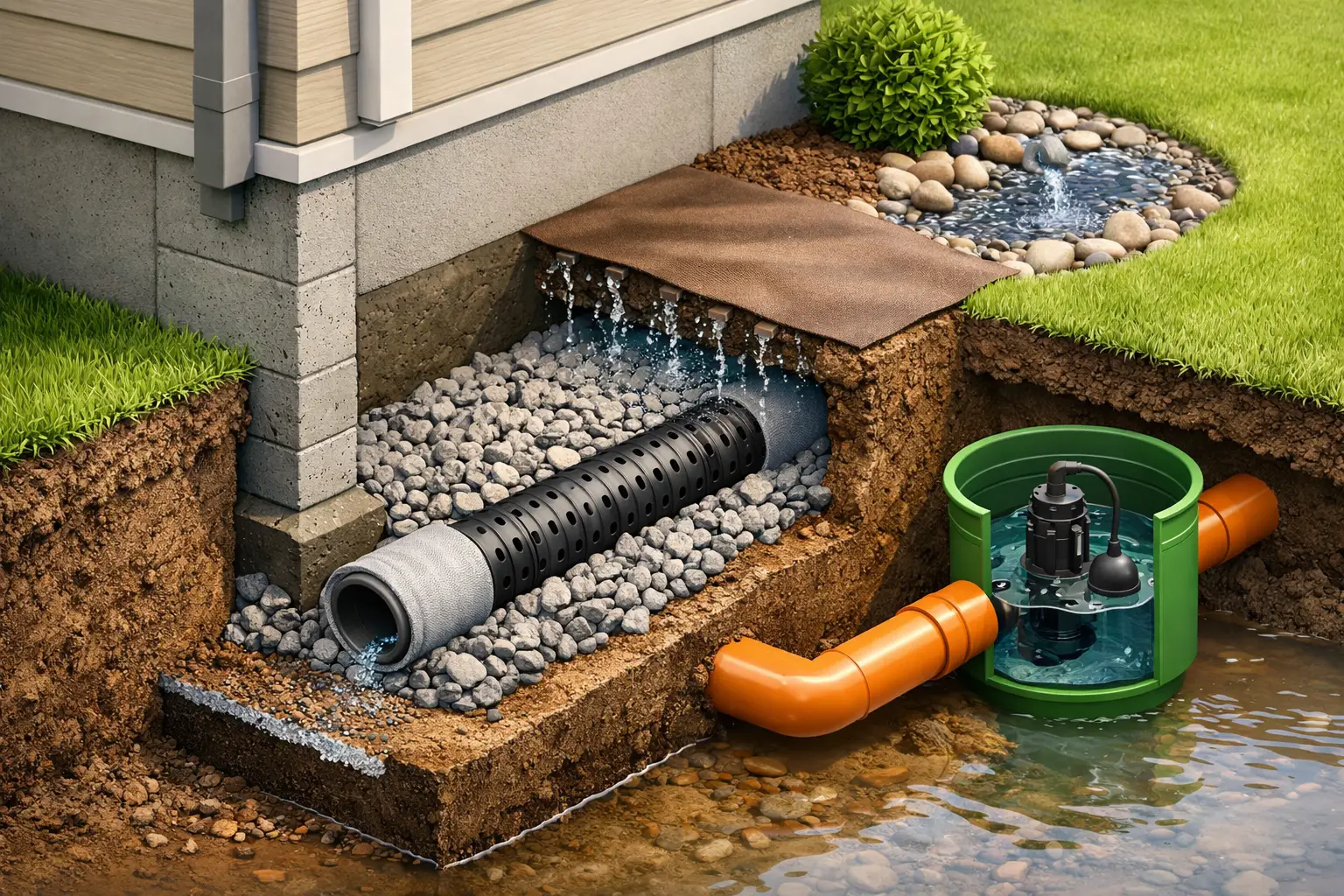
At its core, a French drain is a gravel-filled drainage trench containing perforated pipe. Water enters through the surrounding stone and small openings in the pipe, then flows through the system toward an approved outlet. The goal is simple: reduce the amount of water that sits in the soil beside or beneath the home.
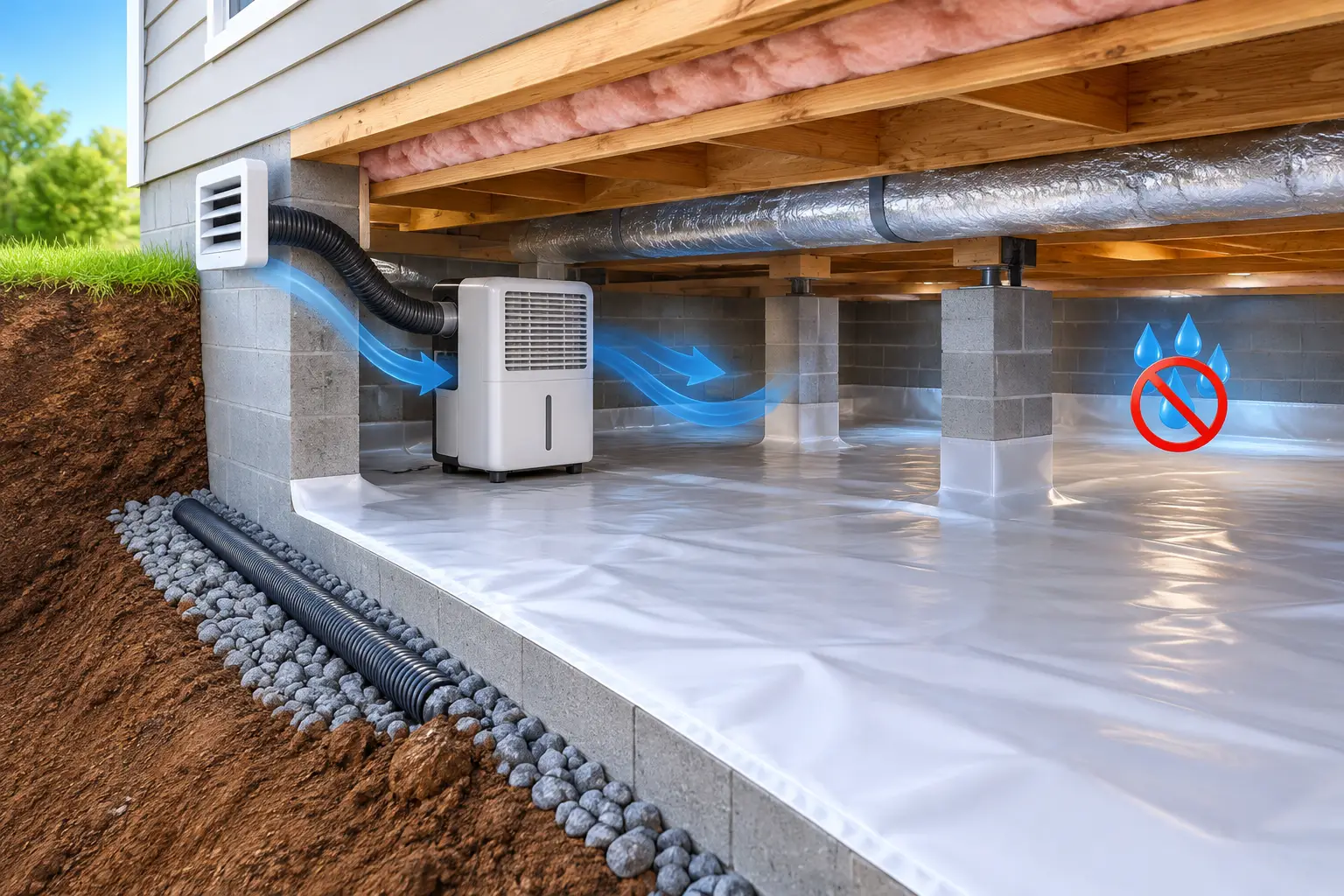
That matters because saturated soil becomes heavy and can place added pressure on basement walls. Water can also work through weak points in masonry, floor-wall joints, and existing cracks. In a crawlspace, prolonged moisture can contribute to wood rot, fungal growth, and weakened floor framing.
A drainage system does not “fix” a cracked or bowing foundation wall. If structural movement is present, it needs its own engineering-based evaluation and repair plan. However, controlling water is often an essential companion to structural work because it helps reduce the conditions that can worsen foundation problems over time.
Exterior vs. Interior French Drain Installation
The location of the system should follow the source of the water.
An exterior French drain is generally installed around the outside of a home or along an uphill area where runoff collects. It intercepts water before it reaches the foundation wall. This approach can be effective when site drainage and surface water are the primary concerns, but it requires excavation and must be carefully planned around utilities, landscaping, hardscaping, and the home’s footing depth.
An interior drainage system is installed beneath the basement slab along the inside perimeter of the foundation. It collects water that reaches the footing area and channels it to a discharge system. This option is often appropriate when exterior excavation is impractical or when groundwater is entering at the basement wall-floor joint.
Neither approach is automatically better. An exterior system may address water earlier in its path, while an interior system can provide dependable collection where water is already reaching the foundation. Some homes need improvements to surface drainage as well as an interior waterproofing system. The best scope is the one that addresses the actual water source without asking the homeowner to pay for unnecessary work.
What Proper French Drain Installation Includes
A drainage system is only as dependable as its design, slope, materials, and discharge path. Simply burying perforated pipe in a shallow trench is not a long-term solution.
A Clear Diagnosis Before Excavation
Before installation begins, the contractor should identify whether the water is surface runoff, groundwater, a roof-drainage issue, or moisture entering through a particular foundation condition. The inspection should also consider the grade of the property, soil conditions, existing drainage, and the lowest point where water can safely exit.
This step protects homeowners from a common mistake: treating visible water without finding out why it is there. A drain that terminates in the wrong location can move the problem from one part of the property to another.
Correct Depth, Slope, and Materials
The trench must be excavated to the appropriate depth for the system’s purpose. Perforated pipe is laid with consistent slope so water moves by gravity rather than collecting in low spots. Clean drainage stone creates an open path for groundwater to reach the pipe, while filter fabric helps limit soil intrusion that can clog the system.
The pipe, stone, and fabric all work together. Skipping one of these components or using the wrong aggregate can reduce flow and shorten the system’s useful life. Backfill and final grading matter as well. The completed area should shed surface water away from the foundation instead of trapping it there.
A Safe, Reliable Discharge Point
Collected water has to go somewhere. Depending on the property, that may mean daylighting at a lower-grade area or connecting to a properly designed collection and discharge setup. The outlet must remain accessible enough to inspect and should not discharge where it can erode soil, freeze across a walkway, or send water back toward the house.
This is one reason drainage work should not be based on a one-size-fits-all price or layout. The discharge plan is not a minor detail. It determines whether the water actually leaves the problem area.
Why Poor Drainage Work Fails
Many drainage failures are predictable. A pipe with insufficient slope cannot carry water efficiently. A system without clean stone can fill with sediment. An outlet buried, blocked, or placed too close to the home can leave water with nowhere to go. In other cases, the drain is installed correctly but the yard still directs roof runoff and surface water toward the foundation.
The lowest bid can become expensive when it addresses only part of the problem. Homeowners should be cautious of recommendations made without evaluating the basement or crawlspace, the exterior grade, and the path of downspout discharge. A lasting repair should explain what is causing the moisture, what the proposed system will control, and what it cannot control.
It is also wise to keep expectations realistic. A French drain is a water-management system, not a substitute for repairing active structural damage, replacing failed framing, or correcting a plumbing leak. Proper diagnosis keeps each repair focused on its purpose.
Protecting More Than a Dry Basement
Moisture control protects more than finished space. It can help preserve insulation, stored belongings, flooring, wood framing, and indoor air quality. It also gives homeowners clearer information about the condition of their foundation. When chronic water intrusion is controlled, it becomes easier to identify whether cracks, wall movement, or floor problems need separate structural attention.
For homeowners preparing to sell, a dry and properly managed basement or crawlspace can also reduce difficult questions during inspections. More importantly, it protects the home you live in now. Waiting for repeated flooding or visible deterioration usually narrows the repair options and raises the cost.
If water is showing up after storms, do not settle for a surface patch or an assumption. A free, no-obligation inspection from Foundation Works can identify the water path and recommend a drainage or waterproofing solution built around your home. The most helpful next step is simple: address the water while the warning signs are still manageable.