A basement can look dry for most of the year, then develop damp walls, puddles, or a musty odor after one long stretch of rain. Often, the force behind that change is hydrostatic pressure – the pressure groundwater creates against your foundation walls and basement floor.
This is not simply water finding a small gap. As saturated soil builds around the home, the weight of that water pushes continuously against concrete, block, mortar joints, and every existing opening. Left unresolved, that pressure can turn a minor moisture issue into recurring water intrusion, wall damage, mold conditions, and expensive structural repairs.
What Is Hydrostatic Pressure?
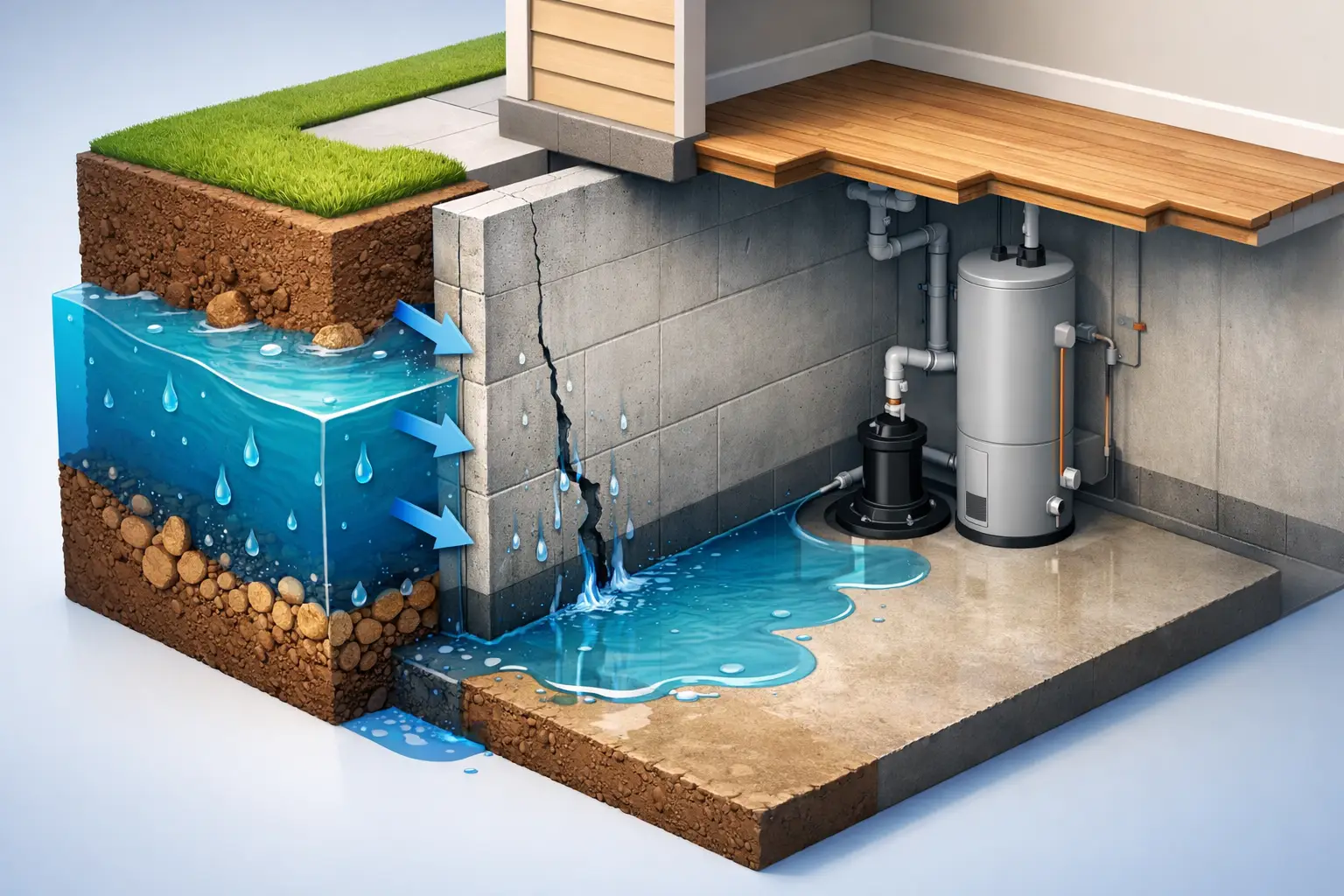
Hydrostatic pressure is the force exerted by standing water. Around a home, it develops when rainwater or groundwater collects in the soil beside and beneath the foundation. The wetter the soil becomes, the more pressure it places on below-grade surfaces.
Concrete is strong, but it is not automatically waterproof. Most foundations have natural pores, construction joints, utility penetrations, and small cracks. Water under pressure does not need a large opening. It can move through tiny gaps in a wall, enter where the wall meets the floor, or push upward through cracks in the basement slab.
Homes with basements are especially vulnerable because foundation walls sit below the surrounding grade. During heavy rain, rapid snowmelt, or extended wet weather, the soil may become saturated faster than it can drain. Water then has nowhere to go except outward, downward, or toward the lower-pressure space inside the basement.
Why Pressure Builds Around Foundations
Hydrostatic pressure is usually part of a larger drainage problem. The foundation is not necessarily the original cause. Water is simply accumulating where it should not.
Poor grading can direct surface water toward the house instead of away from it. Short downspout extensions may discharge roof runoff right beside the foundation. Dense clay soils, common in many Virginia and Maryland properties, drain slowly and can hold water against basement walls long after a storm ends.
High groundwater can also be a factor, particularly in low-lying areas or on properties with seasonal drainage changes. In other cases, clogged or failing drainage components allow water to collect in the backfill around the foundation. A cracked wall may make the symptom visible, but sealing that crack alone will not stop water pressure from returning.
That distinction matters. A permanent repair plan must identify how water reaches the foundation, where it is collecting, and how it can be safely redirected or relieved.
Signs Hydrostatic Pressure Is Affecting Your Basement
Water does not always enter as a dramatic flood. Many homeowners first notice smaller changes that become more obvious after rain. Pay attention if you see several of the following conditions:
- Damp spots, white mineral deposits, or peeling paint on basement walls
- Water collecting along the wall-floor joint, often called the cove joint
- Hairline cracks that leak during or shortly after storms
- Moisture rising through cracks in the basement floor
- A persistent musty smell, visible mold, or unusually humid basement air
- Bowing, inward movement, or horizontal cracking in foundation walls
White, chalky material on masonry is called efflorescence. It appears when moisture moves through concrete or block and leaves mineral salts behind as it evaporates. Efflorescence does not always mean there is active flooding, but it is clear evidence that water has traveled through the material.
Horizontal cracks and inward wall movement require prompt attention. Hydrostatic pressure can add stress to a foundation wall already affected by expanding soil, poor drainage, or age-related deterioration. While not every crack indicates a structural emergency, no homeowner should assume a wet or moving wall is cosmetic.
How Hydrostatic Pressure Damages a Home
The first consequence is usually water intrusion. Water may seep through wall cracks, floor cracks, joints, or openings around pipes. Repeated wetting can damage finished basement materials, stored belongings, insulation, and flooring.
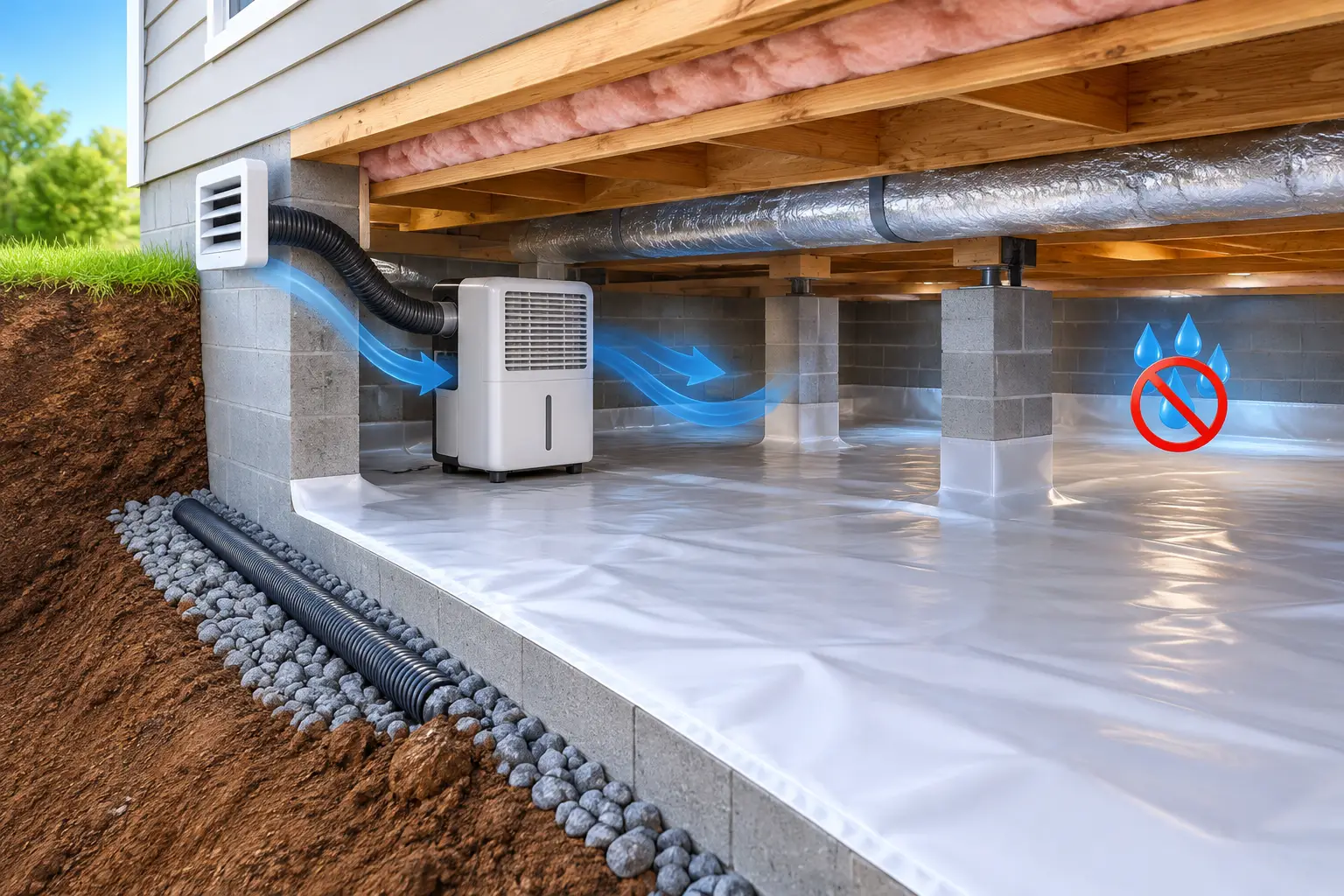
The longer-term concern is what repeated moisture does to the building itself. Wet framing and insulation can support mold growth. In homes with crawlspaces, excess moisture can contribute to wood rot, weakened beams and joists, and sagging floors above. Moist air can also move upward into the living space, affecting indoor comfort and air quality.
Pressure against the exterior side of a foundation wall can be a structural concern as well. Block walls are particularly susceptible to inward movement when soil remains saturated and drainage is poor. A wall that is bowing, cracking horizontally, or separating from adjoining walls needs an engineering-based evaluation to determine whether reinforcement or structural repair is necessary.
There is a practical financial issue, too. Basement moisture rarely stays hidden during a home sale or inspection. Addressing the root cause early can help protect the home’s value and prevent a smaller drainage issue from becoming a larger repair project.
Why Surface Sealing Alone Often Fails
Applying a coating or patch to the interior face of a wall may improve its appearance, but it does not remove the water pressure outside the foundation. If groundwater continues to build, it can find another crack, another joint, or another path through the slab.
That does not mean crack repair has no place. Proper crack repair can be an important part of a waterproofing plan, especially when a specific crack is allowing water into an otherwise stable wall. The issue is relying on a visible patch as the entire solution when the surrounding soil remains saturated.
A lasting approach addresses both the entry point and the water source. Depending on the home, that may mean improving how roof and surface water are directed away, correcting drainage conditions, installing a system that manages water before it reaches living areas, or repairing foundation damage caused by pressure. The right answer depends on the property, soil conditions, foundation type, and severity of the problem.
What a Professional Inspection Should Identify
A useful inspection should do more than point to the wet spot. It should trace the likely path of water and assess whether the foundation has been affected structurally.
The evaluation should consider the grade around the house, gutter discharge locations, signs of standing water, wall cracking patterns, floor-wall joints, drainage conditions, and the condition of basement or crawlspace framing. It should also separate normal cosmetic cracking from cracks that show active movement or water intrusion.
For example, a small vertical crack that stays dry may need monitoring or a targeted repair. A horizontal crack with a bowing wall is a different situation. Likewise, a basement that gets wet only during major storms may need a different solution than one with persistent dampness caused by high groundwater.
Foundation Works provides free, no-obligation inspections so homeowners can understand what is happening before committing to work. An honest recommendation should match the actual cause, not treat every moisture stain as the same problem.
Reducing Water Pressure Around Your Home
Some basic maintenance can reduce the amount of water reaching the foundation. Keep gutters clear, confirm that downspouts carry water well away from the house, and watch how water flows across the property during a storm. Soil should generally slope away from the foundation rather than creating a channel toward it.
These steps are valuable, but they are not always enough. They cannot correct every high-water-table condition, failed drainage system, or foundation wall already under stress. If you have recurring seepage, standing water, wet walls, or visible wall movement, avoid waiting for the next storm to see whether it gets worse.
A dry basement should not depend on a week without rain. When hydrostatic pressure is pushing water against your foundation, the most helpful next step is a clear diagnosis and a repair plan designed to keep water from becoming a structural problem.