A basement does not have to flood to have a water problem. A damp smell after rain, a thin white film on a wall, or a small wet spot near a corner can all be early basement leak symptoms. Left alone, moisture can damage finishes, encourage mold growth, rot wood framing, and place added stress on foundation walls. The sooner you identify where the water is coming from, the better your chances of avoiding a larger repair.
In Virginia and Maryland, heavy storms, clay soils, aging drainage systems, and seasonal freeze-thaw cycles can all expose weak points around a home. The visible water is often only part of the issue. A lasting repair starts by identifying the source of the moisture and the conditions allowing it to reach the basement.
Common Basement Leak Symptoms
Some signs are obvious, such as standing water across the floor. Others are easy to dismiss because they appear gradually or only after certain weather. Watch for changes that repeat after rain, snowmelt, or long humid periods.
Damp walls or darkened concrete
Concrete can look darker when it is holding moisture, particularly near the lower portion of a wall or along a wall-floor joint. You may see damp patches that appear after storms and fade several days later. That pattern matters. It suggests water is moving through or against the foundation rather than a one-time spill inside the home.
A damp wall is not always a major structural emergency, but it should not be treated as normal basement behavior. Persistent moisture can deteriorate paint, loosen wall finishes, and create conditions for mold behind finished walls.
Water on the floor or at the wall-floor joint
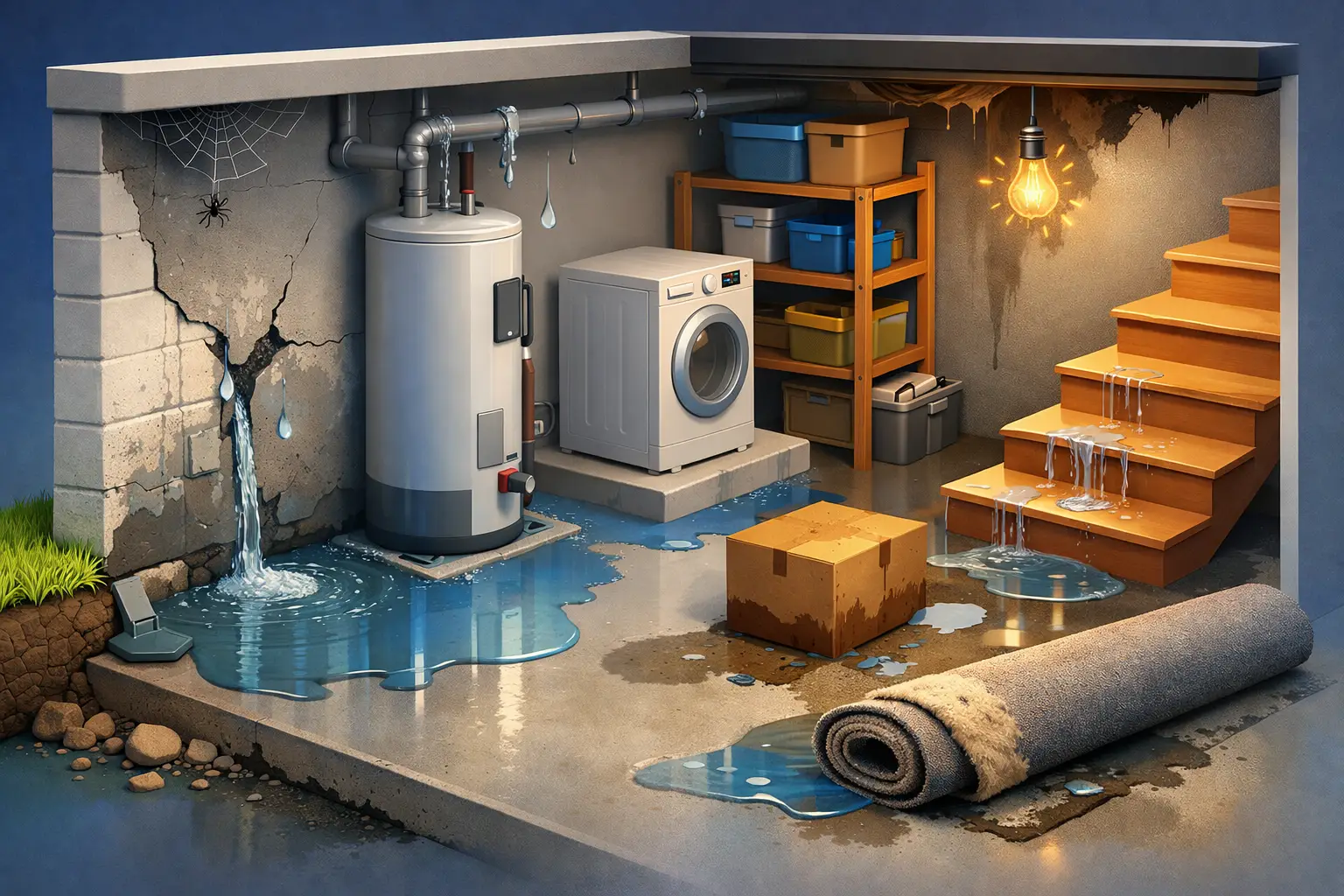
A small puddle around the edge of the basement is a common sign of water pressure building in the soil outside. Water may enter through the joint where the wall meets the slab, through cracks, or through gaps around penetrations such as utility lines.
The timing offers useful clues. Water that appears during or shortly after a storm often points to exterior drainage or groundwater pressure. Water that appears regardless of weather could involve plumbing, condensation, or another indoor source. A professional inspection should distinguish between these causes before any repair plan is recommended.
White, powdery deposits on basement walls
White residue on masonry or concrete is called efflorescence. It forms when moisture passes through the wall and leaves mineral salts behind as it evaporates. Efflorescence itself is not mold, but it is evidence that water has traveled through the material.
Brushing away the residue may improve appearance temporarily, but it does not stop the moisture movement. If it returns, the basement needs a closer look at drainage, foundation cracks, and waterproofing conditions.
Musty odors, mold, or peeling finishes
A basement should not smell earthy, stale, or musty every time you open the door. Odors often develop before you see a clear water path, especially in finished basements where moisture is trapped behind drywall, carpeting, or baseboards.
Look for peeling paint, bubbling wall coverings, warped trim, rust on appliances or metal supports, and discoloration on stored belongings. These symptoms can indicate high humidity or hidden water intrusion. The trade-off of covering stains or running a dehumidifier alone is that the underlying leak may continue unchecked.
Cracks that are wet, widening, or changing
Not every foundation crack leaks, and not every leak is caused by a serious structural issue. Hairline shrinkage cracks are common in concrete. However, a crack deserves attention when it is actively wet, leaves a rust-colored trail, widens over time, or is accompanied by wall movement.
Horizontal cracks, stair-step cracks in block walls, and cracks paired with inward bowing are more concerning. They can indicate pressure from saturated soil against the foundation. In that situation, sealing the crack without addressing the pressure may only delay the problem.
Sticking doors, uneven floors, or bowed basement walls
These are not typical moisture symptoms on their own, but they can appear alongside basement leaks when soil movement and water pressure affect the foundation. Doors that suddenly stick, floors that slope, or walls that appear to lean inward call for a prompt evaluation.
Water management and structural repair are sometimes separate needs. They are also frequently connected. An honest diagnosis should explain whether your home needs drainage correction, crack repair, wall stabilization, or a combination of solutions.
Why Basement Leaks Get Worse
Water follows the path of least resistance. When the soil around a foundation becomes saturated, it can create hydrostatic pressure against basement walls and floors. That pressure pushes water toward joints, cracks, and weak areas. Over time, repeated wetting can widen existing cracks and increase the amount of water entering the home.
Poor drainage above ground can make the problem worse. Gutters that overflow, downspouts that discharge beside the foundation, negative grading, and clogged drain systems can concentrate thousands of gallons of water where it does the most harm. In some homes, groundwater conditions and aging waterproofing materials are also part of the problem.
This is why a quick patch is not always a permanent fix. Interior sealants may hide a symptom, but they may not relieve outside pressure or correct the drainage issue feeding the leak. The right approach depends on how water is reaching the foundation, the condition of the wall, and whether there are signs of structural movement.
What to Do When You Notice a Leak
Start by documenting what you see. Take photos of wet areas, cracks, stains, and damaged finishes. Note whether the issue happens during rain, after snowmelt, or when a particular area outside is wet. This information can help identify patterns during an inspection.
Next, protect the area from further damage. Move storage away from walls, remove wet cardboard and fabric items, and avoid placing rugs or finished materials over damp concrete. If water is near electrical equipment, outlets, or appliances, use caution and contact a qualified professional promptly.
You can also check obvious exterior conditions from the ground. Look for overflowing gutters, disconnected downspouts, standing water near the foundation, and soil that slopes toward the home. These observations are useful, but avoid assuming they are the complete answer. A visible grading problem can exist alongside a cracked wall, failed drainage system, or foundation movement.
When to Schedule a Professional Inspection
Call for an inspection when water returns after storms, moisture is spreading, mold is visible, or foundation cracks are changing. You should also act quickly if basement walls are bowing, cracking horizontally, or showing signs of movement. Waiting can turn a manageable water-intrusion repair into a more complex structural project.
A thorough inspection should focus on cause, not just appearance. The goal is to determine how water is entering, whether pressure is affecting the foundation, and which repair system will provide lasting protection. Foundation Works provides homeowners with clear, engineering-based recommendations and honest evaluations, including when a condition is minor and does not require extensive work.
Do not let a dry week convince you the issue has disappeared. Basement water problems often follow weather patterns, and the most valuable time to address them is before the next heavy rain finds the same weak point again.