
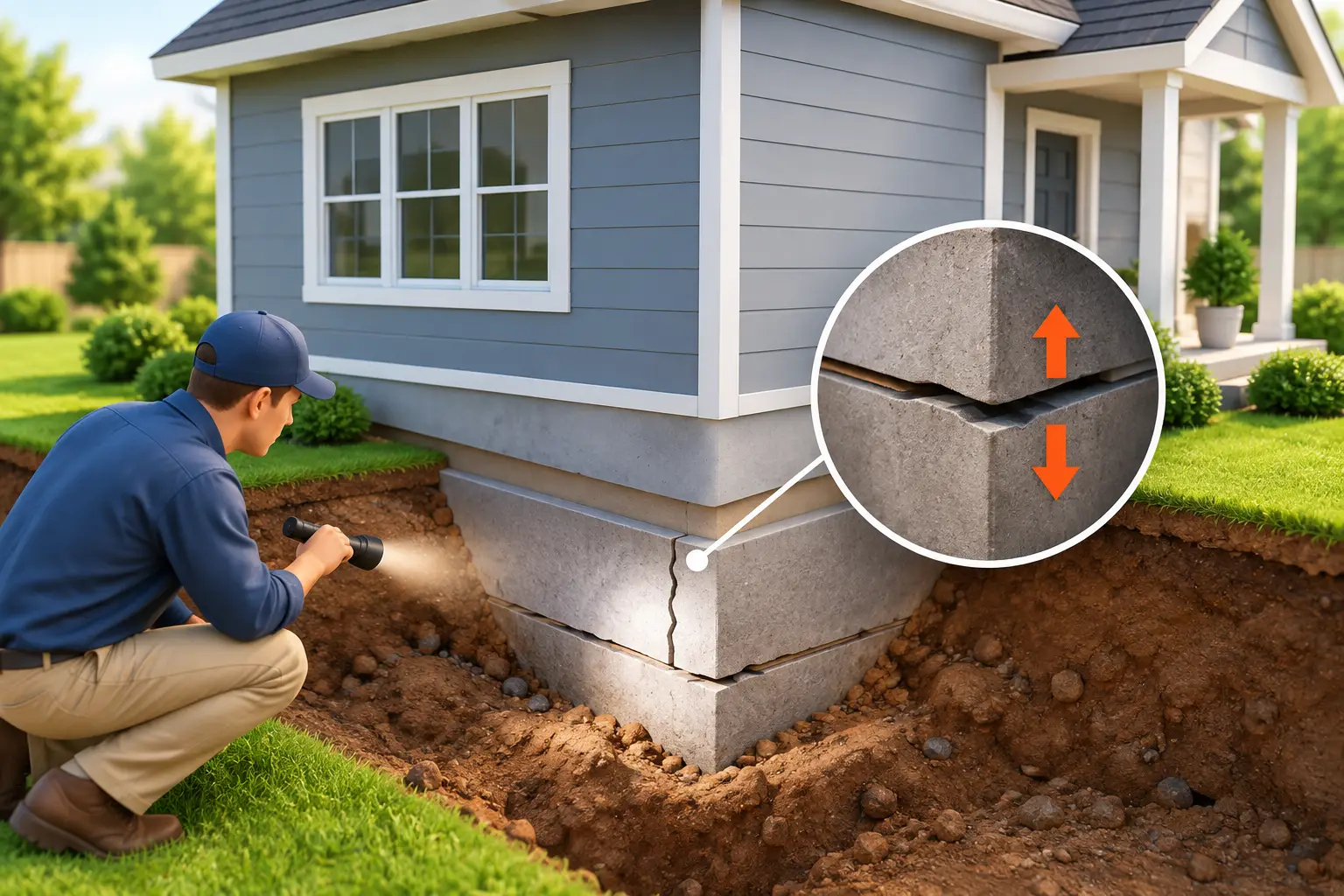
A hairline crack above a doorway may be harmless. A crack that widens, returns after repair, or appears alongside sticking doors and uneven floors deserves attention. Knowing how to spot foundation movement helps you separate ordinary house settling from warning signs that could affect your home’s safety, value, and repair costs.
Foundation movement happens when the soil beneath or around a home shifts, shrinks, expands, erodes, or no longer supports the structure evenly. In Virginia and Maryland, changing moisture levels, poor drainage, aging construction, and clay-heavy soils can all contribute. The earlier the cause is identified, the more options you typically have for a permanent repair.
Start With the Pattern, Not One Isolated Crack
Most homes develop minor cosmetic cracks over time. Paint dries, framing adjusts with seasonal temperatures, and materials expand and contract at different rates. One small, stable crack is not automatically a foundation emergency.
The concern rises when several symptoms appear together or when a condition is getting worse. A crack that grows from season to season, a door that suddenly will not latch, and a floor that feels noticeably lower in one area can point to movement below the home. Look for changes rather than judging any one symptom in isolation.
Take clear photos of cracks and measure their width with a ruler. Note the date and location. If the crack expands, extends, or is joined by new signs nearby, that record gives a foundation professional useful information during an inspection.
How to Spot Foundation Movement Inside Your Home
Interior symptoms are often the first things homeowners notice because they affect everyday routines. Pay attention to what has changed recently, especially after prolonged rain, drought, or a plumbing leak.
Cracks Around Doors, Windows, and Drywall Seams
Diagonal cracks running from the corner of a door or window are common signs of stress. So are cracks that travel across walls or ceilings, separate drywall tape, or reopen after being patched. Wider cracks and stepped patterns are more concerning than fine surface lines, but location and progression matter more than appearance alone.
Cracks can also form where walls meet ceilings or where an addition connects to the original house. These areas may move differently when support changes beneath one section of the structure.
Doors and Windows That Stick or Misalign
A door that sticks during humid weather may simply be reacting to moisture. But if several doors become difficult to open, gaps appear around their frames, or latches no longer line up, the framing may be shifting.
Windows can tell a similar story. Watch for windows that bind, become difficult to lock, or show new gaps between trim and the wall. When these problems occur in multiple areas, they should not be dismissed as a minor adjustment issue.
Sloping, Bouncy, or Sagging Floors
Floors should feel generally level and stable underfoot. A subtle slope does not always mean foundation movement, particularly in an older home, but a new or worsening slope should be evaluated. You may notice furniture rocking, a ball rolling across the room, gaps opening between baseboards and flooring, or a distinct low spot.
In homes with crawlspaces, sagging floors can also result from weakened beams, undersized supports, moisture damage, or deteriorated joists. The source may be structural framing rather than settlement, but it still needs a root-cause repair instead of a cosmetic floor-leveling fix.
Check the Exterior for Structural Clues
Walk slowly around the outside of your home at least twice a year. Look at the foundation walls, brick or siding, trim, driveway, and ground near the perimeter. Exterior signs can reveal what is happening before interior symptoms become severe.
Horizontal, Stair-Step, and Widening Cracks
Concrete and masonry cracks have different meanings depending on their direction. Vertical hairline cracks can occur as concrete cures or ages. They still need monitoring, especially if water is entering through them.
Horizontal cracks in a basement or foundation wall are more urgent because they can indicate pressure from saturated soil pushing inward. Stair-step cracks that follow mortar joints in brick or block may signal uneven movement. Cracks that are widening, offset, or paired with a bulging wall need prompt professional attention.
Do not rely on caulk, paint, or a quick patch to solve an active crack. Sealing may improve appearance or reduce minor water entry, but it does not stop the force causing the wall or footing to move.
Separation at Trim, Porches, and Chimneys
Look for gaps where exterior trim meets brick, siding, or window frames. Check whether a porch, stoop, deck, or chimney appears to be pulling away from the house. A small separation can have several causes, including normal material movement, but a growing gap may indicate that one part of the structure is settling differently than another.
Chimney movement deserves particular attention. Because chimneys are heavy and often supported separately from the main structure, even a modest lean or separation should be inspected rather than ignored.
Soil, Drainage, and Water Problems
Foundation movement often starts with water. Soil that repeatedly becomes saturated can expand and place pressure on basement walls. Soil that dries severely can shrink, reducing support beneath parts of a foundation. Water flowing toward the home can also erode soil or create persistent moisture problems in a basement or crawlspace.
After a rainstorm, look for standing water near the foundation, overflowing gutters, downspouts that discharge too close to the house, or soil that slopes toward exterior walls. Inside, musty odors, damp walls, puddles, efflorescence, and visible mold growth can signal water intrusion that should be addressed before it contributes to more extensive damage.
When Is It Settling and When Is It Foundation Movement?
Every house settles to some degree, particularly after construction. Normal settling is usually minor, gradual, and stable. It may leave a small crack that does not change over years.
Foundation movement is more likely when symptoms are new, worsening, widespread, or connected to moisture and drainage issues. It is also more concerning when cracks are horizontal, diagonal, wider than a hairline, or accompanied by wall bowing, floor slope, water intrusion, or doors that no longer operate normally.
There is no single crack width or online checklist that can diagnose a foundation. A proper evaluation considers the crack pattern, structure type, soil conditions, drainage, framing, and whether the issue is active. That is why an honest inspection matters. The right answer may be monitoring and maintenance, targeted waterproofing or drainage improvements, structural repair, or a combination of solutions.
What to Do When You Notice Warning Signs
First, document the condition instead of covering it immediately. Photograph cracks from the same angle, note whether doors or windows have changed, and watch the area through wet and dry weather. If water is present, move stored belongings away from the affected wall and address any obvious drainage problem, such as a disconnected downspout.
Avoid assuming a cosmetic repair has solved the issue. Fresh paint can hide a crack temporarily, and a basement sealant may reduce visible dampness, but neither confirms that the wall is stable or that groundwater is being controlled outside the home.
If you see bowing walls, a rapidly widening crack, a significant floor slope, a leaning chimney, or active water entering the basement or crawlspace, schedule an inspection promptly. These conditions can progress, and waiting may limit repair options. A professional should explain what is causing the problem, whether it is active, and what repair approach will address it for the long term.
Protect the Structure Before the Damage Grows
Foundation concerns can feel overwhelming because the signs often appear slowly and in different parts of the house. The goal is not to panic over every crack. It is to recognize patterns early and get clear answers before a manageable issue becomes a major structural repair.
Foundation Works provides homeowners with no-pressure, engineering-based evaluations focused on the real cause of movement, moisture, and structural distress. If something in your home has changed, a professional inspection can replace guesswork with a practical path forward and help protect the investment your family depends on.

