A bare strip of dirt beside the foundation, a new dip in the lawn, or mulch that keeps washing into the driveway can be more than a landscaping nuisance. Knowing how to spot soil erosion gives you a chance to correct drainage problems before moving water affects the soil supporting your home.
In Virginia and Maryland, heavy rain, steep lots, compacted clay soil, and overflowing gutters can all send water where it does not belong. Erosion does not always mean your foundation has damage. But when it repeatedly removes or shifts soil near the house, it can create the conditions that lead to settlement, water intrusion, and expensive structural repairs.
How to Spot Soil Erosion Before It Reaches the Foundation
Walk around your home after a hard rain and again after the ground has dried. The difference between those two views can reveal where water is traveling, pooling, and carrying soil away. Focus first on the perimeter of the house, downspout discharge areas, slopes, retaining edges, driveways, and walkways.
One of the clearest signs is exposed foundation material. Soil should generally meet the home at a controlled grade that directs surface water away from the structure. If you can see a growing section of foundation wall that was previously covered, or if the soil line is noticeably lower in one area, water may be washing that material away.
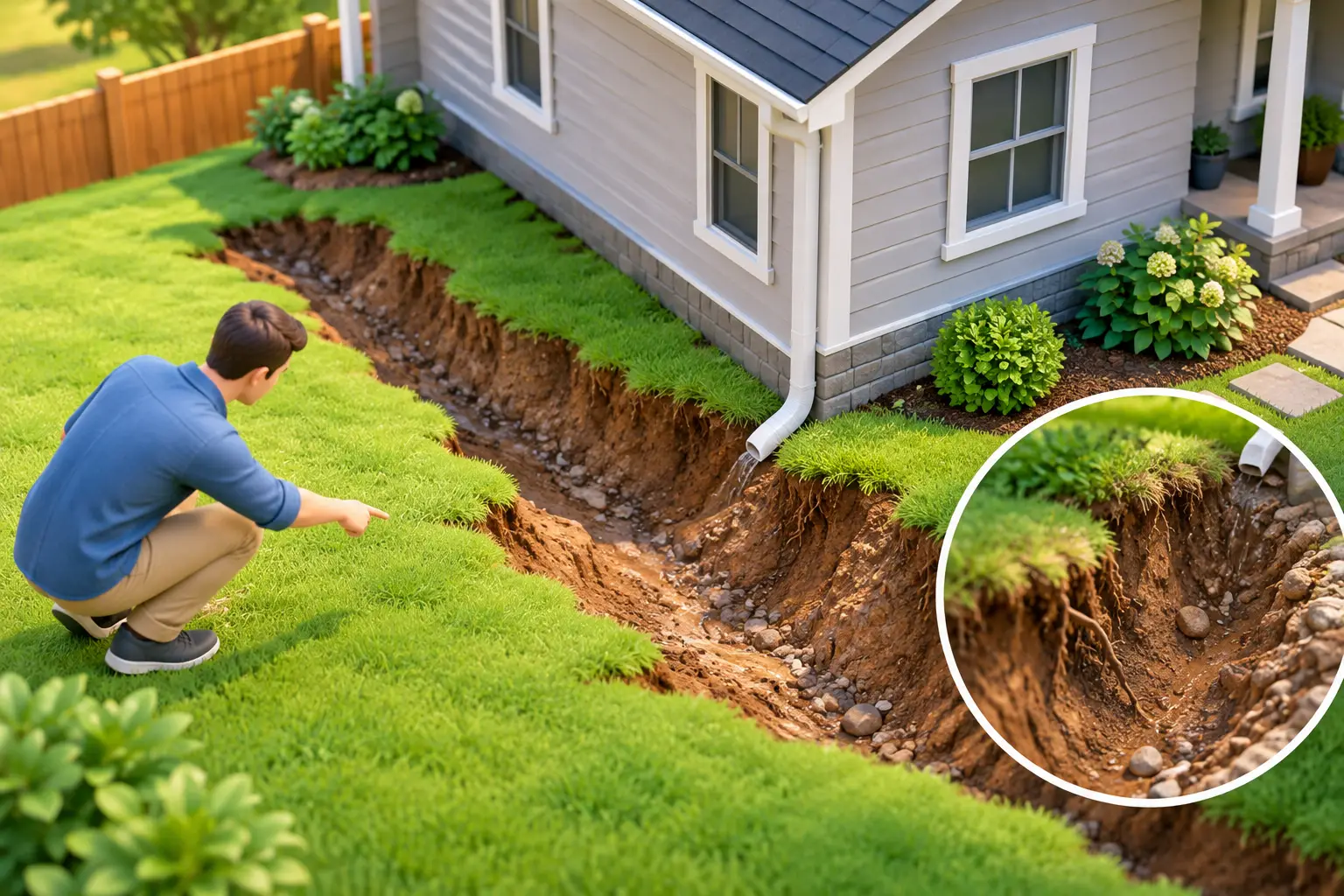
Look for channels or small trenches in the ground. These are called rills or runoff paths, and they often appear below downspouts, along a sloped side yard, or where roof water lands. A shallow channel may seem minor, but it shows that water has enough force to move soil. With each storm, that channel can deepen and widen.
Other warning signs deserve attention as well:
- Bare patches where grass, mulch, or ground cover repeatedly disappears
- Puddles near the foundation or water that flows toward the house
- Soil piles, mulch, or gravel collecting at the bottom of a slope
- A sinking area beside a driveway, patio, porch, or walkway
- Downspouts that discharge directly next to the foundation
Do not assume erosion is limited to visible dirt. In some yards, water travels below the surface and creates soft, spongy areas or subtle depressions. If the ground near a foundation feels unstable after rain, take the change seriously, especially if it is paired with cracks, sticking doors, or basement moisture.
Why Eroding Soil Can Become a Structural Problem
Your foundation depends on stable, properly compacted soil for support. When water repeatedly saturates or carries away soil, the support conditions around the home can change. That does not mean every washed-out flower bed will cause settlement. The risk depends on the amount of soil movement, how close it is to the structure, the type of foundation, the slope of the property, and how long the problem has been occurring.
For example, erosion at the far edge of a large yard may be primarily a drainage and landscaping concern. Erosion that creates a void beside a footing, exposes a crawlspace wall, or directs water toward a basement is more urgent. Water can soften supporting soil, increase pressure against below-grade walls, and find entry points through cracks or joints.
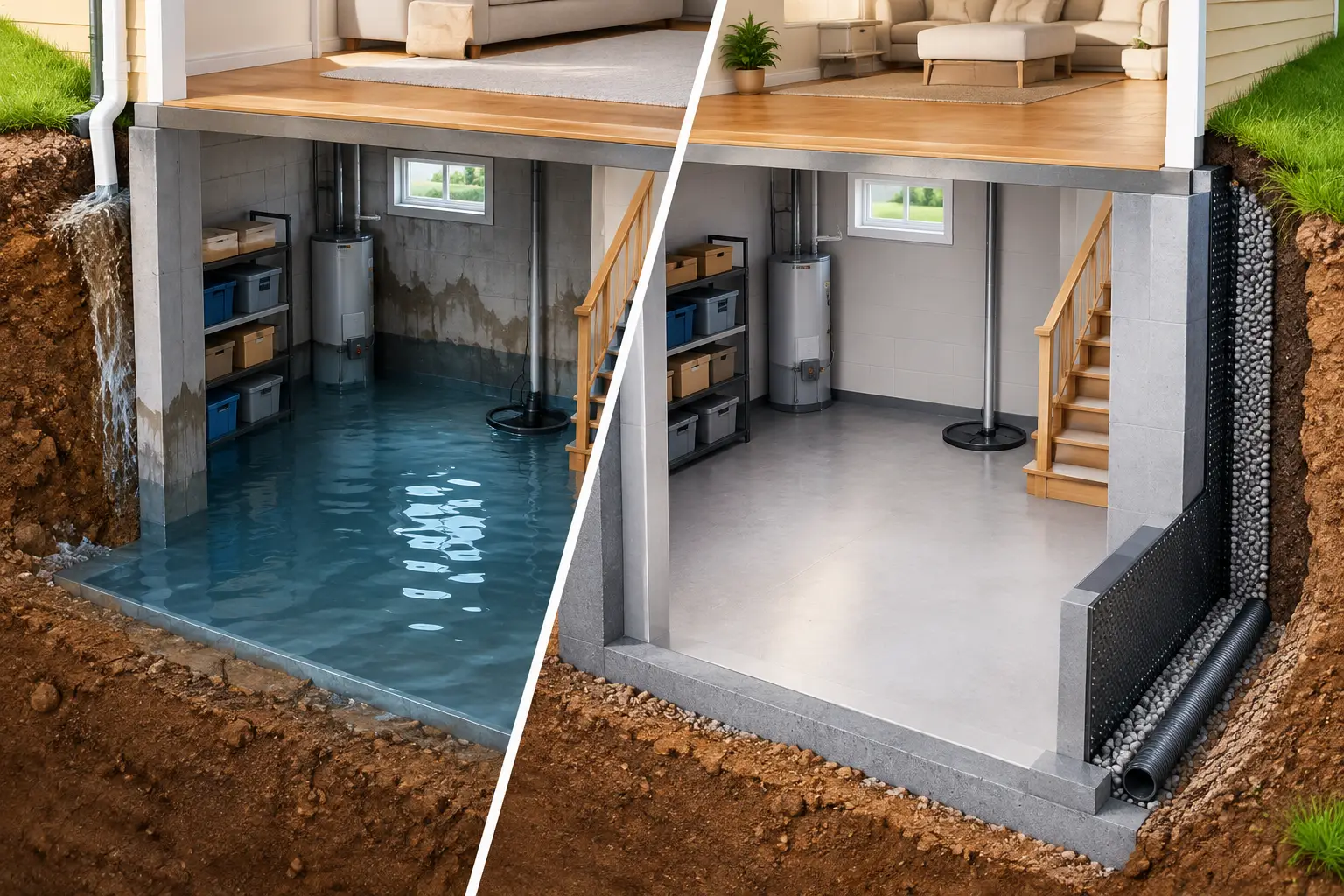
Homes with crawlspaces are especially vulnerable to poor grading and runoff. Water that reaches the crawlspace can raise humidity, encourage wood rot, and weaken floor framing over time. In a basement, persistent exterior water can contribute to damp walls, musty odors, seepage, and hydrostatic pressure against the foundation.
The key is to address the cause, not just replace the missing soil. Adding a few bags of topsoil may improve the appearance temporarily, but it will not stop an overflowing gutter, a failed downspout extension, or a grade that pitches toward the house. Permanent protection starts with controlling the water path.
Check the Roofline and Drainage First
Many erosion problems begin above ground. During rainfall, watch where water leaves the roof and where it lands. Gutters that overflow at one corner can dump a surprising volume of water onto a small area of soil. A loose elbow, disconnected downspout, or short extension can create a concentrated stream beside the foundation.
Check that gutters are clear and securely fastened, and make sure downspouts carry water away from the home to an appropriate discharge point. The right solution depends on the property. On a sloped lot, simply extending a downspout may redirect water toward a neighbor’s property, a walkway, or another vulnerable area. Drainage changes should be planned so they move water safely without creating a new problem downhill.
Next, examine the grade around the foundation. The soil should slope away from the house rather than forming a bowl that captures runoff. Settling soil, old landscaping, edging, and repeated mulch replacement can gradually alter that slope. A low area next to the house may hold water long after the rest of the yard has dried.
Also inspect paved surfaces. Cracks or separation between a driveway, patio, or sidewalk and the house can allow water to run along the foundation edge. If a slab appears to be dropping or tilting, it may be a sign that soil beneath or beside it has moved. That condition can be cosmetic in some cases, but it can also point to drainage-related soil loss that needs a closer look.
Watch for Interior Signs of Soil Movement
Outside evidence matters, but the home itself may provide the stronger warning. Soil erosion and drainage problems do not always cause immediate structural damage. When movement has affected foundation support, however, homeowners may notice changes indoors.
Pay attention to new or expanding cracks in drywall, particularly above doors and windows or where walls meet ceilings. Doors and windows that suddenly stick, gaps opening around trim, sloping floors, or cracks in masonry can also indicate movement. In a basement or crawlspace, look for water stains, active seepage, damp insulation, sagging framing, or signs of wood deterioration.
These symptoms have more than one possible cause. Seasonal humidity can make a door stick, and hairline drywall cracks can result from normal minor movement. What raises concern is a pattern: exterior erosion or poor drainage combined with worsening interior symptoms, water intrusion, or visible foundation cracking.
Take dated photos of the affected areas. Photograph channels in the soil, standing water, exposed foundation sections, wall cracks, and any changes after storms. This record can help you determine whether the issue is stable or progressing, and it gives a professional inspector useful context.
When to Call for a Professional Foundation Inspection
Call for an evaluation promptly if you see soil washing away next to the foundation, a developing void under a porch or walkway, recurring basement or crawlspace water, or cracks that are widening. The same applies if a section of foundation wall appears to be shifting, bowing, or separating from surrounding materials.
A professional assessment should distinguish between a surface drainage correction and a deeper foundation concern. That distinction matters. Not every erosion issue requires structural repair, and homeowners should not be sold a major repair system for a problem that can be resolved by correcting water management. On the other hand, covering a serious condition with soil or sealant can delay the repair while the underlying problem grows.
At Foundation Works, inspections focus on identifying why the soil is moving and whether the home has been affected. The goal is an honest recommendation based on the actual conditions – whether that means improving drainage, addressing moisture entry, stabilizing a foundation concern, or confirming that the structure is not at risk.
Do Not Wait for the Next Major Storm
Erosion tends to worsen in steps. A heavy storm exposes a small channel. The next storm follows that same path. Over time, the water route becomes more efficient, more soil moves, and a manageable drainage issue can become a foundation or moisture problem.
If you have noticed changing soil levels, runoff beside the house, or new structural warning signs, schedule a free inspection before the next period of heavy rain. A clear diagnosis now can protect your home’s foundation, indoor environment, and long-term value.