A homeowner noticed the problem after a hard spring rain: a shallow line of water along one basement wall, wet carpet padding, and a musty smell that did not go away when the floor dried. By the next storm, the water had spread farther into the finished area. This basement flooding repair case study shows why drying a basement is not the same as fixing the reason it flooded.
For homeowners across Northern Virginia and nearby Maryland communities, basement water often arrives as a recurring problem. A mop, dehumidifier, or wall sealant may make the space look better temporarily. But when groundwater pressure, poor drainage, or an unreliable pumping system is still present, the next heavy rain can bring the same damage back.
The Warning Signs Were Easy to Miss at First
The home in this representative case had a partially finished basement used for storage and family space. The first signs seemed manageable: dampness near the base of one wall, white mineral staining on the concrete, and an occasional earthy odor after rain. No large foundation crack was visible, and there was no standing water during dry weather.
Over time, however, the symptoms became more serious. Water entered at the wall-floor joint during prolonged rain. The homeowner began moving boxes and furniture away from the perimeter before storms. Carpet edges stayed damp for days, and the lower portion of a finished wall started to show discoloration.
These signs matter because basement water rarely stays contained. Moisture can damage flooring, insulation, drywall, trim, and personal belongings. It can also create conditions for mold growth and conceal deterioration behind finished surfaces. Waiting for a larger flood often means a wider repair scope and more restoration work afterward.
Basement Flooding Repair Case Study: Finding the Source
A permanent repair starts with a careful inspection, not an assumption. In this case, the inspection focused on where water appeared, when it appeared, and what conditions existed outside the home.
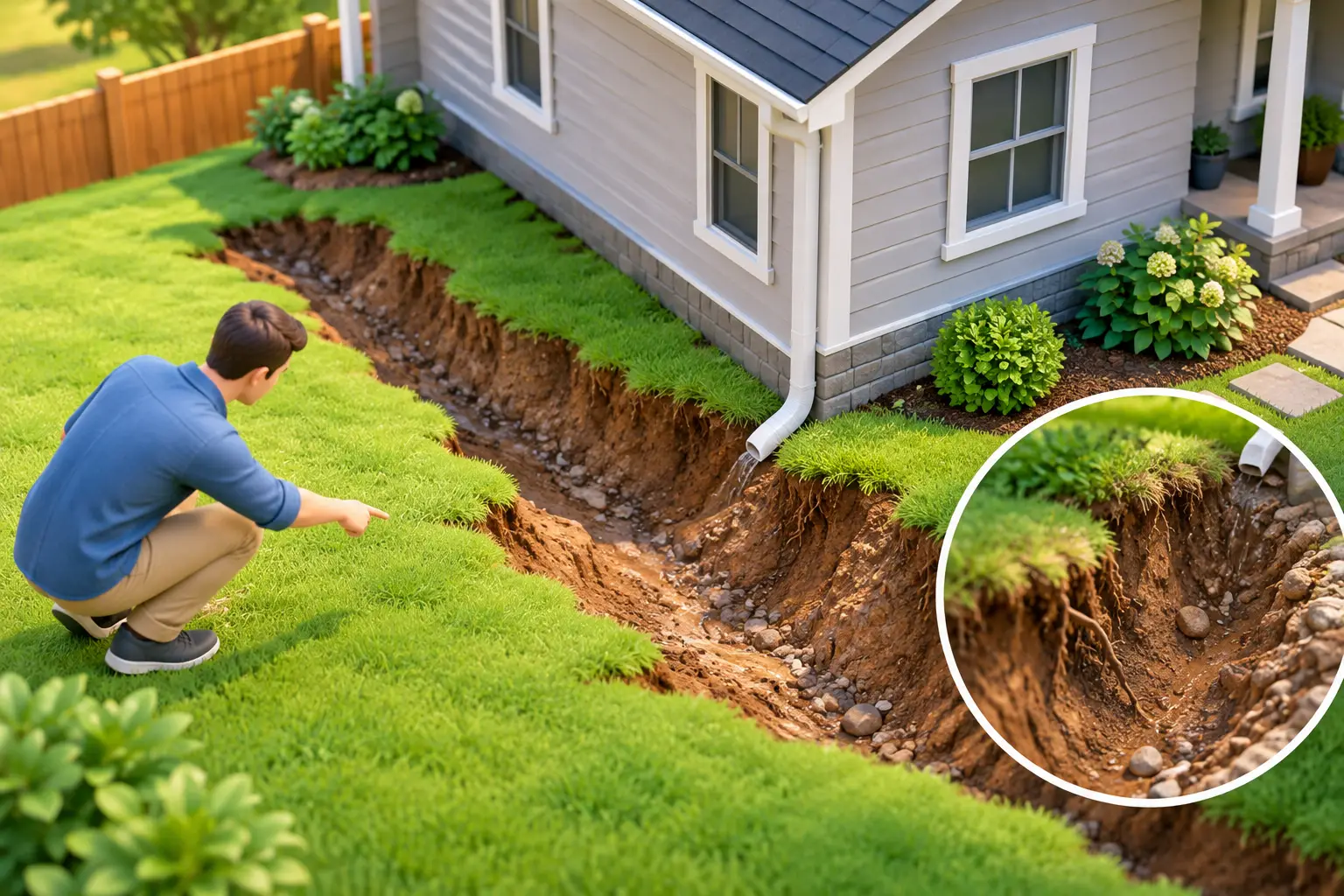
The water was not coming through one isolated crack. It was collecting beneath the basement slab and pressing against the foundation during heavy rainfall. The wall-floor joint was simply the lowest, easiest path into the basement. Surface drainage around the home was also contributing. Downspout discharge was too close to the foundation, and the soil near the affected wall did not direct water away effectively.
This distinction changed the repair plan. Applying a coating to the visible interior wall would not relieve the water pressure below the floor. Filling the joint alone would not control future water. The homeowner needed a system designed to collect incoming groundwater and move it safely away before it reached the living space.
That is the value of an engineering-based diagnosis. The visible stain or puddle is a symptom. The right repair identifies the water path, the pressure behind it, and the most reliable way to control it.
The Repair Plan: Control Water Instead of Chasing It
The recommended solution combined interior water management with exterior drainage improvements. This approach fit the home because the main issue was subsurface water reaching the foundation perimeter during storms, not a single surface-level leak.
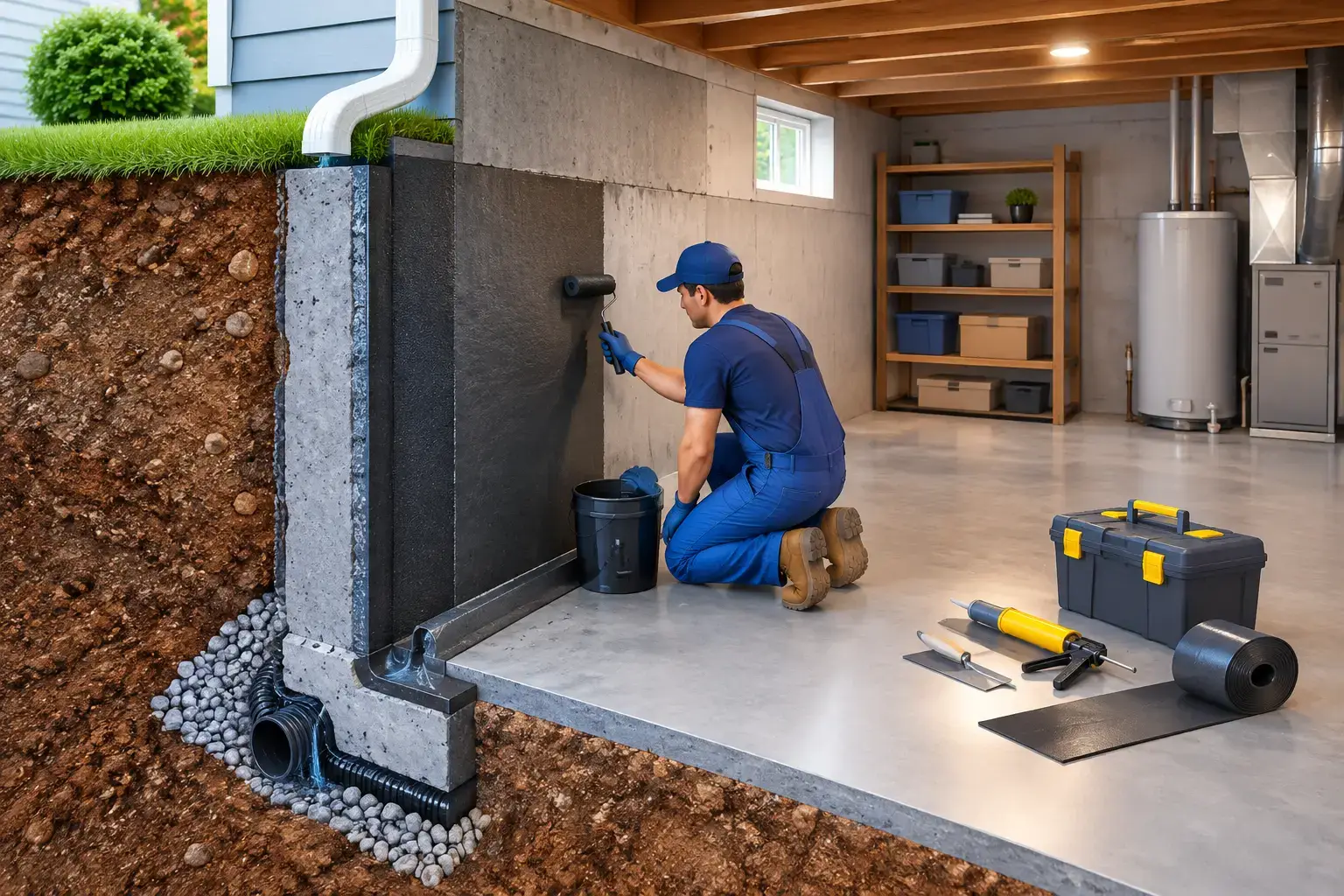
Inside the basement, the crew created a controlled drainage path along the affected foundation perimeter. Water entering at the wall-floor joint could then flow into the drainage system rather than onto the basement floor. A wall protection layer directed moisture down into that system while helping keep the finished area separated from the damp foundation wall.
The drainage system led to a properly sized sump basin and pump. When water collected, the pump discharged it away from the home through a dedicated line. The system was designed so that water had a predictable route out of the basement instead of building pressure under the slab.
Outside, drainage corrections reduced the volume of roof runoff collecting near the foundation. Extending discharge farther from the home and improving the slope near the affected wall helped keep surface water moving away. These details are not optional extras. A sump system can manage groundwater effectively, but it should not be asked to handle unnecessary water caused by poor runoff control.
Why Not Just Seal the Wall?
Wall sealants can be useful in limited situations, such as addressing minor surface moisture or specific cracks after the cause has been evaluated. They are not a reliable answer when water is being driven through the wall-floor joint by hydrostatic pressure.
In this case, sealing alone could have trapped water pressure behind the wall and left the real entry point untreated. The homeowner would have spent money without gaining dependable protection. A repair plan should match the source of the water, not simply the place where water becomes visible.
Why an Interior System Made Sense
Exterior waterproofing can be appropriate when excavation is practical and outside foundation conditions require direct access. However, excavation may involve landscaping, hardscapes, access limitations, and added disruption. It is not automatically the best answer for every flooded basement.
For this home, an interior drainage system provided a direct way to relieve and collect water at the basement perimeter without excavating around the foundation. Combined with corrected runoff management outside, it addressed both groundwater control and surface water exposure. The right choice always depends on the home, the soil conditions, the water pattern, and the condition of the foundation.
What the Homeowner Could Expect During Installation
Basement waterproofing work can feel disruptive, especially in a finished space. A professional crew should explain what will be moved, protected, removed, and restored before work begins. In this case, the affected finished materials near the perimeter had to be opened so the drainage system could be installed correctly.
The installation process included protecting the work area, removing the required strip of flooring and lower wall materials, creating the drainage channel, installing the collection system and sump components, then cleaning the site thoroughly. The homeowner retained clear access to the project team throughout the work and understood where future maintenance access would be located.
There is a trade-off here: a permanent water-control system may require opening finished areas. But leaving wet materials and hidden moisture in place carries its own cost. A clean, controlled repair is usually far less disruptive than repeated flooding, damaged finishes, and ongoing uncertainty every time rain is in the forecast.
The Result After the Next Heavy Rain
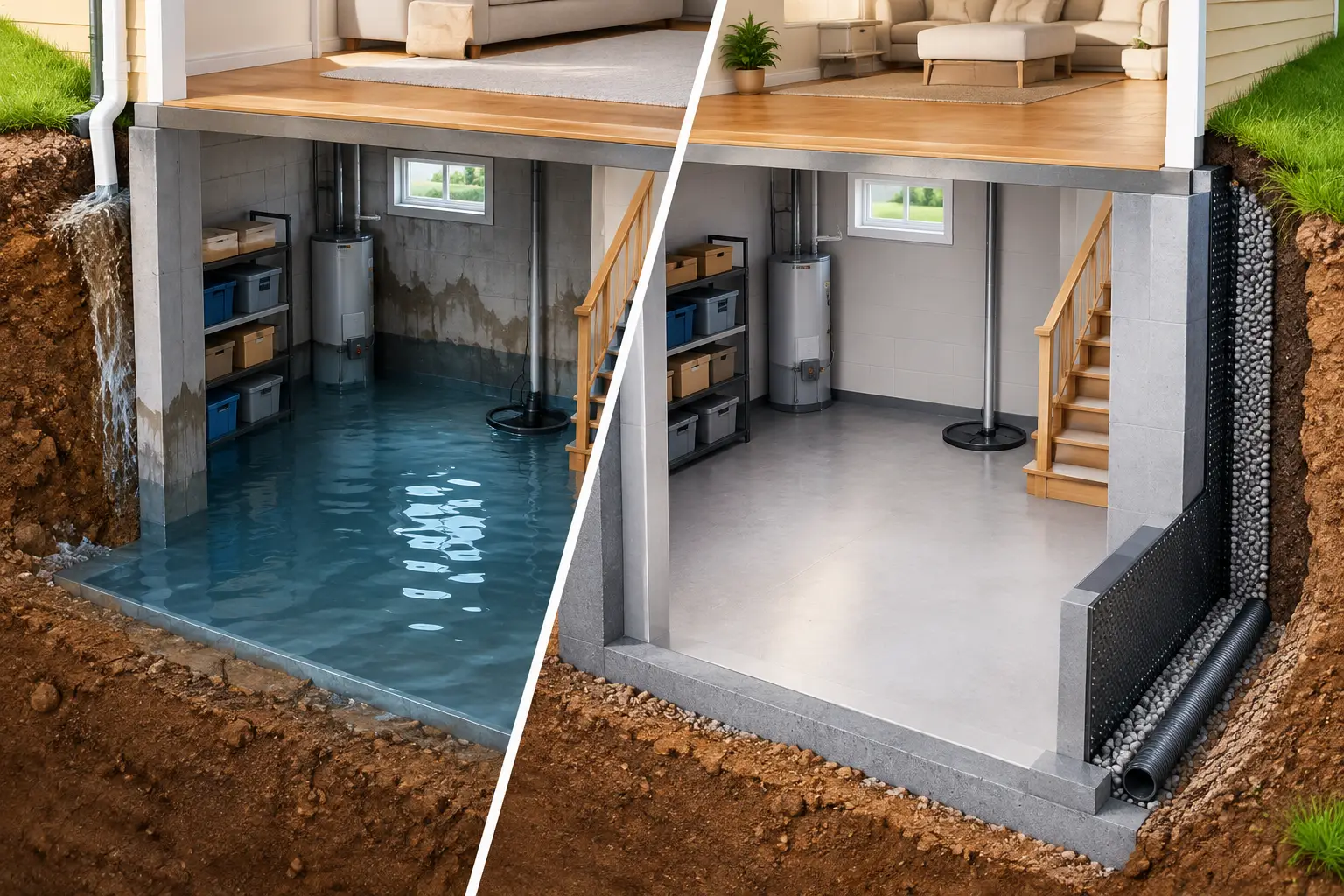
The first meaningful test came with a prolonged storm that would previously have left water along the basement wall. This time, the basement floor remained dry. The system collected water before it entered the usable space, and the sump pump discharged it away from the foundation.
Just as important, the homeowner no longer had to treat the basement as a space that might flood whenever storms passed through. After damaged materials were addressed and the space had fully dried, the basement could be restored with greater confidence.
A dry basement also protects more than belongings. It helps preserve indoor air quality, reduces the risk of moisture-related damage to finishes, and supports the long-term value of the home. When water intrusion is paired with foundation movement, wall cracks, or bowing walls, prompt inspection becomes even more important because the repair plan may need to address both moisture and structural conditions.
What Homeowners Can Learn From This Case
The lesson is not that every wet basement needs the same system. Some homes have a failed sump pump. Others have clogged or poorly directed downspouts, a cracked foundation wall, or water entering through a window well. The correct solution depends on an honest diagnosis.
What does not change is the need to act before a minor water problem becomes a damaging one. If you see damp walls, mineral staining, moldy odors, wet carpet edges, standing water, or water at the wall-floor joint, schedule a professional evaluation. Foundation Works provides free, no-obligation inspections and straightforward recommendations based on what your home actually needs.
A basement should not become unusable every time it rains. Address the water path now, and you can protect the space, the foundation, and the investment beneath your feet.