A wet basement after a hard Virginia rain is not always a foundation failure. Sometimes, the warning sign starts several feet away from the wall. Grading around foundations determines where rainwater goes once it leaves your roof and lands in your yard. When the ground slopes toward the house, that water can collect against the foundation, saturate the soil, and create pressure where your home needs stable, dry support.
The right grade is one of the most practical ways to protect a basement, crawlspace, and foundation. It is also easy to overlook because the problem develops outdoors while the symptoms show up inside: damp walls, standing crawlspace water, musty odors, peeling paint, or cracks that seem to get worse over time.
Why grading around foundations matters
Soil holds water. The more water it holds, the heavier it becomes and the more pressure it can place against basement walls. In areas with clay-heavy soil, common throughout parts of Northern Virginia and Maryland, wet soil can expand and dry soil can shrink. That repeated movement can contribute to settlement, wall movement, drainage problems, and cracks.
Poor grading also gives water a direct path to the lowest point around your home. If that low point is next to the foundation, water may work through wall cracks, joints, window wells, utility openings, or porous concrete. A crawlspace can remain damp long after a storm has passed, creating conditions that encourage wood rot, mold growth, and weakened floor framing.
A foundation is built to carry the weight of a home. It should not have to constantly manage roof runoff and pooled surface water. Proper drainage reduces that burden by moving water away before it has a chance to build up.
Warning signs the yard may be draining toward your home
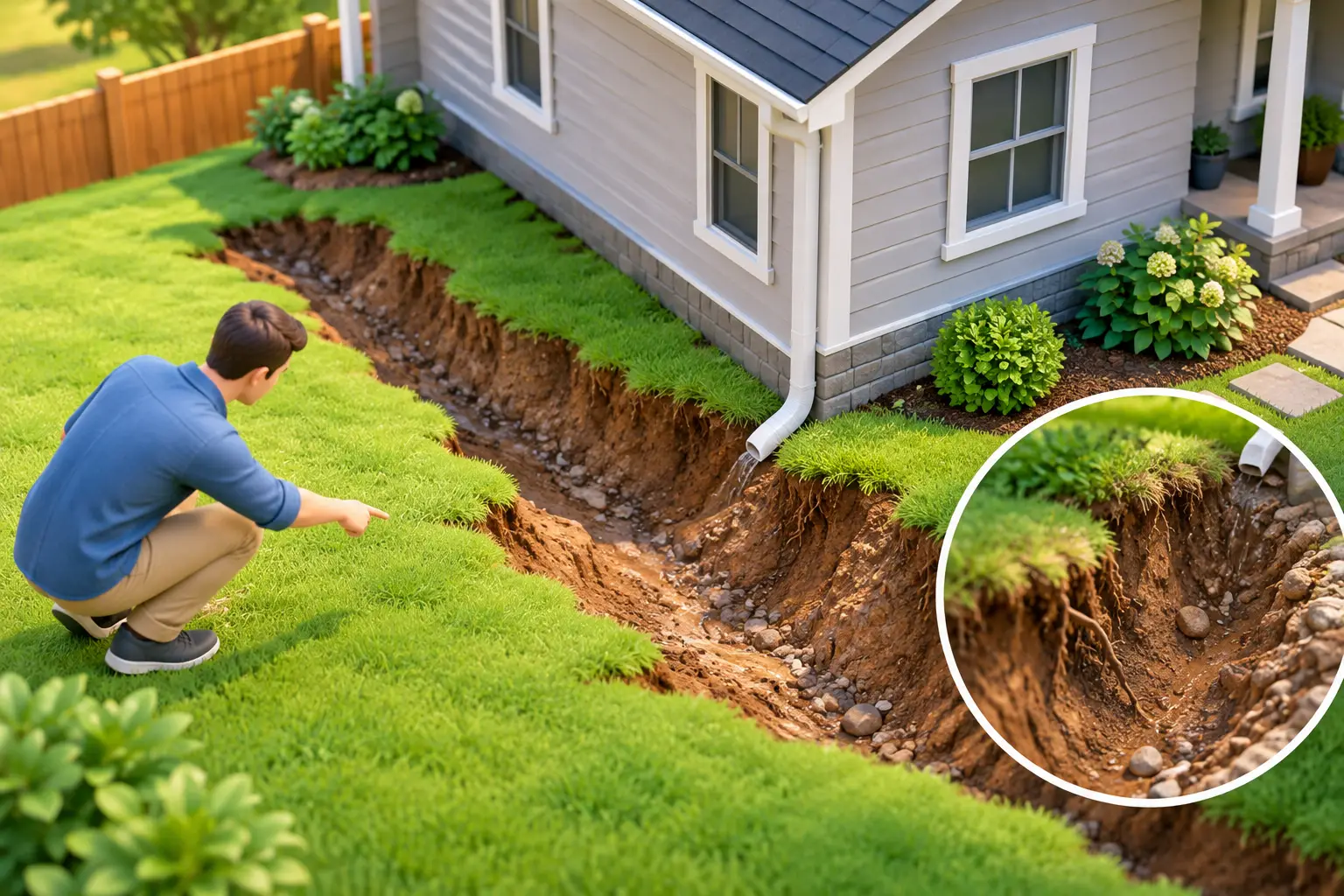
Walk around your house during or shortly after a steady rain. Look for water sitting near the walls, muddy areas that never seem to dry, or mulch and soil washed away from the foundation. Those visible clues matter, but indoor symptoms can be just as revealing.
You may have a grading problem if you notice a damp or musty basement, water stains on lower walls, recurring crawlspace moisture, efflorescence on concrete, or puddles near basement doors and window wells. Sticking doors, new drywall cracks, sloping floors, and cracks in masonry may point to a structural concern as well, particularly when they appear alongside long-term water exposure.
Not every crack means the foundation is failing, and not every wet basement is caused by grading. A broken downspout extension, a clogged gutter, a leaking plumbing line, or groundwater pressure can produce similar symptoms. The key is identifying where the water originates and how it reaches the foundation before choosing a repair.
What proper grading around foundations looks like
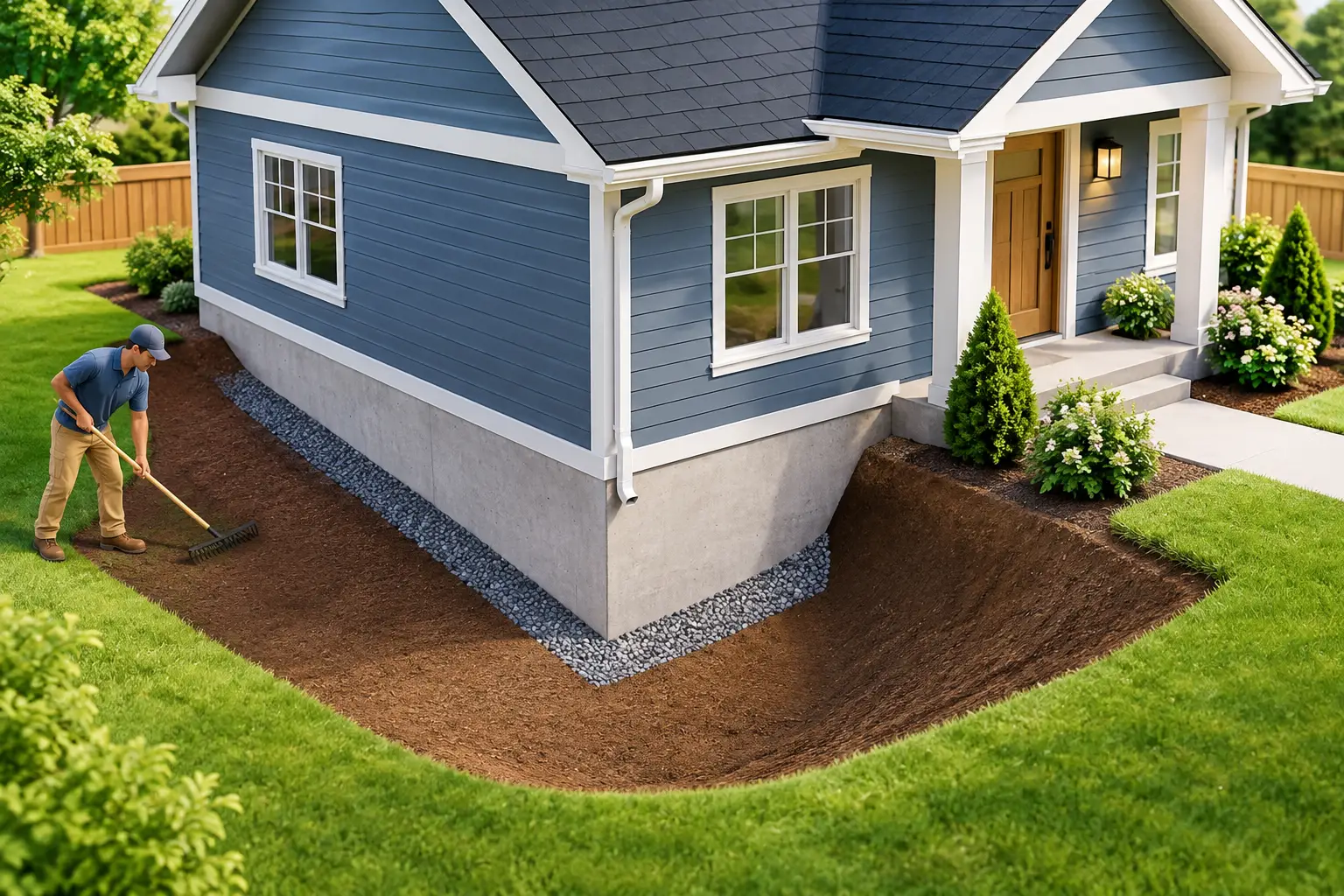
A properly graded yard starts high near the foundation and slopes downward away from the house. As a general rule, the finished ground should fall about 6 inches over the first 10 feet from the foundation. The exact grade depends on the property, soil type, landscaping, walkways, and local conditions, but the principle stays the same: surface water should flow away, not back toward the walls.
Keep soil below siding and framing
The grade cannot simply be raised as high as possible. Soil, mulch, and landscaping should remain below wood siding, trim, and other vulnerable building materials. When soil is piled too high, it can trap moisture against the structure, conceal termite activity, and allow water to reach framing that should stay dry.
For homes with brick veneer, the exposed foundation area and drainage openings should not be covered. Blocking these details can create moisture problems behind the exterior wall. A drainage correction must protect the foundation without creating a new problem above it.
Move roof water farther from the house
Even a well-sloped yard can be overwhelmed when gutters overflow or downspouts empty beside the foundation. Roofs collect a surprising volume of water during a storm, then concentrate it at a few downspout locations. Extensions should discharge water well away from the home and onto an area that continues to slope outward.
Avoid directing downspouts onto a driveway, neighbor’s property, or a spot where water immediately turns back toward the house. If the yard is tight, heavily landscaped, or naturally slopes toward the home, a custom drainage approach may be needed to manage runoff responsibly.
Check patios, walks, and landscape borders
Hard surfaces can create hidden drainage paths. A settled patio, front walk, or driveway that slopes toward the house may send water directly against the foundation. Decorative edging, raised flower beds, and thick mulch can also act like small dams, trapping water where it should be draining away.
These conditions do not always require a major reconstruction. Sometimes the answer is adjusting soil, correcting a small low spot, extending downspouts, or changing how water moves through a landscaped area. Other times, the surface drainage problem is tied to deeper water intrusion or structural movement and needs a more complete repair plan.
Common grading mistakes homeowners make
The most common mistake is adding soil near the house without checking the final slope and exterior clearances. It may cover a low area temporarily, but if the soil settles, the original problem returns. It can also bury siding or create a pathway for moisture into the structure.
Another mistake is relying on mulch to solve drainage. Mulch has value in landscaping, but it absorbs water and can hold moisture against the foundation when applied too deeply. It is not a substitute for a properly sloped grade.
Homeowners also sometimes correct only one downspout while overlooking the larger drainage pattern. If several roof lines dump water near the home, or a backyard slope funnels runoff toward the basement wall, one extension will not fix the root cause. Permanent results come from seeing the entire water path, from roofline to discharge point.
When grading alone is not enough
Grading is preventive, but it cannot reverse every foundation or moisture issue. If water has already caused wood rot, weakened beams or joists, damaged crawlspace insulation, or contributed to failing basement walls, the home may need structural restoration and moisture-control work in addition to surface drainage corrections.
Likewise, a bowed basement wall, large horizontal crack, widening stair-step brick crack, or rapidly worsening settlement should not be treated as a landscaping project. These signs may indicate soil pressure or foundation movement that requires an engineering-based evaluation. Covering the symptom with fresh soil can delay the repair while the underlying condition continues.
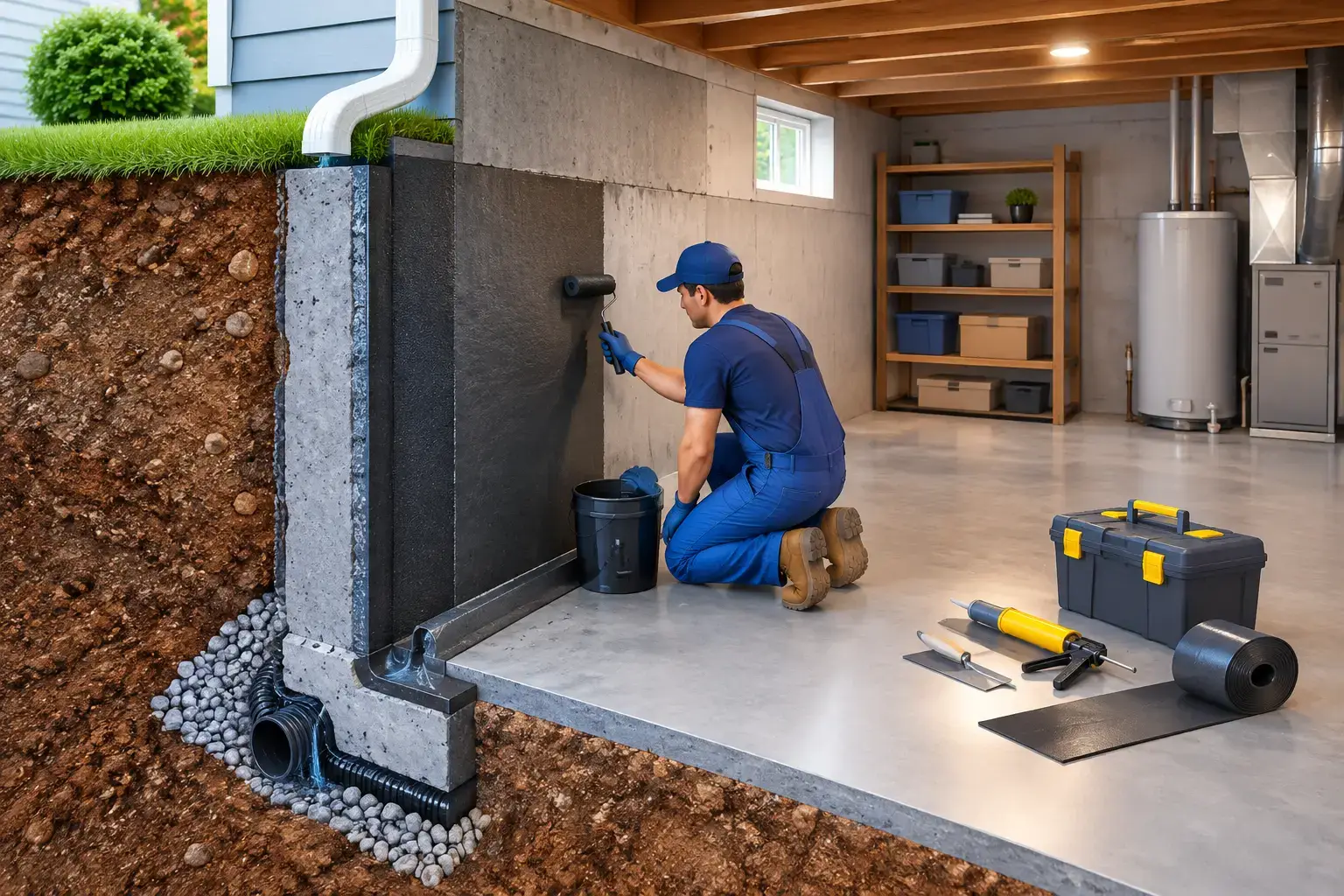
Basement water can also come from below grade rather than from the surface. Hydrostatic pressure, poor exterior drainage, leaking wall penetrations, and inadequate interior water management can all play a role. The right solution depends on the source of the water, the construction of the home, and the condition of the foundation itself.
Start with an honest diagnosis
Before moving dirt or paying for a drainage project, inspect the property after rainfall. Note where water collects, where downspouts discharge, and whether the ground falls toward the house. Inside, check for dampness, odors, stains, wall cracking, and changes in doors or floors. Photos taken during a storm can be especially helpful because they show the water path clearly.
If you are seeing water intrusion, persistent crawlspace moisture, or possible structural movement, a professional inspection can separate a simple grading correction from a larger repair need. Foundation Works provides no-pressure evaluations designed to identify the actual cause, whether that means improving drainage, addressing water entry, or recommending a permanent structural repair.
Your yard should act as your home’s first line of defense, not a funnel aimed at its foundation. Correcting the slope while the problem is still manageable can help keep water outside, where it belongs.