
A wet basement wall after a hard storm is not always a foundation failure. But it is always a reason to look at where water is going. The best drainage systems move roof runoff and groundwater away from the foundation before pressure builds, soil shifts, or moisture reaches the basement or crawlspace. For Virginia homeowners, that often means combining more than one solution rather than relying on a single drain or a quick sealant.
Water problems are rarely random. A downspout that empties beside the house, a low area in the yard, compacted clay soil, or a clogged footing drain can all send water toward the same vulnerable place: the foundation. The right system starts with an honest diagnosis of the water source, the grade around the home, and the condition of the foundation itself.
What Makes a Drainage System Work?
Drainage is not simply about installing a pipe. A working system must collect water, carry it through a clear path, and discharge it far enough from the home that it cannot flow back toward the foundation. If any one of those steps fails, water can still pool against walls, saturate crawlspace soil, or create hydrostatic pressure below grade.
The best approach depends on whether the water is coming from the roof, the surface of the yard, or groundwater at the footing level. Homes in Northern Virginia and the Maryland metropolitan region commonly deal with dense soils that drain slowly. During repeated storms, even a small grading problem can leave water standing near a foundation long enough to become a serious moisture issue.
A drainage plan should also account for the home’s existing warning signs. Damp basement walls, a musty crawlspace, white mineral staining on masonry, puddles near the foundation, mold growth, and recurring sump pump activity all point to a water-management issue. Cracks, bowing walls, and settling may indicate that long-term soil movement or pressure is now affecting the structure.
The Best Drainage Systems for Different Water Problems
There is no single drainage product that is right for every house. The most effective systems address the specific route water takes to reach the foundation.
Gutters and Downspout Extensions
For many homes, the first drainage failure is above ground. Gutters collect roof runoff, but they only protect the foundation if they are clean, properly sloped, and connected to downspouts that release water well away from the house.
Short downspouts are a common problem. When they discharge at the edge of the foundation bed, thousands of gallons of roof water can soak the same area during a season of heavy rain. Extensions or buried downspout lines can carry that runoff to a suitable discharge point.
This is often the most practical first improvement when water appears after rain near a particular corner of the home. Still, extensions alone will not solve a below-grade water issue, a negative yard slope, or a clogged footing drain.
Surface Grading and Swales
The ground around the foundation should slope away from the house so surface water naturally travels outward. A shallow channel in the landscape, called a swale, can guide runoff around the home and toward a safe drainage area.
Grading is especially valuable when water pools near exterior walls or flows back toward the house from a patio, driveway, or neighboring slope. It can be a straightforward fix, but it must be planned carefully. Adding soil too high against siding, brick openings, or exterior finishes can create other moisture problems.
A properly graded yard handles ordinary rainwater before it becomes foundation water. It is not always enough for a home with a deep basement or high groundwater, but it is a critical part of a complete drainage strategy.
French Drains for Surface and Groundwater Control
A French drain is a trench containing perforated pipe and drainage stone, typically wrapped in filter fabric to reduce soil intrusion. Water enters through the stone, flows into the pipe, and is directed away from the problem area.
French drains work well where water repeatedly collects in a low yard area, along a retaining edge, or near a foundation due to saturated soil. An exterior French drain may also be part of a larger waterproofing plan when groundwater is placing pressure on basement walls.
The trade-off is that installation requires correct depth, slope, pipe placement, and discharge design. A poorly installed French drain can fill with sediment, hold water, or send runoff toward another part of the property. It should never be treated as a decorative landscaping feature when the foundation is involved.
Exterior Footing Drains
Exterior footing drains are installed at the base of the foundation, where they collect groundwater before it can build pressure against below-grade walls. They are often the most direct way to manage water around a basement foundation because they address the problem outside the wall.
This approach can be appropriate when a foundation is already being excavated for repairs or when exterior water pressure is severe. It is a substantial project, and access around the home matters. Porches, decks, utilities, landscaping, and tight lot lines can affect whether exterior excavation is the most practical choice.
When installed as part of an engineering-based repair plan, footing drainage can protect both the basement environment and the structural wall from repeated water loading.
Interior Perimeter Drainage and Sump Pumps
When groundwater is reaching the basement floor level, an interior perimeter drainage system may be the better solution. This system is installed along the inside edge of the basement slab to collect water that reaches the footing area and direct it to a sump basin. The sump pump then discharges that water away from the home.
Interior drainage is often effective when exterior excavation is impractical or when water is entering at the floor-wall joint. It manages water reliably, but it does not eliminate the need to control roof runoff and surface grading outside. If downspouts continue dumping water beside the foundation, the system may have to work harder than necessary.
A sump pump should have a properly routed discharge line. The discharge must not release water next to the foundation or into an area where it will freeze, back up, or drain toward the home. For homes that lose power during major storms, a battery backup can provide added protection.
Crawlspace Drainage Solutions
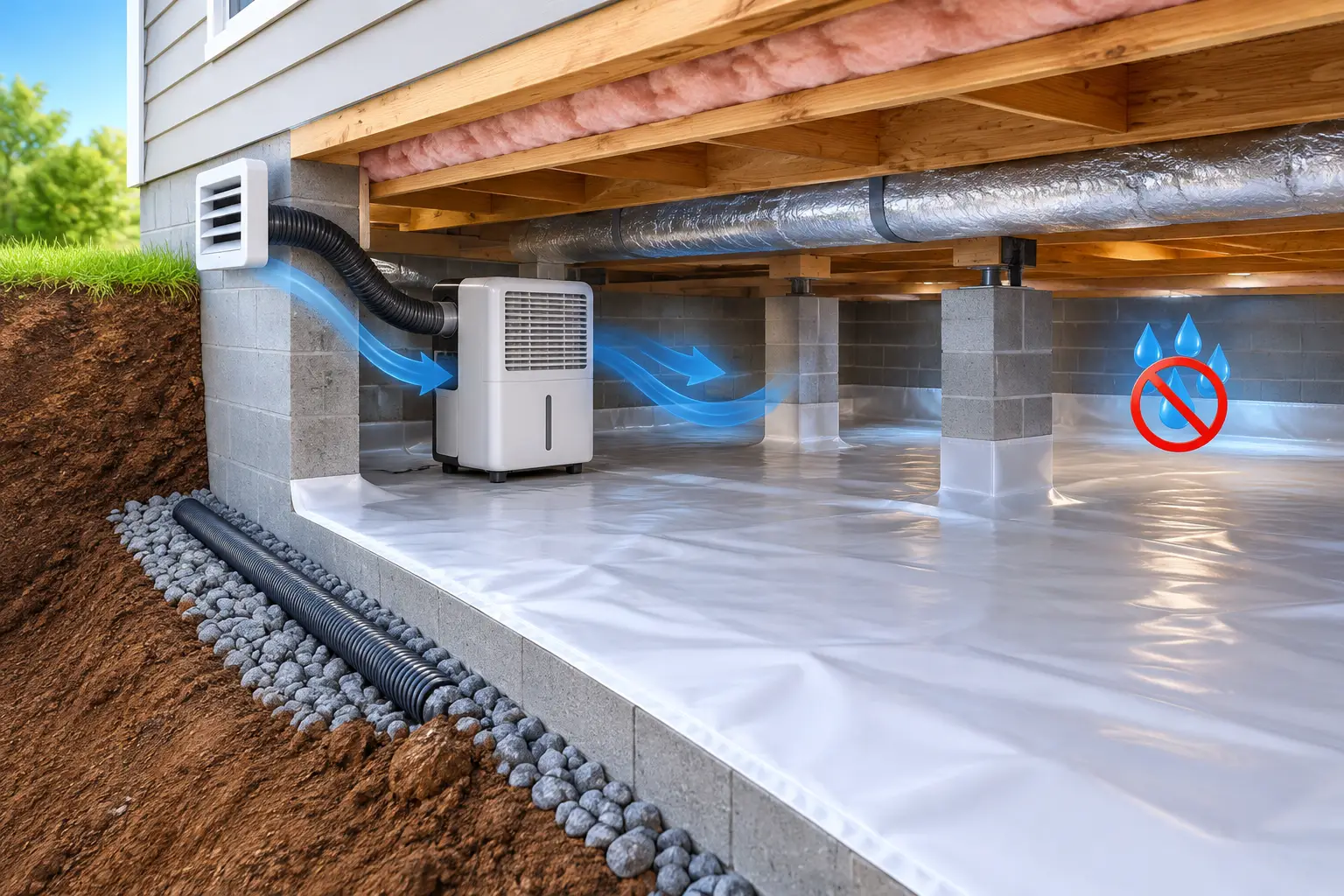
A crawlspace with standing water, wet soil, or persistently high humidity needs more than a plastic vapor barrier laid over the ground. Water must be collected and removed before moisture damages beams, floor joists, insulation, or subflooring.
Crawlspace drainage may include perimeter collection channels, a sump pump, and a sealed vapor barrier system. The correct combination depends on whether the moisture is coming from surface runoff, groundwater, plumbing leaks, or humid outside air. Encapsulation is highly effective for controlling moisture, but it should follow drainage correction when water is actively entering the crawlspace.
Warning Signs That Call for a Professional Evaluation
Some drainage concerns are easy to spot, such as overflowing gutters or a downspout that ends at the foundation. Others appear inside the home first. If you notice a damp or musty basement, water stains, mold, peeling paint, efflorescence, or puddles after storms, the drainage system deserves attention.
Structural warning signs raise the urgency. Horizontal cracks in basement walls, inward movement, stair-step cracks in masonry, sticking doors, sloping floors, and recurring foundation cracks can mean water and soil conditions are contributing to foundation stress. Sealing the visible crack without correcting the water source may only hide the problem temporarily.
A professional inspection should distinguish between minor maintenance needs and conditions that require a more complete waterproofing or foundation repair plan. The goal is not to sell the largest system. It is to identify the path water is taking and stop it at the source.
Choosing a Permanent Drainage Solution
The right drainage system is based on the property, not a one-size-fits-all recommendation. A home with roof runoff problems may need gutter corrections and longer downspouts. A home with a wet basement floor may require interior drainage and a sump pump. A house with saturated soil and bowing foundation walls may need both water management and structural repair.
Before approving work, ask where the water will be collected, where it will discharge, and how the system addresses the actual cause of the problem. You should also understand whether the recommended solution protects the foundation from pressure or simply manages water after it enters the home.
Foundation Works evaluates drainage, waterproofing, crawlspace, and foundation concerns as connected systems. That matters because the most durable repair is the one that addresses both the symptom you can see and the water conditions creating it.
Water around a foundation does not become less damaging with time. If your home is showing signs of moisture intrusion or soil-related movement, a clear inspection now can help prevent a small drainage issue from becoming a costly structural repair later.