A horizontal crack stretching across a basement wall, a wall that feels bowed when you hold a level against it, or damp soil pressing against the exterior are not problems to watch casually. The decision to reinforce foundation walls should be based on what is causing the movement, how far the wall has shifted, and whether that force is still active. The right repair can stabilize your home for the long term. The wrong one can hide a serious issue while pressure continues to build.
For homeowners in Virginia and the Maryland metro area, foundation wall trouble often follows heavy rain, poor drainage, expanding clay soils, aging construction, or years of moisture exposure. A professional evaluation separates a cosmetic crack from a structural warning sign and identifies the permanent repair system your home actually needs.
Signs You May Need to Reinforce Foundation Walls
Foundation walls are built to carry the weight of the home above them, but they can be vulnerable to pressure from the soil outside. When wet soil expands or groundwater cannot drain properly, that pressure can push inward on basement or crawlspace walls. Over time, movement may become visible inside the home.
A horizontal crack is one of the clearest signs of outside soil pressure. Unlike many vertical cracks, which can result from normal curing or minor settlement, a horizontal crack often indicates that a wall is bending inward. Stair-step cracks in block walls, especially when they widen over time, also deserve prompt attention.
Look for bowing, bulging, or inward-leaning walls. You may notice that shelves no longer sit flush against the wall or that a straightedge reveals a visible gap near the center. Other connected symptoms can include sticking doors, cracks above windows, uneven floors, water seepage, or loose masonry joints.
Not every crack requires structural reinforcement. Hairline cracks that are stable, dry, and not widening may not indicate active movement. But homeowners should not have to guess. Tracking a crack with pencil marks can show whether it changes, but it does not identify why it formed or whether the wall is under continuing pressure.
Why Foundation Walls Begin to Move
Most failing foundation walls are not caused by one dramatic event. They are the result of forces working against the wall over many seasons.
Water is usually a major factor. Roof runoff that discharges beside the house, clogged gutters, short downspouts, negative grading, and saturated soil all increase hydrostatic pressure around the foundation. During freeze-thaw cycles, soil can also expand and push against below-grade walls.
In some homes, the original drainage system has aged, become clogged, or was never adequate for the property. Older block foundations may be particularly susceptible because mortar joints can weaken after decades of moisture exposure. Tree roots, nearby construction, and changes to landscaping can also alter how water moves around a home.
The repair must account for these conditions. Reinforcing a wall without correcting the moisture or drainage issue may stop visible movement for a time, but it does not remove the force that created the problem. Permanent solutions address both the wall and the conditions placing it under stress.
How Professionals Reinforce Foundation Walls
There is no one-size-fits-all foundation repair. The proper system depends on the wall material, the direction and extent of movement, access around the home, soil conditions, and whether the wall needs only stabilization or can be carefully brought closer to its original position.
Carbon Fiber Reinforcement for Minor to Moderate Bowing
Carbon fiber reinforcement is often used for poured concrete walls with cracks or limited inward movement. High-strength carbon fiber straps are bonded vertically to the wall to help resist further deflection. The material is low profile, so it does not take up usable basement space and can often be covered during finishing work.
This is a strong stabilization option when a wall is structurally sound enough for the system and movement has not progressed too far. Carbon fiber does not typically straighten a significantly bowed wall, and it is not a substitute for solving outside drainage problems.
Wall Anchors for Outside Soil Pressure
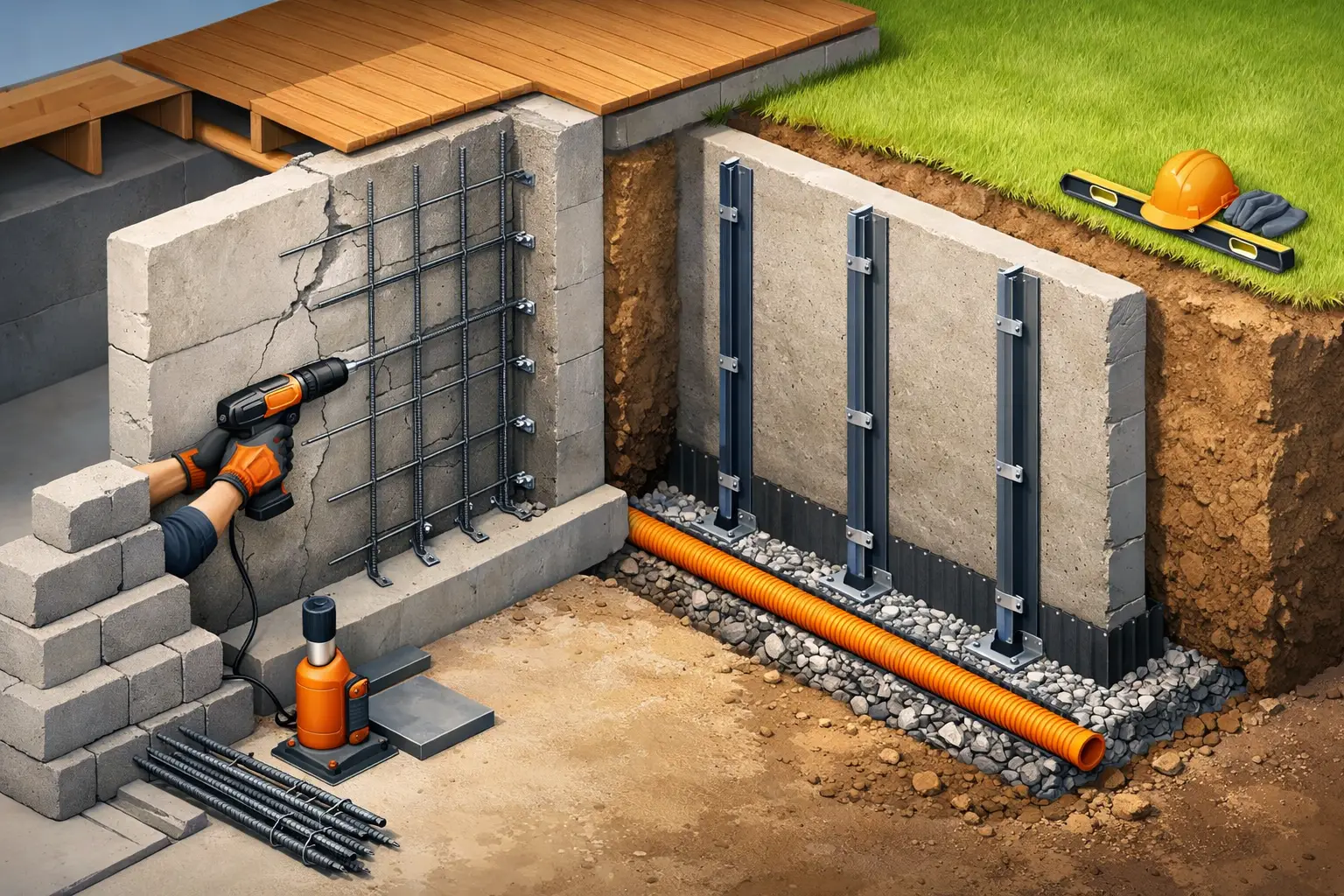
Wall anchors are designed for walls affected by ongoing lateral soil pressure. The system connects an interior wall plate to an exterior earth anchor placed in stable soil away from the foundation. A steel rod joins the two components, creating resistance against further inward movement.
Wall anchors can be a practical long-term solution for block or concrete walls when there is enough open space outside the home for installation. In some situations, periodic tightening may allow gradual improvement in a bowed wall. However, property lines, patios, utilities, and landscaping can limit whether this approach is appropriate.
Steel I-Beams and Other Interior Bracing
Steel beams may be installed along the inside of a foundation wall to provide direct support where space or exterior access makes anchor systems less practical. These systems are engineered to resist additional movement and can be effective for walls with more substantial deflection.
Interior bracing can be an appropriate answer in a tight lot or beneath areas where excavation is not desirable. Still, steel support alone should not be treated as a shortcut. If water is collecting against the wall, drainage correction and waterproofing may be part of the repair scope.
Stabilization Is Not the Same as Cosmetic Crack Repair
Filling a crack can improve appearance and reduce minor water entry, but it does not reinforce a wall that is being pushed inward. Paint, patching compounds, and surface sealers may temporarily cover the evidence of movement. They do not stop soil pressure, correct weakened structure, or restore peace of mind when the wall is actively shifting.
This distinction matters when buying, selling, or refinancing a home. A visible patch without a documented structural solution can leave future buyers with questions. A properly designed repair addresses the concern directly and helps protect the home’s long-term value.
A thorough inspection should examine more than the crack itself. The technician should assess the degree of wall movement, inspect drainage and grading, look for moisture patterns, evaluate related framing concerns, and determine whether settlement is contributing to the issue. This root-cause approach prevents homeowners from paying for work that treats only the symptom.
What Homeowners Should Do Before the Repair
If you see bowing walls, widening cracks, or fresh water intrusion, avoid storing heavy items against the affected wall and do not attempt to push it back into place. Keep the area accessible for inspection, especially if the wall is in a basement utility room or crawlspace.
Outside, make sure gutters are clear and downspouts direct water away from the foundation. Do not add large amounts of soil against the house to hide exposed foundation walls, as this can worsen moisture conditions. If the ground near the home stays soggy after rain, mention that during the inspection.
Take clear photos of cracks and note when you first noticed them. If a crack has widened quickly, a wall has visibly shifted, or masonry is breaking apart, schedule an evaluation promptly. Structural movement rarely becomes less expensive by waiting.
Choosing a Permanent Repair Plan
The best plan is not automatically the biggest or most expensive system. It is the one that matches the actual cause and condition of your foundation wall. A stable hairline crack may need monitoring or limited sealing. A bowing wall under active soil pressure may require anchors, carbon fiber, steel reinforcement, drainage improvements, or a combination of solutions.
Ask whether the recommended repair is intended to stop further movement, improve existing deflection, control water, or all three. You should also understand where the system will be installed, how the work may affect landscaping or finished basement areas, and what ongoing maintenance is recommended.
Foundation Works approaches these problems with engineering-based diagnosis and proven repair systems, not cosmetic patches. A free, no-obligation inspection can give you a clear explanation of what is happening beneath and around your home, along with an honest recommendation for the next step.
A foundation wall does not need to fail completely before it deserves attention. Acting when the first meaningful warning signs appear gives you more repair options, protects the structure above, and helps keep a manageable concern from becoming a major disruption.