A hard rain should not leave you wondering whether your home is moving. But when water pools near the foundation, basement walls feel damp, or a familiar crack appears to widen, the concern is justified. Can wet soil damage foundations? Yes. Saturated soil can create pressure, lose its ability to support the structure evenly, and set off movement that leads to cracks, bowing walls, and uneven floors.
The good news is that wet soil does not automatically mean your foundation has failed. The condition of the soil, the amount of water, the drainage around the home, and the foundation’s existing condition all matter. The key is identifying whether moisture is creating a temporary nuisance or a structural problem that needs a permanent fix.
How Wet Soil Affects a Foundation
Soil is part of your home’s support system. When it is relatively stable, it distributes the home’s weight consistently. When it becomes saturated, that support can change quickly.
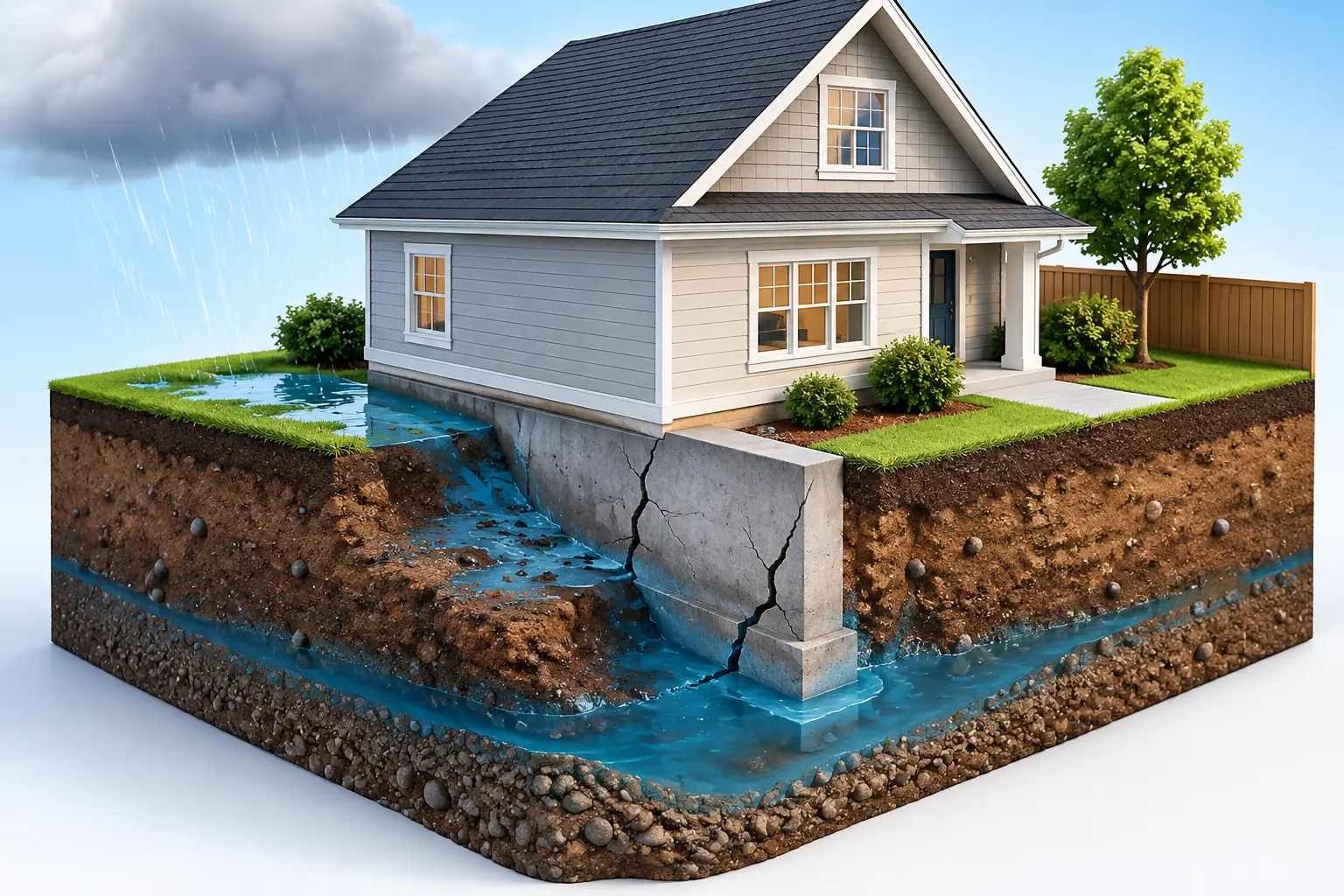
Wet soil becomes heavier and can press against below-grade basement walls. This is called hydrostatic pressure. Concrete is strong when carrying weight straight down, but it is far less suited to resisting constant sideways force. Over time, pressure from waterlogged soil can cause walls to crack, lean inward, or bow through the middle.
At the same time, saturated soil beneath a footing may soften or shift. If one section of soil loses bearing strength more than another, the foundation can settle unevenly. That uneven movement can show up as stair-step cracks in brick, vertical or diagonal cracks in foundation walls, sticking doors, and sloping floors upstairs.
Many Virginia and Maryland homes sit on clay-rich soils, which make moisture changes more significant. Clay expands as it absorbs water and shrinks as it dries. That repeated cycle can put a foundation through ongoing movement, especially when roof runoff, poor grading, or a clogged drainage path keeps water concentrated along one side of the home.
Can Wet Soil Damage Foundations Without Flooding?
Yes. Foundation damage does not require a dramatic flood or several inches of standing water in the basement. Slow, repeated moisture exposure is often the more deceptive problem.
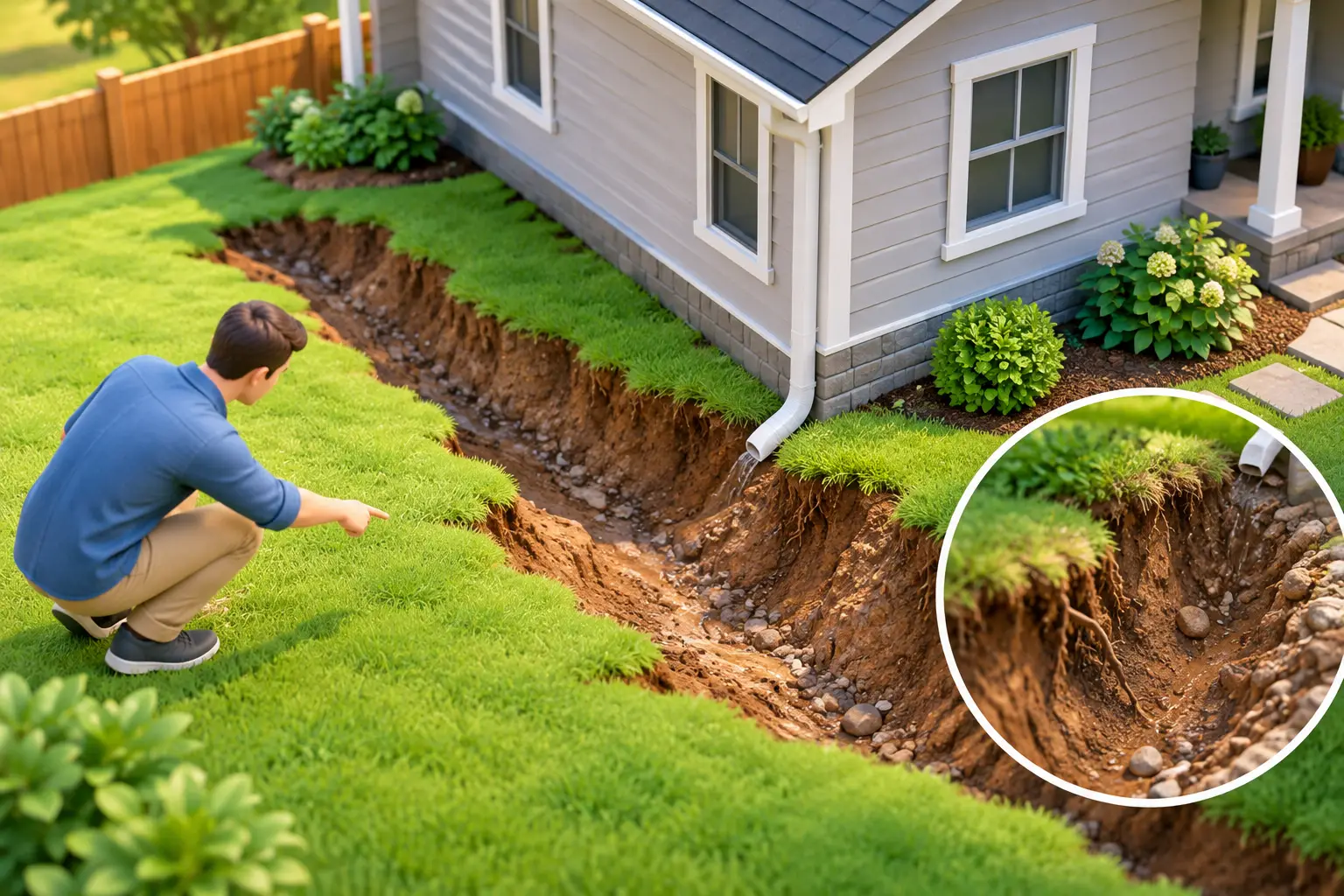
A downspout that empties beside the house, a low spot in the yard, or soil that slopes toward the foundation can deliver water to the same area after every storm. Water may seep down along the wall, saturate backfill soil, and create pressure long before it becomes visible indoors.
Seasonal patterns matter, too. A wet spring can swell the soil around the home. A hot, dry stretch can then cause that same soil to contract. The foundation may experience small movements in opposite directions over and over. A house can tolerate some normal seasonal change, but persistent movement can enlarge minor cracks and strain framing, finishes, and utility connections.
Warning Signs That Moisture May Be Affecting Your Foundation
Homeowners often notice the interior symptoms first. A basement crack may appear after a rainy season, or doors that once closed smoothly may begin sticking. These signs do not all mean the same thing, but they deserve attention when they occur together or continue to worsen.
Look for cracks in foundation walls, especially horizontal cracks or stair-step cracks in masonry. Watch for basement walls that appear bowed, tilted, or pushed inward. Water stains, damp wall surfaces, peeling paint, musty odors, and recurring seepage can indicate that water is building up outside the wall.
Inside the living space, new drywall cracks, gaps near trim, uneven floors, and windows or doors that bind can point to settlement or shifting below. In a crawlspace, wet insulation, standing water, wood rot, mold growth, sagging beams, or soft floor areas are more urgent warnings. Moisture below the home can weaken wood framing while unstable soil affects the foundation above it.
One hairline crack is not always an emergency. Concrete naturally shrinks as it cures, and older homes often have minor cosmetic cracks. The concern rises when cracks are widening, water is entering, walls are moving, or several symptoms appear at once.
Why Sealing a Crack Is Not Always the Fix
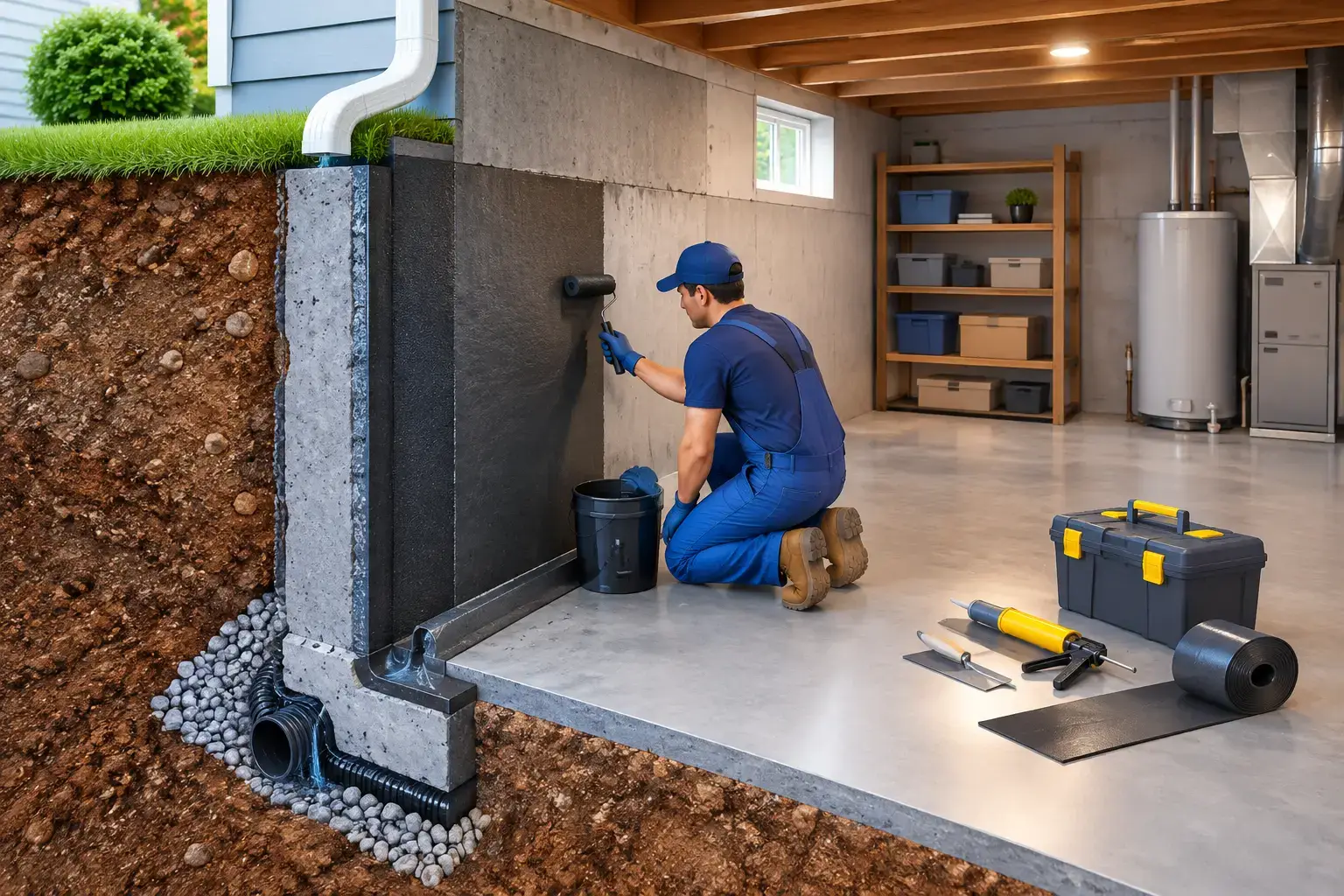
A visible crack is often where the problem becomes noticeable, not where it begins. Applying a surface sealant may reduce a small amount of water intrusion, but it does not relieve exterior soil pressure, correct settlement, or stop water from collecting beside the foundation.
The right repair starts with diagnosis. Is the primary issue water pressure against a basement wall? Is soil movement causing settlement? Is a drainage failure feeding water toward the home? Has moisture in a crawlspace led to damaged beams, joists, or floor framing? Each condition requires a different scope of work.
For example, a wall that is actively bowing may need structural reinforcement designed to stabilize it, along with waterproofing and drainage corrections that reduce the pressure behind it. A settling foundation may require a solution that addresses the support beneath the structure. A damp crawlspace may need moisture control and repairs to compromised framing. Treating only the visible crack can leave the root cause in place.
What Homeowners Can Check After Heavy Rain
You do not need to diagnose a foundation problem yourself, but a quick exterior check can reveal conditions worth correcting. Walk around the home after rain and see where water travels. It should move away from the foundation, not collect against it.
Check that gutters are not overflowing and that downspouts discharge well away from the house. Look for soil that has settled below the top of the foundation, creating a channel where water can run toward the wall. Notice whether mulch, landscaping borders, patios, or walkways trap water against the home.
Also inspect the basement or crawlspace within a day or two of a major storm. New damp spots, puddles, wall stains, or a stronger musty odor are useful clues. Take photos of cracks and water entry points so you can compare them over time. If a crack changes quickly or a wall appears to move, do not wait for the next storm to see what happens.
When to Schedule a Foundation Inspection
An inspection is a practical next step when wet soil is accompanied by recurring water intrusion, widening cracks, wall movement, settling, or floor issues. It is also wise when you are planning to sell, buy, or renovate a home with a known moisture history. Catching the cause early may prevent a repair from becoming more extensive.
A qualified evaluation should separate cosmetic conditions from real structural concerns. Homeowners deserve a clear explanation of what is happening, why it is happening, and whether repair is necessary now or simply something to monitor. Engineering-based diagnosis matters because soil and water problems are rarely solved with a one-size-fits-all patch.
Foundation Works provides free, no-obligation inspections for homeowners who are seeing warning signs in their basement, crawlspace, or foundation. The goal is not to create alarm over every crack. It is to identify moisture and structural issues before continued soil movement turns a manageable repair into a larger risk to your home, safety, and property value.
If rainwater keeps returning to the same place around your home, treat that pattern as useful information. Addressing it early gives you more options, more control, and a better chance of protecting the foundation for the long term.