
A diagonal crack above a Fairfax living-room doorway was the first warning sign. Within months, the homeowner noticed that two doors no longer latched, a section of hardwood floor felt noticeably sloped, and a thin basement-wall crack had widened. This Fairfax foundation settlement case study shows why those symptoms needed more than crack filler – and how a careful diagnosis turned a worrying structural problem into a defined, permanent repair plan.
The property was an older single-family home with a basement, built on soil that had experienced years of seasonal moisture changes. The homeowner had initially assumed the issue was normal aging. But settlement does not become harmless because it develops slowly. When a foundation moves unevenly, the framing above it responds. Cracks, sticking doors, gaps at trim, and sloping floors are often connected signs of the same underlying movement.
What the Homeowner Saw Before Calling
The visible symptoms were concentrated on one side of the home. A stair-step crack had formed in the masonry exterior near the rear corner. Indoors, a crack extended from the top corner of a door opening, while baseboard gaps appeared along the adjoining wall. In the basement, the homeowner could see a horizontal separation where the wall met the floor in one area.
No single crack can confirm settlement on its own. Drywall can crack from seasonal movement, minor framing shifts, or ordinary settling after construction. The concern in this case was the pattern: multiple symptoms, all generally aligned with the same portion of the structure, and all becoming more apparent over time.
The homeowner also described water collecting near the rear foundation wall after heavy rain. That detail mattered. Water management may not be the sole cause of settlement, but repeated saturation and drying can change soil conditions around a foundation. Before recommending structural work, the inspection needed to determine whether drainage was contributing to the movement.
The Inspection: Looking Past the Crack
A sound settlement evaluation starts with the entire structure, not the most obvious damage. The inspection included a review of the exterior grade, downspout discharge, foundation walls, basement framing, floor elevations, and interior cracking. Measurements were taken to identify whether the floor slope and wall movement were localized or part of a broader structural pattern.
The findings pointed to differential settlement at the rear corner. In plain terms, that section of the foundation had moved lower than the rest of the home. The movement was not uniform, which explained why doors and floors were affected on one side while other rooms appeared normal.
The inspection also found that roof runoff was discharging too close to the house. Water had repeatedly concentrated near the same foundation area, and the surrounding soil grade directed additional surface water toward the wall. That did not mean drainage correction alone would reverse the existing settlement. It did mean that any lasting repair had to address both the support issue and the water conditions that could continue to stress the soil.
This distinction is critical. Sealing the interior crack would have improved appearance, but it would not have stabilized the settling corner. Regrading without structural support might reduce future moisture exposure, but it would not correct a foundation that had already lost adequate bearing. Permanent fixes require the right scope for the actual problem.
Fairfax Foundation Settlement Case Study: The Repair Plan
The repair plan had two goals: stabilize the settled foundation section and correct the drainage conditions around it. Because settlement had affected a defined area rather than the entire structure, the scope was targeted. A custom-designed piering system was specified along the affected foundation wall to transfer the home’s load to more stable supporting soil below.
After access was prepared, the installation crew excavated at the planned locations and placed the support system beneath the foundation footing. Hydraulic equipment was used to carefully stabilize the affected section. Where conditions allow, this process can also provide controlled lift toward the home’s original elevation. The goal is never to force a structure beyond what it can safely tolerate. The goal is stable support, measured adjustment, and protection against further settlement.
At the same time, the drainage plan called for redirecting roof runoff away from the rear foundation and improving the grade so surface water would move away from the home. This was not an optional add-on. It was part of treating the root cause. Structural support protects the foundation from continued downward movement, while proper drainage reduces the chance of recurring soil instability at that location.
The homeowner received a clear explanation of what the work would and would not change. Structural stabilization can stop ongoing movement and may improve some visible symptoms. However, pre-existing drywall cracks, trim gaps, and cosmetic finishes often need separate repair after the foundation has been stabilized. Setting that expectation upfront is part of an honest evaluation.
Why Cosmetic Repairs Were Not the Answer
A crack can be patched in an afternoon. That does not make the foundation stable.
In this home, repairing drywall before correcting the settlement would have risked repeating the same damage as the structure continued to move. Cosmetic work makes sense after the underlying condition has been addressed and the home has had time to settle into its stabilized position. The sequence matters.
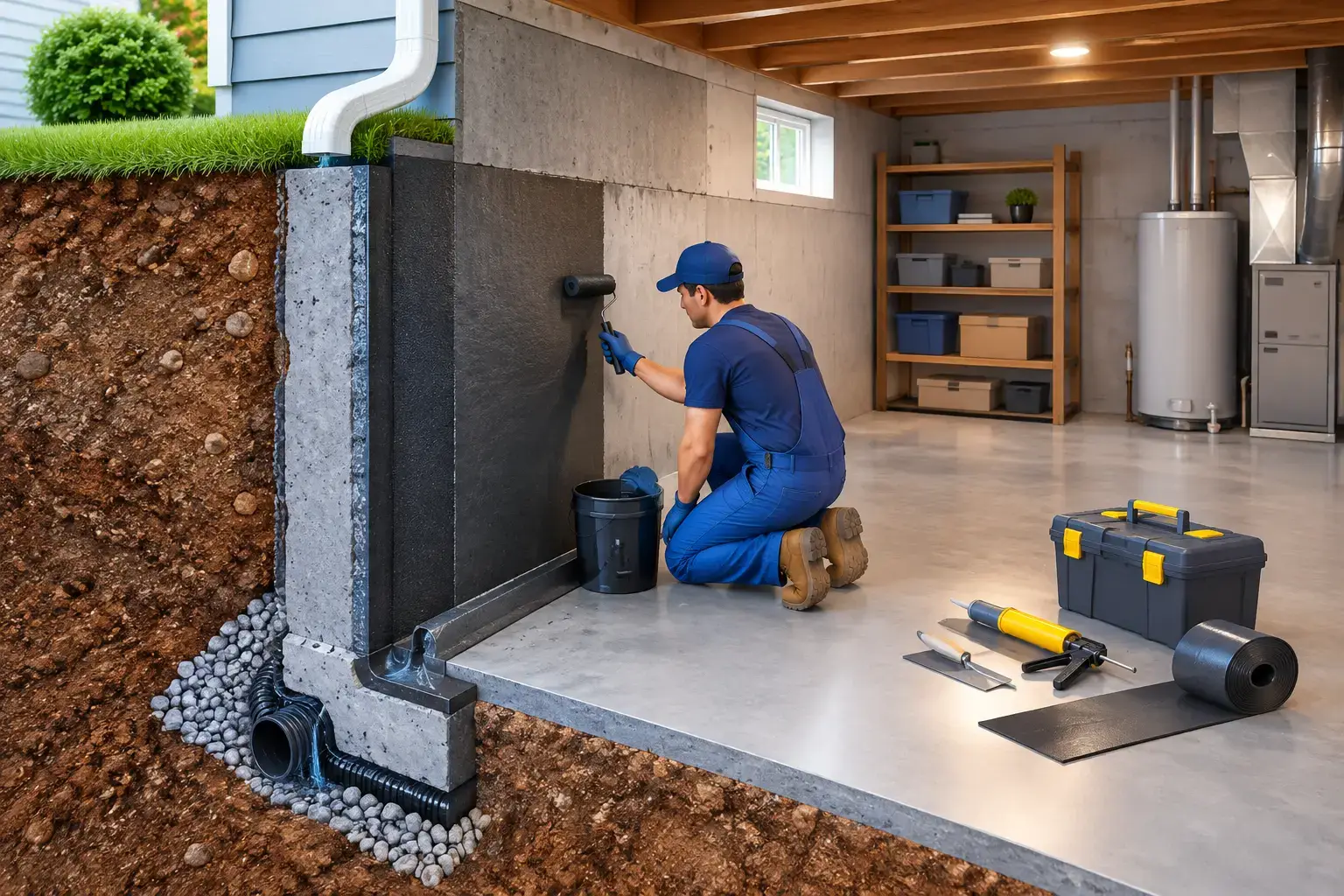
The same caution applies to basement-wall coatings or surface sealants. They may be appropriate for certain moisture concerns, but they cannot restore support under a settling footing. Homeowners deserve a recommendation based on the cause of the damage, not a quick treatment selected because it is easy to see.
The Result: A Stable Foundation and a Clear Next Step
Once the support system and drainage corrections were in place, the homeowner had a stable path forward. The affected portion of the foundation was supported against further settlement, and the property had better protection from concentrated water near the rear wall. The project also gave the homeowner documentation of the repair work, an important benefit when maintaining the home or preparing for a future sale.
Not every symptom disappeared immediately. Some interior cracks and trim separations remained visible, as expected. With the structural issue addressed, those repairs could now be completed without the concern that ongoing foundation movement would reopen them. The homeowner could also monitor the home from a position of confidence rather than uncertainty.
That is the practical value of an engineering-based approach. It separates a cosmetic concern from a structural one, identifies contributing conditions, and builds a repair scope around lasting performance. It also avoids overselling. If an inspection finds normal minor movement rather than active settlement, extensive foundation work may not be necessary. If there is confirmed differential movement, waiting can allow more damage to develop in walls, floors, plumbing connections, and finishes.
When Fairfax Homeowners Should Schedule an Inspection
Foundation settlement is worth evaluating when several warning signs appear together, especially if they are new or worsening. Watch for cracks that grow or recur after repair, stair-step cracks in brick or block, sloping floors, doors and windows that stick, gaps around trim, separation between an exterior wall and porch or chimney, or water repeatedly collecting beside the foundation.
Photos can be useful for tracking changes, but they are not a substitute for a professional inspection. The location, direction, width, and pattern of a crack all matter. So do conditions hidden below grade and beneath finished basement walls.
For homeowners in Fairfax and nearby Northern Virginia communities, Foundation Works provides no-pressure inspections designed to identify the real issue. A good assessment should explain what is happening, why it is happening, and whether repair is truly needed before any work is recommended.
A small crack does not automatically mean a failing foundation. But a crack paired with uneven floors, sticking doors, or recurring water near the house deserves attention. Acting while the signs are still manageable gives you more choices, better clarity, and a stronger chance to protect the home you have worked hard to build.