A sump pump is easy to ignore when it is working properly. It sits quietly in a pit at the lowest point of the basement, turning on only when groundwater rises. But when a pump fails during a hard Virginia rain, the result can be standing water, damaged belongings, mold growth, and moisture pressure against the foundation.
This guide to basement sump pumps explains what a pump does, what warning signs deserve attention, and why the pump itself is only one part of a dependable basement waterproofing system. A properly installed unit can be an excellent line of defense. It cannot, however, solve every water problem on its own.
What a Basement Sump Pump Does
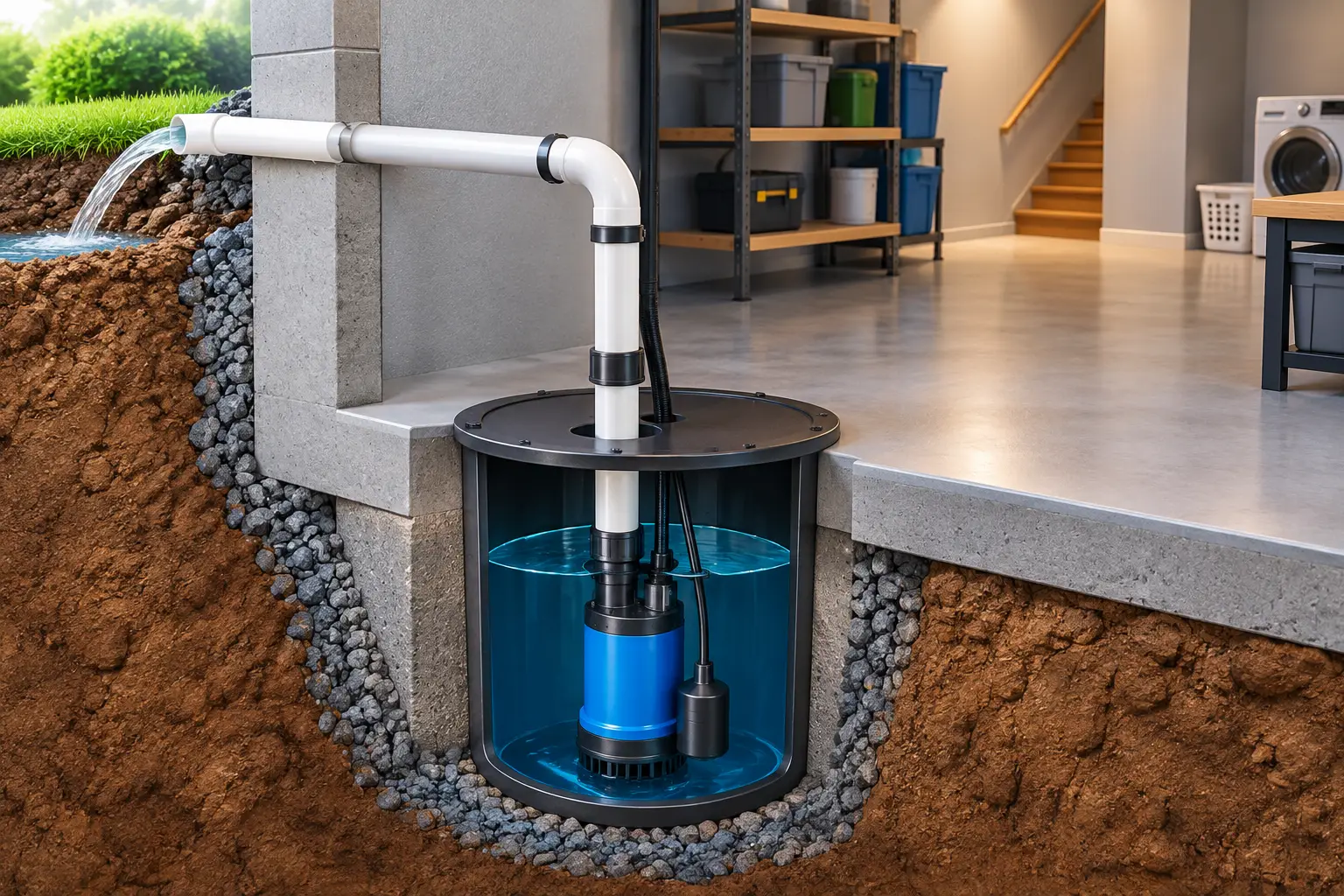
A sump pump collects and removes water that reaches a sump basin, also called a sump pit. Water typically enters the pit through interior drainage piping placed around the basement perimeter. As the water level rises, a float switch activates the pump. The pump sends the water through a discharge line to a safe area outside the home.
This process reduces the chance of groundwater collecting beneath the basement floor or pushing through the cove joint, which is the joint where the wall meets the floor. It also helps relieve hydrostatic pressure, the force groundwater places against below-grade walls and slabs.
For many homes, especially those with finished basements or a history of seasonal water intrusion, a sump pump is not a luxury. It is an active part of protecting the home, its contents, and its foundation.
Signs Your Sump Pump May Need Attention
A pump does not always fail without warning. Homeowners should pay attention to changes in its sound, cycling pattern, and the condition of the basement around it.
A pump that runs continuously when there has been little rain may be dealing with a stuck float, a check-valve issue, or an unusually high water table. A unit that hums but does not move water may have a jammed impeller or motor problem. If the pump turns on and off every few seconds, known as short cycling, the float may be set incorrectly or the pit may be too small for the volume of water entering it.
Other warning signs are less obvious. A musty odor, damp carpet near the walls, white mineral residue on masonry, rust at the base of support columns, or water marks on foundation walls can indicate that water management is falling short. A dry sump pit is not always proof that everything is fine either. If water is appearing elsewhere in the basement, the drainage system may be clogged, missing, or directing water poorly.
The Parts of a Reliable Sump Pump System
The pump gets most of the attention, but several components must work together for the system to protect the basement.
The Sump Basin and Float Switch
The basin needs to be large enough to accommodate incoming water without forcing the pump to cycle too often. It should have a secure lid to keep out debris and reduce humidity in the basement. The float switch must move freely and activate at the correct water level. A switch that catches on the basin wall can leave the pump off when it is needed most.
The Pump and Check Valve
The pump must have enough capacity for the amount of water the home receives. More horsepower is not automatically better. An oversized pump paired with a small basin may cycle excessively, which can shorten equipment life. A qualified assessment should consider the water volume, lift height, discharge distance, and the home’s drainage conditions.
A check valve on the discharge pipe prevents water from flowing backward into the pit after the pump shuts off. Without one, the pump may have to remove the same water repeatedly.
The Discharge Line
Water needs to travel well away from the foundation after it leaves the house. A discharge line that ends too close to the home can send water back toward the basement, defeating the purpose of the system. The outlet should drain over stable ground, slope away from the foundation, and remain clear in freezing weather.
Never direct sump discharge into a sanitary sewer. Local rules and site conditions vary, so the correct discharge approach depends on the property and municipal requirements.
Battery Backup Protection
A standard sump pump depends on household power. Unfortunately, severe storms can bring heavy groundwater and power outages at the same time. A battery backup pump provides a second layer of protection when the primary pump cannot run or cannot keep up.
Backup systems are especially valuable for homes with finished basements, frequent power interruptions, or known groundwater problems. They still require testing and battery replacement according to the manufacturer’s guidance. A backup system is only useful if its battery is charged and its alarm is working.
Basic Sump Pump Maintenance Homeowners Can Do
A simple inspection a few times a year can catch many problems before the next major storm. Start by looking into the pit. Remove loose debris, confirm the lid is secure, and make sure the float is not blocked. Check that the discharge pipe is connected, supported, and open at its exterior outlet.
To test the pump, slowly pour water into the basin until the float rises. The pump should start, move water through the discharge line, and shut off once the water level drops. Listen for grinding, rattling, or unusually loud vibration. If the pump does not start, does not shut off, or fails to move water outside, it needs prompt service.
Do not wait for a forecasted storm to perform this test. Spring rains, snowmelt, and sudden summer downpours can expose a weak system quickly. If your pump has a battery backup, test that system separately and check its alarm function as well.
When a New Pump Will Not Fix the Real Problem
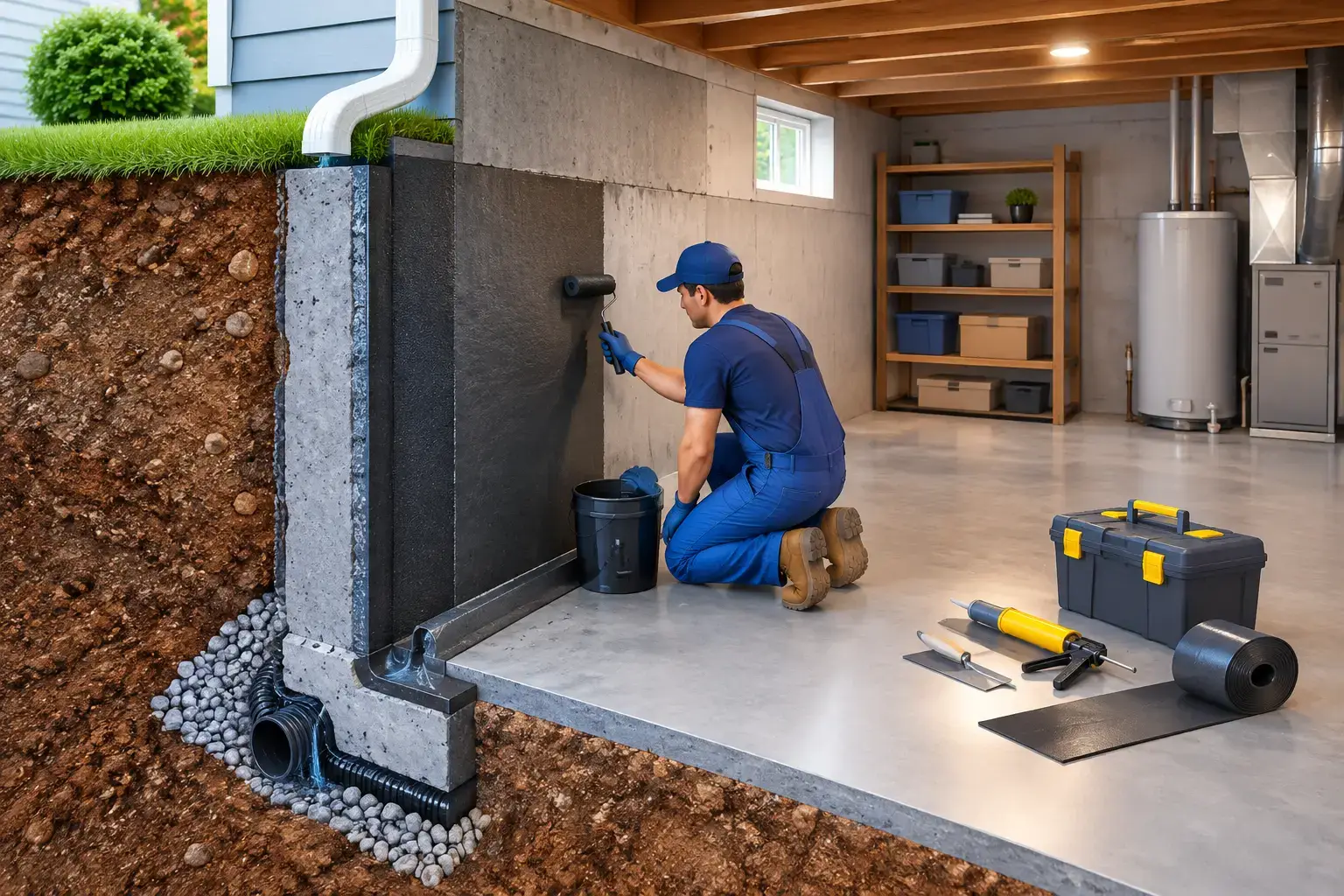
Replacing an old sump pump can be necessary, but it is not always the complete answer. If water is entering through foundation cracks, leaking window wells, a failing exterior grade, or overloaded gutters and downspouts, a new pump may only manage the symptom.
The same is true when the basement has no interior drainage path leading water to the pit. Groundwater does not automatically find its way to a sump basin. It may instead collect under the slab or force its way through the floor-wall joint. In these cases, a properly designed drainage system may be needed to collect water and direct it to the pump before it reaches the living space.
Foundation conditions matter as well. Horizontal cracks, bowing walls, stair-step cracking in block walls, or repeated seepage can point to outside soil pressure and drainage issues that deserve a professional evaluation. Sealing the inside surface of a wall without controlling the water source can leave the underlying pressure in place.
Foundation Works approaches basement moisture with the full system in mind: where the water is coming from, how it is moving around the foundation, and what permanent measures will manage it. That may include sump pump work, but the recommendation should fit the actual conditions of the home rather than a one-size-fits-all solution.
Choosing the Right Time for an Inspection
Call for an inspection if you have had standing water, repeated dampness, a pump that runs constantly, or a system that cannot keep up during rain. You should also schedule an evaluation before finishing a basement if there is any history of water intrusion. Installing flooring, drywall, and furnishings over an unresolved moisture problem can turn a manageable repair into a far more expensive loss.
A professional inspection can determine whether the existing pump is undersized, improperly installed, nearing the end of its service life, or being asked to compensate for a broader drainage problem. It can also identify whether water is affecting the foundation itself.
Your sump pump should be quiet insurance, not a source of uncertainty every time the forecast calls for rain. If you are seeing moisture, unusual pump behavior, or foundation warning signs, address the cause while the problem is still contained.