
A basement wall that is cracking, leaning, or pushing inward is not a problem to watch from a distance. The choice between wall anchors versus steel beams can determine whether a repair simply holds the line or gives your wall a path toward recovery. Both are proven structural solutions, but they work differently and fit different site conditions.
The right answer depends on why the wall moved, how far it has moved, the condition of the concrete or block, and what is available outside the home. A professional inspection should come before any repair recommendation. The goal is not to install the most hardware. It is to stop the forces damaging your foundation and protect the home for the long term.
What Causes Basement Walls to Bow?
Basement walls are below grade, which means they hold back thousands of pounds of surrounding soil. When that soil becomes saturated after heavy rain, snowmelt, or poor drainage, the pressure against the wall increases. Clay-heavy soils common across parts of Virginia and Maryland can expand significantly when wet, then shift again as they dry.
Hydrostatic pressure, poor exterior drainage, clogged gutters, downspouts that discharge too close to the house, and grading that directs water toward the foundation can all contribute. Freeze-thaw cycles and aging masonry can make the situation worse. Over time, a wall may develop horizontal cracks, stair-step cracks in block walls, inward bowing, or separation where the wall meets the floor framing.
These symptoms are not always an emergency, but they are never cosmetic by default. A horizontal crack through a basement wall is particularly concerning because it often signals pressure from outside the foundation.
Wall Anchors Versus Steel Beams: The Main Difference
Wall anchors and steel beams both stabilize foundation walls, but their purpose is not identical.
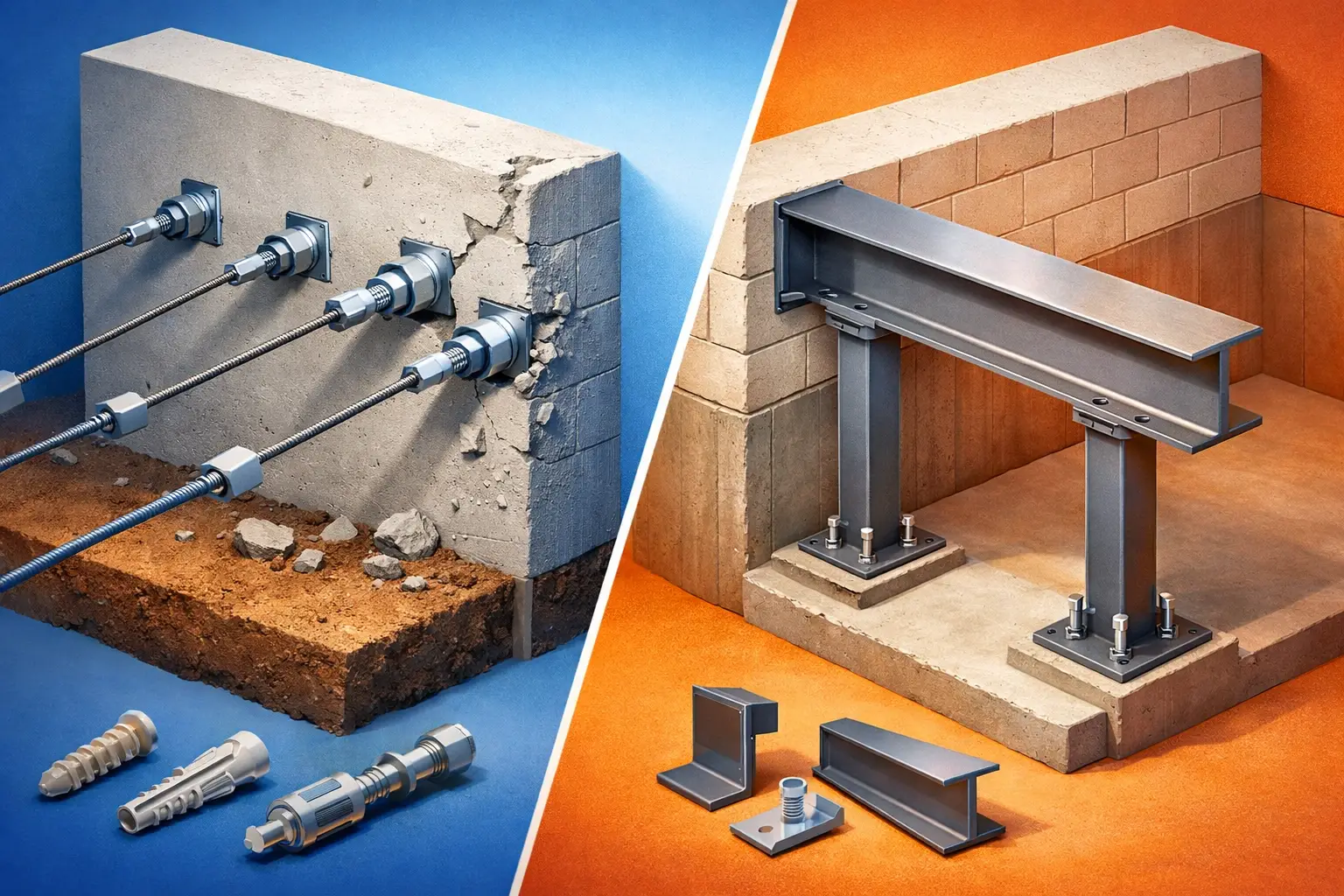
A wall anchor system uses heavy-duty steel plates, threaded rods, and an earth anchor installed in stable soil away from the foundation. One plate is mounted inside the basement against the damaged wall. The other is installed outside in the yard. Tightening the system transfers the force away from the bowed wall and into more stable soil.
Steel beam systems, often called steel I-beam wall bracing, are installed vertically along the interior face of a basement wall. The beams are secured at the floor framing above and at the concrete slab below. They create a strong interior brace that resists additional inward movement.
In practical terms, wall anchors can stabilize a wall and may allow for gradual correction over time. Steel beams are generally used to stop further movement and reinforce the wall in its current position. Neither system should be selected based on appearance, price alone, or a one-size-fits-all rule.
When Wall Anchors Are Often the Better Fit
Wall anchors are commonly recommended when a basement wall has bowed inward from exterior soil pressure and there is enough accessible land outside the foundation for earth anchors. The exterior anchor location must be placed a suitable distance from the wall in undisturbed soil. That requires a clear area without obstacles that interfere with installation.
For many homeowners, the ability to gradually improve a bowed wall is a major advantage. A qualified crew can tighten the anchor system in controlled increments, reducing inward deflection when the wall condition allows it. The result may be a straighter wall over time, not merely a wall held in its bowed position.
Wall anchors can be a strong option for poured concrete and block foundation walls with horizontal cracking or visible inward movement. They are especially useful when the underlying wall remains structurally repairable and the exterior property layout supports the system.
There are trade-offs. Installation requires exterior excavation at the anchor locations, which can affect landscaping. Properties with tight lot lines, patios, driveways, decks, utility conflicts, neighboring structures, or limited side-yard access may not have enough usable space for an anchor system.
When Steel Beams Are Often the Better Fit
Steel beams are often the practical choice when exterior access is limited. If a home has a narrow lot, extensive hardscaping, a finished patio, or other obstructions around the foundation, interior bracing can provide reinforcement without installing earth anchors in the yard.
A steel beam system is designed to resist continued inward movement. Properly sized and installed beams transfer pressure through the framing and slab connections, helping keep the wall from bowing farther. This is often an effective permanent stabilization approach for a wall that needs reinforcement but is not a good candidate for gradual pullback.
Steel beams also tend to be a cleaner option when preserving exterior landscaping matters. Most of the work occurs from inside the basement, though the area near the wall must be accessible for installation. Homeowners should understand that the beams remain visible unless incorporated into a future basement finishing plan.
The key limitation is correction. Steel beams are excellent at bracing a wall, but they do not typically straighten a significantly bowed wall the way a wall anchor system may. If restoring wall alignment is a priority, anchors may be preferable when site conditions permit.
How Far Has the Wall Moved?
The amount and pattern of movement matter as much as the repair product. A wall with a minor inward deflection may be a candidate for either system, depending on the cause and property layout. A wall with larger movement, spreading cracks, crumbling block, sheared sections, or visible displacement needs careful structural evaluation before a repair plan is chosen.
Do not assume that a severe-looking crack automatically means the wall must be replaced. On the other hand, do not assume that every bowed wall can be corrected with braces or anchors. The condition of the masonry, the age of the movement, moisture exposure, and the pressure still acting on the wall all affect the proper scope of work.
This is where an engineering-based diagnosis matters. A permanent repair system must fit the actual failure, not just the most noticeable symptom.
Drainage Still Matters After Structural Repair
Wall anchors and steel beams address wall movement. They do not eliminate the water and soil conditions that created pressure in the first place. If water is collecting around the foundation, a structural repair should be paired with a clear look at drainage and moisture control.
Watch for overflowing gutters, disconnected downspouts, standing water near the foundation, soil that slopes toward the home, or persistent dampness in the basement or crawlspace. Correcting these conditions helps reduce future stress on the repaired wall and protects the broader foundation system.
A homeowner may be tempted to seal a crack from the inside and move on. Crack sealing can help manage a specific opening in the right situation, but it does not stop a wall from moving under exterior pressure. If the wall is bowing, reinforcement and root-cause correction should come first.
Questions to Ask Before Choosing a System
Before approving a foundation wall repair, ask whether the wall is still moving, what is causing the pressure, and whether the proposed system is intended to stabilize, straighten, or both. Ask how the system connects to the home, whether exterior access is required, and what work will be done to address drainage.
It is also reasonable to ask how the crew will protect the basement, landscaping, and surrounding property during installation. A clear scope should explain what the repair is designed to accomplish and what results are realistic. Honest answers are more valuable than promises that every wall can be returned to perfect condition.
Do Not Wait for a Bowed Wall to Get Worse
A bowed basement wall rarely improves on its own. The soil pressure that created the problem can return with every wet season, and small cracks can become wider, longer, and more expensive to address. Early action usually gives you more repair options and helps protect your home’s value and safety.
If you have noticed horizontal cracks, inward bowing, water intrusion, or a basement wall that no longer looks straight, schedule a professional evaluation. Foundation Works provides honest, no-pressure inspections to identify the cause, explain whether wall anchors or steel beams make sense, and recommend a repair built for the conditions under your home. The best time to protect a moving wall is before the next season puts more pressure on it.

