
A hairline crack in a basement wall is not always an emergency. But when that crack widens, leaks after rain, or appears alongside sticking doors and sloping floors, your home may be signaling a deeper problem. This home foundation repair guide helps Virginia and Maryland homeowners separate normal aging from warning signs that deserve a professional inspection.
Foundation problems rarely improve by themselves. Water, soil movement, poor drainage, and weakened framing continue applying pressure long after the first symptom appears. The right repair starts with an honest diagnosis of what is moving, why it is moving, and what will keep it stable for the long term.
Start With the Signs You Can See and Feel
Many structural issues show up in everyday moments. A bedroom door that suddenly will not latch, a floor that feels uneven underfoot, or a crack that reopens after being patched can all point to movement below or within the home.
Look carefully at your basement, crawlspace, exterior brick or masonry, and main living areas. One minor symptom may be cosmetic. Several symptoms appearing together deserve more attention, especially if they are getting worse.
Common signs include:
- Stair-step cracks in brick or block walls
- Horizontal cracks or inward bowing on basement walls
- Vertical cracks that widen over time or allow water inside
- Doors and windows that stick, separate from trim, or no longer close correctly
- Sloping, bouncy, or sagging floors
- Cracked drywall near doors, windows, or ceiling corners
- Standing water, musty odors, mold growth, or damp crawlspace insulation
- Gaps between walls, floors, cabinets, or exterior trim
Do not judge severity by crack size alone. A narrow horizontal crack in a block basement wall can be more concerning than a larger, stable vertical crack because horizontal cracking often reflects soil pressure against the wall. Pattern, location, moisture, and change over time all matter.
What Causes Foundation and Structural Problems?
A foundation is only as stable as the soil and drainage conditions around it. In Northern Virginia and surrounding Maryland communities, seasonal rain, clay-heavy soils, changing groundwater conditions, and older construction can all contribute to foundation movement and water intrusion.
Soil movement and settlement
Soil expands when it becomes saturated and contracts as it dries. This cycle can leave parts of a foundation unsupported or create uneven pressure against foundation walls. Settlement occurs when soil beneath the footing compresses, shifts, or was not adequately compacted before construction.
Settlement may cause diagonal cracks, sloping floors, and misaligned doors or windows. The repair is not simply filling visible cracks. A permanent approach may require stabilizing the structure and addressing the conditions that allowed movement in the first place.
Hydrostatic pressure and poor drainage
Water in the soil around a basement creates hydrostatic pressure. As the ground becomes saturated, that pressure pushes against foundation walls and finds its way through cracks, joints, and porous concrete. Over time, it can contribute to leaking walls, bowing walls, and damaged finishes.
Roof runoff, clogged gutters, short downspouts, negative grading, and poorly managed surface water can make the problem worse. Waterproofing and drainage improvements work best when they are designed around the actual water source, not applied as a generic coating or quick seal.
Crawlspace moisture and failing framing
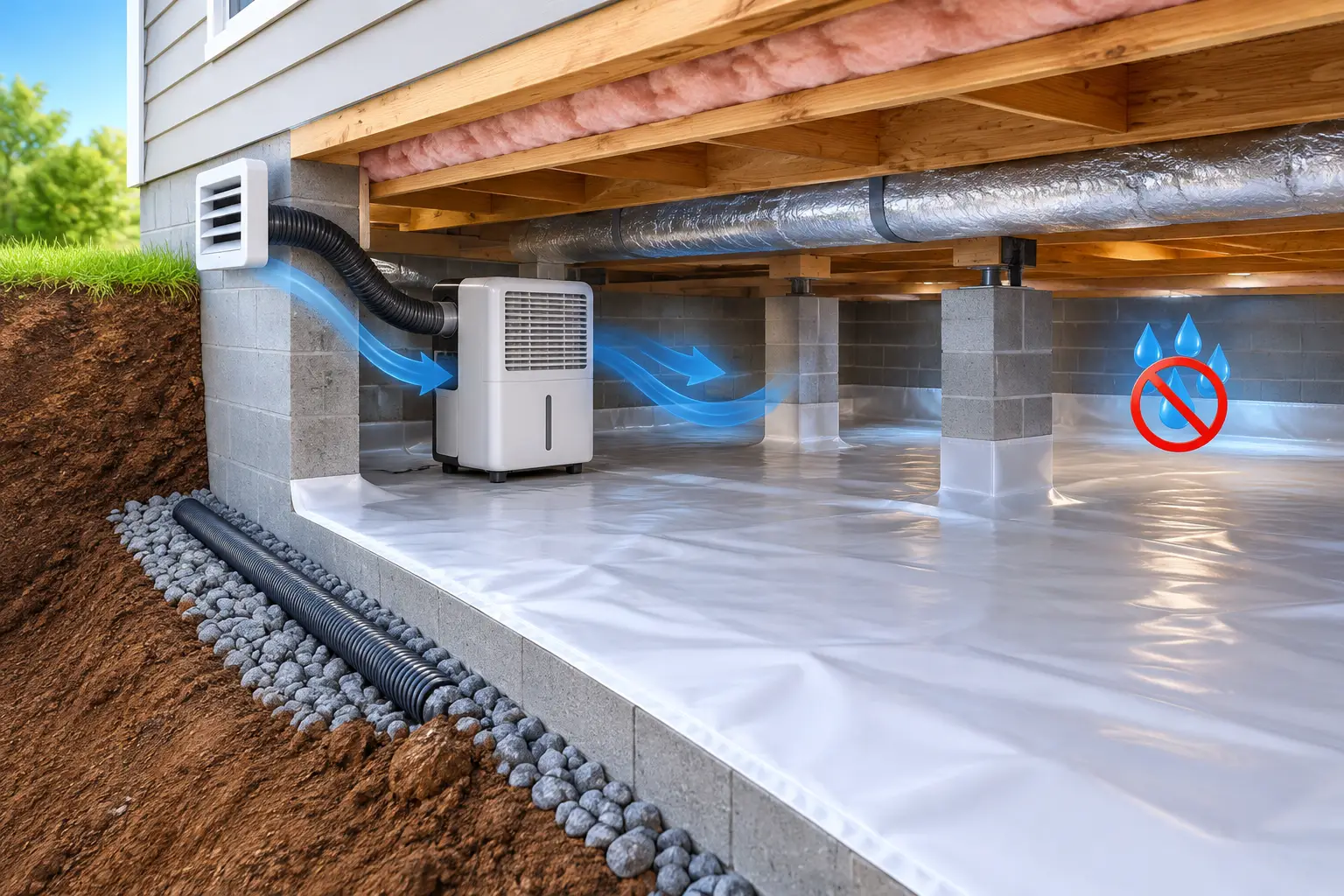
A damp crawlspace affects more than the space beneath your home. Persistent moisture can lead to wood rot, mold, weakened beams and joists, damaged insulation, and sagging floors above. Homes with vented crawlspaces are particularly vulnerable when humid outdoor air and groundwater are allowed to enter unchecked.
If your floors feel soft, uneven, or springy, the issue may be damaged framing rather than a foundation footing alone. A thorough inspection should evaluate both the masonry or concrete foundation and the wood structure it supports.
A Home Foundation Repair Guide to Crack Types
Cracks offer clues, but they are not a complete diagnosis. Take clear photos, note their location, and watch for changes. If you choose to monitor a crack briefly, mark its ends lightly with pencil and record the date. Never assume monitoring replaces an inspection when other structural signs are present.
Vertical cracks are common in poured concrete foundations and may result from normal curing or minor settlement. If a vertical crack is narrow, dry, and unchanged, it may not require structural repair. However, a vertical crack that leaks, widens, or accompanies floor movement should be evaluated.
Diagonal cracks can indicate uneven settlement, particularly when they run from the corner of a window or door opening. Stair-step cracks in brick, block, or mortar joints can also point to differential movement.
Horizontal cracks in basement walls, or walls that visibly bow inward, require prompt attention. These signs often mean outside soil pressure is exceeding what the wall can withstand. Waiting can increase the chance of further movement and make repairs more involved.
Know When to Call for an Inspection
Homeowners often wait because they do not want to overreact. That is understandable. Still, a free, no-pressure assessment is usually far less disruptive than waiting for a small structural concern to become a major repair.
Schedule a professional inspection soon if you notice active water entering the basement or crawlspace, a horizontal wall crack, inward bowing, a rapidly widening crack, sagging floors, rotted framing, or several new symptoms at once. If you are preparing to sell, buy, or refinance a home, an inspection can also provide clarity before structural questions complicate the transaction.
A qualified contractor should explain what they see in plain language. You should understand whether the issue is cosmetic, moisture-related, structural, or a combination of these conditions. Be cautious of anyone who recommends a major repair without examining drainage, soil conditions, wall movement, and the framing system as a whole.
What Permanent Foundation Repair May Involve
There is no one-size-fits-all foundation repair. The right system depends on the foundation type, the direction of movement, soil conditions, access, water exposure, and the condition of the structure above.
For settlement, repairs may involve structural support systems designed to stabilize or help restore a settling foundation. For bowing basement walls, engineered wall stabilization systems can resist continued lateral pressure and help prevent further inward movement. The goal is to stop the problem at its source, not hide evidence of it behind new drywall or fresh paint.
When water is involved, repairs may include interior drainage, sump pump systems, crack repair, exterior water management, or a combination of measures. In crawlspaces, encapsulation and moisture control can help protect joists, beams, insulation, and indoor air quality. If wood framing has already deteriorated, damaged members may need structural restoration before the floor system can perform as intended.
The trade-off is straightforward: a lower-cost cosmetic patch may look better temporarily, but it does not correct ongoing movement or water pressure. A properly designed repair can cost more upfront, yet it protects the home’s structure, livability, and long-term value.
What to Do Before a Foundation Repair Visit
You do not need to become a structural expert before requesting help. A few practical steps can make an inspection more productive. Clear access to basement walls, crawlspace entries, and areas with visible damage. Move stored items away from problem walls when possible, and make note of when you first noticed each symptom.
It also helps to gather photos from before and after heavy rain, records of past repairs, and any information from a home inspection report. Mention changes such as a recent plumbing leak, landscaping work, gutter problems, or new cracking after a dry season. These details can help identify the underlying cause.
Avoid covering cracks, painting over water stains, or installing new flooring over sagging areas before the inspection. Those updates can conceal useful evidence and may need to be removed later if repairs are necessary.
Protect the Home Before Damage Spreads
Foundation and moisture concerns can feel intimidating because they affect the part of the home you cannot easily replace. The most useful next step is not guessing from a photo or applying a tube of sealant. It is getting a clear explanation from professionals who inspect the entire condition and recommend only the work the home needs.
Foundation Works provides homeowners with honest evaluations and engineering-based solutions for structural movement, water intrusion, crawlspace moisture, and failing framing. If you have noticed cracks, uneven floors, dampness, or bowing walls, schedule a free inspection before a manageable repair becomes a larger disruption to your home and family.