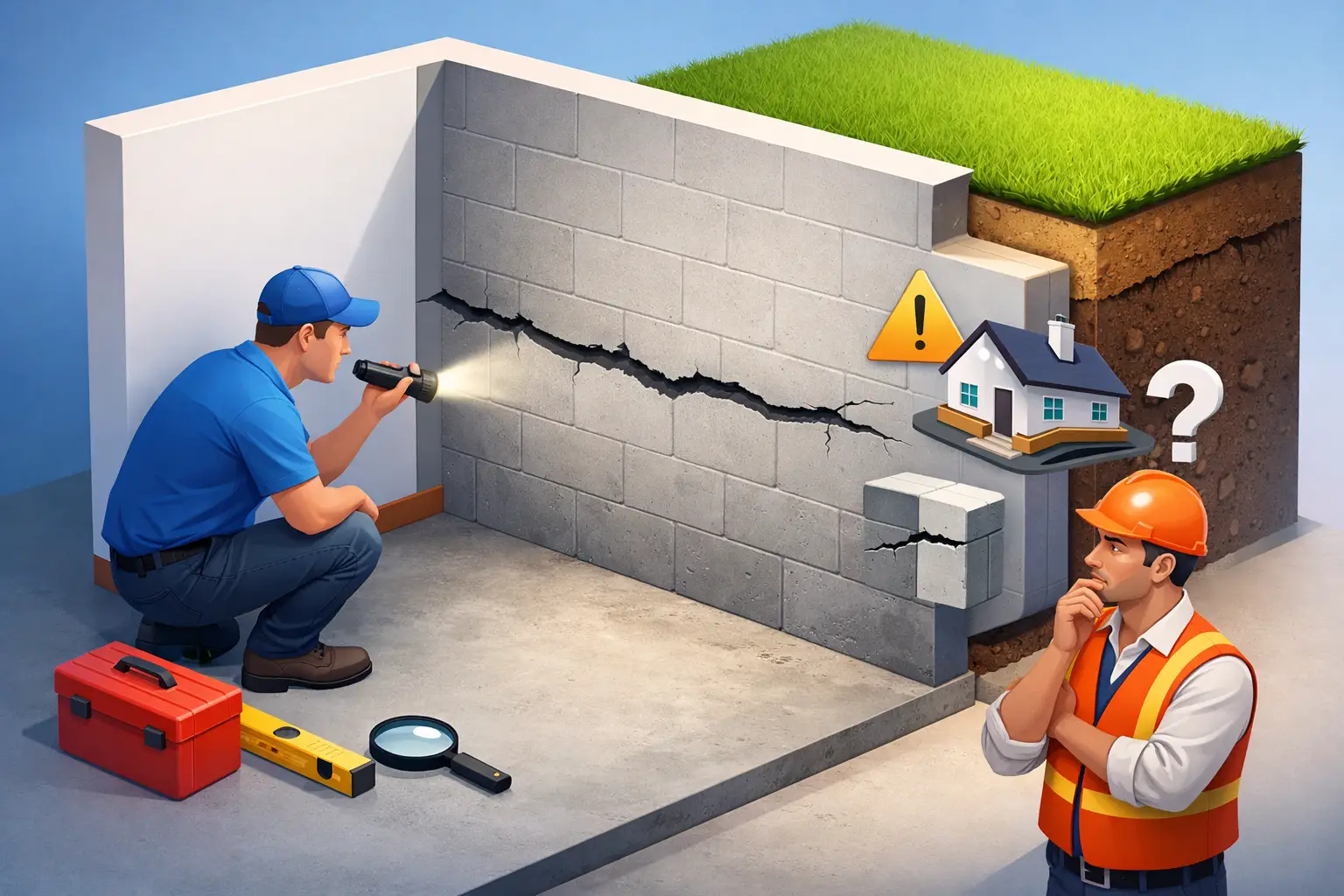
A thin crack across a basement wall can be easy to dismiss, especially if the basement is unfinished or the wall has looked the same for months. But are horizontal wall cracks serious? Often, yes. Unlike many small vertical cracks, a horizontal crack can indicate that soil or water pressure is pushing against the foundation wall from the outside.
That does not mean every horizontal line is an emergency. It does mean the crack deserves a prompt, professional evaluation before movement increases, water enters the home, or a repair becomes more extensive. Foundation walls are designed to hold back soil. When they begin to crack or bow inward, the issue is usually more than cosmetic.
Why Horizontal Cracks in Walls Need Attention
A horizontal crack in a concrete block, poured concrete, or brick foundation wall commonly forms when outside pressure exceeds what the wall can resist. Saturated soil becomes heavier, poor drainage allows water to collect near the foundation, and freezing conditions can expand soil against the wall. Over time, that repeated pressure can force a wall inward.
In Virginia and Maryland, this can be especially common around homes with clay-heavy soils, aging drainage systems, downspouts that discharge too close to the home, or grading that directs water toward the foundation. A single heavy storm does not always create the problem, but years of moisture and soil movement can.
The location of the crack matters. Horizontal cracks often appear near the middle of a basement wall, where lateral pressure is greatest. Cracks near the top of the wall may point to pressure from expansive soils or a floor system issue. A crack near the bottom can be related to footing movement, water pressure, or settlement. The pattern helps identify the likely cause, but it should not be used as a DIY diagnosis.
When Are Horizontal Wall Cracks Serious?
Horizontal wall cracks are most concerning when they are accompanied by signs that the wall is actively moving. Look closely at the crack and the surrounding area. If one side of the wall sits farther inward than the other, or the crack is widening, the wall may be bowing.
Other warning signs include:
- A basement wall that bulges or leans inward
- Stair-step cracks in block or brick walls
- White, chalky mineral deposits or dampness along the crack
- Water seepage after rain or snowmelt
- Gaps where the foundation wall meets the floor framing
- Doors or windows above the affected area that begin sticking
A horizontal crack with no visible bowing may still need repair, but it is typically less urgent than a crack paired with inward movement. The concern is not just the crack itself. It is the force that created it and whether that force is still acting on the wall.
If you can see a wall curve inward, if blocks are shifting, or if the crack has changed noticeably, do not wait for the next remodeling project or real estate sale. A qualified foundation inspection can determine the extent of movement and identify a permanent repair path.
What Causes a Foundation Wall to Crack Horizontally?
Most horizontal foundation cracks are pressure-related, but the source of that pressure can vary. Identifying the root cause is the difference between a lasting repair and a temporary patch.
Poor Exterior Drainage
Rainwater should move away from the house. When gutters overflow, downspouts discharge beside the foundation, or the yard slopes toward the home, water saturates the soil around the basement wall. Wet soil is heavier than dry soil and creates more lateral pressure.
Drainage correction may be part of the solution, but drainage alone cannot straighten or stabilize a wall that has already moved. It must be paired with the right structural repair when damage is present.
Hydrostatic Pressure
Hydrostatic pressure occurs when groundwater builds up in the soil and presses against below-grade walls. It can cause water intrusion, but it can also contribute to cracking and bowing. A damp basement is not only a moisture concern. In some cases, it is evidence that the soil outside the foundation is holding too much water.
Expansive or Frost-Affected Soil
Some soils swell when wet and shrink when dry. Seasonal changes can repeatedly load and unload the foundation wall. In colder weather, freezing moisture in the soil can expand and increase pressure against the structure. These cycles can gradually turn a hairline crack into a larger structural concern.
Construction and Age-Related Weaknesses
Older foundation walls, especially concrete block walls, may have less resistance to lateral pressure than newer reinforced systems. Weak mortar joints, prior water damage, or inadequate original drainage can leave a wall more vulnerable. Even a well-built home can develop issues when site conditions change over decades.
Why Sealing the Crack Is Not a Structural Repair
It is understandable to want a visible crack gone quickly. Caulk, epoxy, paint, and waterproof coatings can improve appearance or slow minor moisture entry in limited situations. They do not relieve the soil pressure outside the wall or stop a wall from moving inward.
When horizontal cracking is caused by lateral pressure, the wall needs to be stabilized with a repair system designed for that specific condition. Depending on the wall material, degree of movement, access around the home, and soil conditions, that may involve engineered wall anchors, wall bracing, or another structural stabilization method.
The right approach also addresses water management. A permanent solution looks at the full picture: the wall, the soil pressure, drainage conditions, moisture entry, and any impact on the framing above. Repairing only the visible crack can leave the real problem in place.
What to Do When You Find a Horizontal Crack
Start by taking clear photos of the crack and the entire wall. Note its approximate location, whether it appears damp, and whether there is any visible inward bowing. If you have older photos of the space, compare them carefully. Changes over time are useful information.
Avoid chiseling out the crack, applying a thick cosmetic coating, or trying to pull the wall back into place yourself. These actions can hide evidence that helps determine the cause, and they can create a false sense of security.
Next, check the exterior conditions around that section of the home. Make sure gutters are not overflowing, downspouts carry water away from the foundation, and soil is not sloping toward the wall. Correcting obvious drainage problems is wise, but do not assume that improvement alone means the foundation is safe.
Then schedule a professional foundation evaluation. An honest inspection should distinguish between minor cracking, a wall that needs monitoring, and active structural movement that calls for repair. You deserve a clear explanation of what is happening, what can wait, and what should be addressed promptly.
What a Professional Inspection Should Evaluate
A thorough inspection goes beyond measuring the crack. The evaluator should examine the wall for bowing, leaning, bulging, displaced blocks, and signs of ongoing water pressure. They should also look for related symptoms, such as floor joist movement, moisture damage, drainage concerns, and cracks in adjacent walls or finishes.
The repair recommendation should fit the home rather than follow a one-size-fits-all formula. A wall with a narrow crack and no measurable movement may require a different plan than a wall that has visibly bowed inward. The goal is not simply to make the wall look better. It is to stop further movement and protect the home’s structural integrity.
Foundation Works provides engineering-based evaluations for homeowners who need a straightforward answer about foundation cracks, water intrusion, and wall movement. There is no benefit to overreacting to a minor crack, but there is real risk in ignoring a wall that is under pressure.
Do Not Wait for the Crack to Become a Bigger Problem
Foundation damage rarely improves on its own. As soil pressure and moisture continue, a horizontal crack can widen, allow water into the basement, and lead to more noticeable bowing. The longer movement continues, the more difficult the repair may become.
If you have spotted a horizontal crack in a basement or crawlspace foundation wall, trust the warning sign. A free, no-obligation inspection can replace uncertainty with a clear plan and help protect the safety, value, and long-term stability of your home.