
A crack above a doorway, a floor that feels uneven, or a basement wall that appears to lean can make any homeowner wonder what is happening beneath the house. To evaluate structural movement correctly, look beyond one visible symptom. The location, direction, size, and progression of the issue – along with moisture and drainage conditions around the home – tell a much clearer story.
Not every crack means a foundation is failing. Homes expand and contract with seasonal temperature and moisture changes, and older homes may show minor cosmetic settling. But movement that is active, widespread, or paired with water intrusion deserves prompt attention. Waiting can turn a manageable repair into a larger structural and financial problem.
Start With the Warning Signs You Can See
Structural movement rarely announces itself in just one place. A small crack may be harmless on its own, but several related changes can point to settlement, soil pressure, deteriorated framing, or moisture damage below the home.
Look closely at cracks in drywall, brick, block, and concrete. Vertical hairline cracks are often less urgent than stair-step cracks in masonry, horizontal basement wall cracks, or cracks that widen from one end to the other. A crack that reopens after being patched is also a concern because it may indicate that the underlying movement is continuing.
Inside the home, check doors and windows. Doors that suddenly stick, swing open on their own, or will not latch can be signs that framing has shifted. Gaps around trim, separated crown molding, and cracks running from the corners of doors or windows are worth documenting as well.
Floors provide another useful clue. A floor can slope because of normal construction differences, but a new slope, soft area, bounce, or sag may point to weakened beams, floor joists, support posts, or crawlspace moisture damage. In a basement, watch for walls that bow inward, lean, or show horizontal cracking. Soil pressure can build outside the wall over time, particularly when poor drainage keeps the soil saturated.
How to Evaluate Structural Movement Over Time
The most useful question is not simply, Is there a crack? It is, Has the condition changed? Structural concerns become more serious when movement is active rather than historic.
Take clear photographs of cracks and gaps with a ruler or tape measure in the image for scale. Record the date and location. Recheck the same areas every month and after major rain events, long dry periods, or freeze-thaw weather. Note whether doors become harder to operate, whether floors feel different, or whether new cracks appear nearby.
A pencil mark at the end of a crack can help you notice whether it extends. For wider cracks, measure the opening at the same point each time. This simple record gives a foundation professional valuable context during an inspection. It also prevents homeowners from relying only on memory, which can make gradual changes difficult to recognize.
Do not try to force a bowed wall back into place, fill a widening crack with caulk, or use cosmetic repairs as proof that the issue is resolved. Paint, spackle, and sealant can hide a symptom without stopping the pressure, settlement, or moisture condition causing it.
Check Whether Water Is Driving the Problem
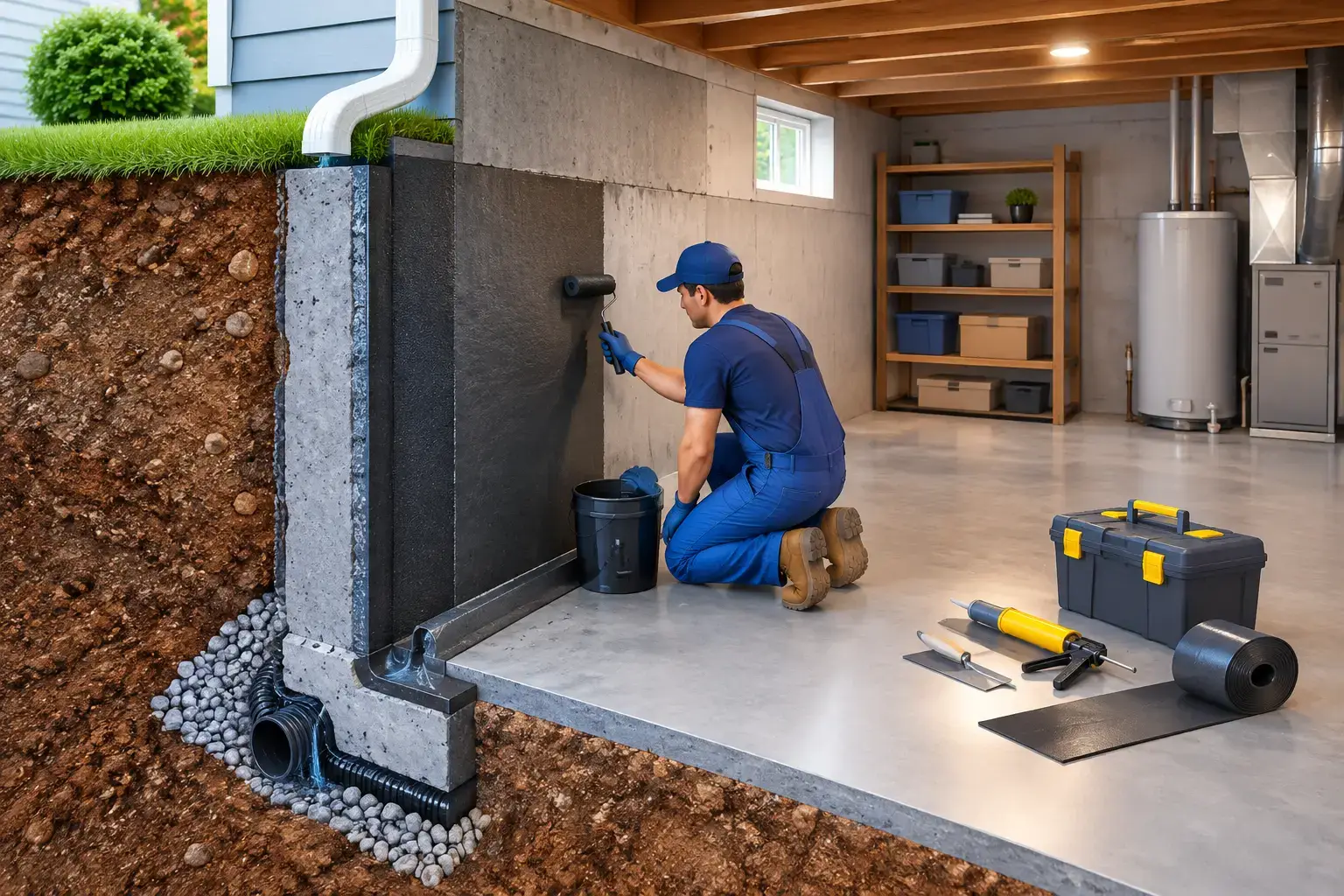
Water is one of the most common contributors to structural movement in Virginia and Maryland homes. Saturated soil can increase pressure against basement walls. Repeated wet-dry cycles can cause expansive soils to shift. Water in a crawlspace can weaken wood framing, create rot, and reduce the capacity of beams and joists to support the house above.
Walk around the exterior during or shortly after rainfall. Water should drain away from the foundation rather than pond beside it. Look for overflowing gutters, disconnected downspouts, low grading, eroded soil, and landscaping that channels water toward the house.
Inside, inspect the basement or crawlspace for standing water, damp walls, musty odors, mold-like growth, wet insulation, rusted supports, or deteriorated wood. These conditions do not automatically mean the foundation has moved, but they can create or accelerate the conditions that lead to movement. A permanent repair plan often needs to address both the structural symptom and the moisture source.
Separate Normal Settling From a Structural Concern
Many homes settle slightly after construction, and older homes may have long-standing imperfections that have not changed for years. The goal is not to expect a home to be perfectly level or completely crack-free. The goal is to identify changes that affect stability, safety, or the home’s ability to resist outside pressure.
Minor cosmetic cracking is more likely when cracks are thin, isolated, stable over time, and not accompanied by sticking doors, sloping floors, basement wall movement, or water problems. Even then, it is reasonable to monitor the area.
A professional evaluation is more appropriate when you see multiple symptoms, cracks wider than a hairline, stair-step brick cracks, horizontal cracks in foundation walls, inward bowing, noticeable floor sagging, failing floor supports, or recurring water intrusion. The same is true if a condition develops quickly after heavy rain, a plumbing leak, nearby excavation, or a major change in drainage.
Some movement is seasonal. Wood framing can respond to humidity, and soils can react to extended rain or drought. That does not mean the concern should be dismissed. Seasonal change is exactly why an experienced inspection should consider the entire home, the soil and drainage conditions, and the pattern of distress rather than judging one crack in isolation.
What a Professional Structural Inspection Should Answer
A useful inspection should do more than point out visible damage. It should identify what is moving, why it is moving, whether the condition appears active, and what repair approach fits the home.
For example, a bowed basement wall may require a permanent wall stabilization system, but drainage outside the foundation may also need correction to reduce the water pressure contributing to the problem. A sagging floor may call for new supports or reinforcement, while the crawlspace moisture that damaged the framing must also be controlled. Repairing only the visible symptom leaves the root cause in place.
During an evaluation, a qualified structural repair team may assess foundation wall condition, crack patterns, floor elevation changes, beam and joist performance, crawlspace supports, moisture levels, drainage paths, and signs of soil-related settlement. The recommended scope should be specific to your home, not a one-size-fits-all repair package.
Ask direct questions: What is causing this condition? Is the movement active? What evidence supports the recommendation? Will the repair address water or soil pressure if those factors are involved? What should I expect after the work is complete?
An honest contractor should also be willing to tell you when a concern appears cosmetic or when monitoring is appropriate. Not every crack requires major work. But when a genuine structural problem exists, clear answers and permanent solutions protect both your family and your investment.
When to Schedule an Inspection
Call for a professional assessment promptly if you notice a wall moving inward, a rapidly widening crack, a floor that is suddenly sagging, or water entering the basement or crawlspace. These issues can worsen as moisture and soil pressure increase.
A free, no-obligation inspection can remove guesswork before you spend money on surface repairs that do not solve the problem. Foundation Works evaluates structural and moisture concerns with an engineering-based approach, helping homeowners distinguish between normal aging and conditions that need repair.
Your home does not need to be in immediate danger for an inspection to be worthwhile. Document what you see, keep water away from the foundation, and act before small changes become expensive damage.