A damp basement floor after heavy rain can look like a simple leak. Sometimes it is. But when water is being forced through the floor or walls by saturated soil outside, the real issue may be hydrostatic pressure. Understanding what is hydrostatic pressure helps homeowners recognize why basement moisture can persist even when there is no obvious crack, pipe leak, or open window.
Hydrostatic pressure is not something to ignore or solve with a quick coat of paint. Over time, water pressure around a foundation can contribute to seepage, damaged finishes, mold-friendly conditions, and, in some cases, structural stress. The right repair starts with identifying where the water is coming from and why it is building up around the home.
What Is Hydrostatic Pressure?
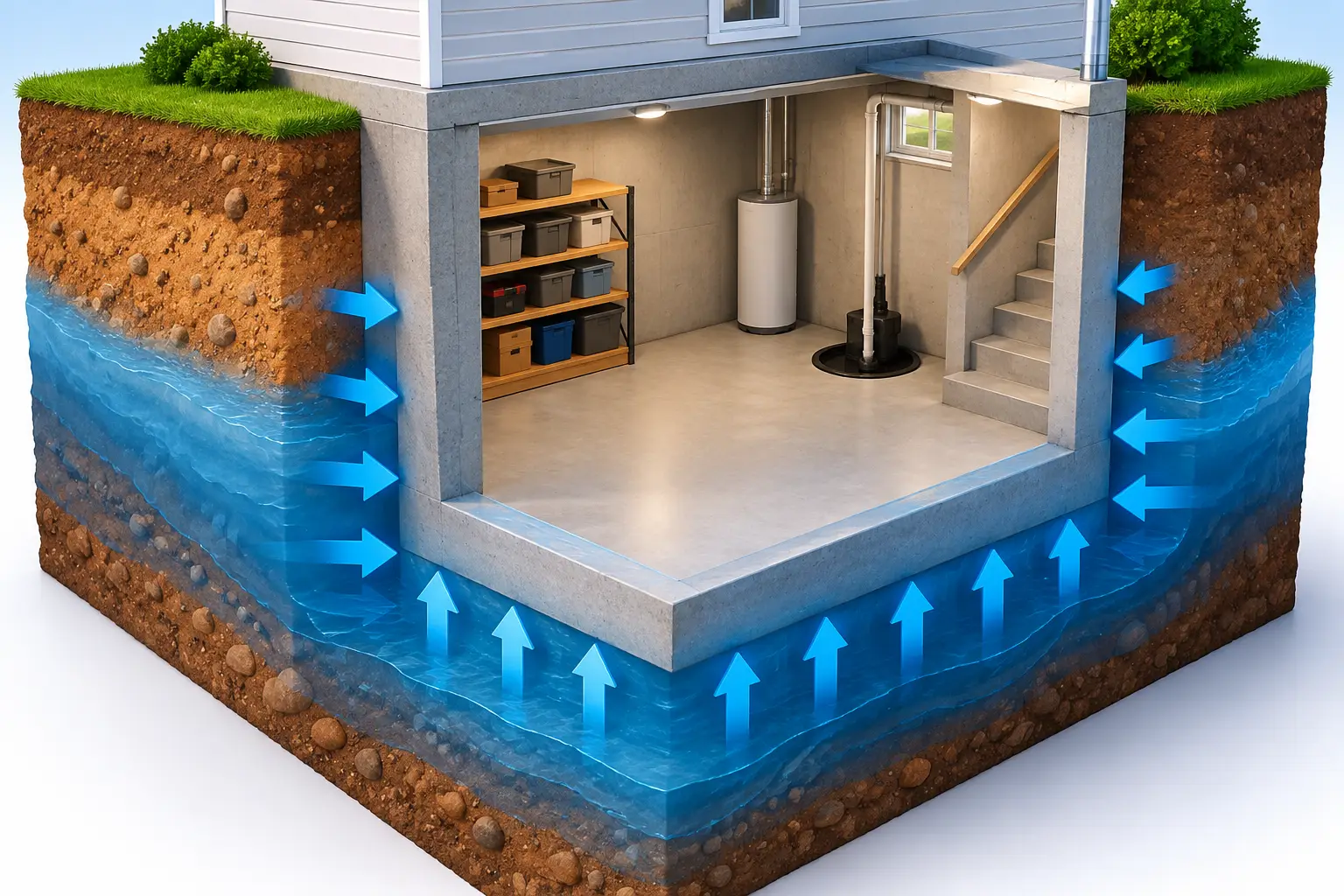
Hydrostatic pressure is the force that standing or trapped water applies because of its weight. Around a home, it develops when rainwater, snowmelt, or naturally high groundwater saturates the soil beside and beneath the foundation.
As the ground fills with water, that water pushes in every direction. It presses sideways against basement walls and upward against the basement slab. The deeper the water level and the more saturated the soil, the greater the pressure can become.
Concrete is strong, but it is not completely waterproof. It has tiny pores, joints, penetrations, and potential cracks where water can find a path. Hydrostatic pressure does not need a large opening. Given enough force and enough time, groundwater can seep through a cold joint where the wall meets the floor, through hairline cracks, around utility penetrations, or directly through a porous concrete slab.
Why Hydrostatic Pressure Causes Basement Water Problems
A basement sits below grade, meaning much of it is below the surrounding soil line. When the soil outside is dry, there may be little water pressing against the foundation. After prolonged rain or during periods of high groundwater, the conditions change quickly.
Water naturally moves toward areas of lower resistance. If the water collected around your foundation has nowhere else to go, the basement can become its relief point. This is why homeowners may notice water appearing at the wall-floor joint even when the basement wall itself looks dry.
Hydrostatic pressure can create several types of moisture problems:
- Water seepage along the perimeter of the basement floor
- Damp spots or puddles that appear after storms
- White, chalky mineral deposits on concrete, often called efflorescence
- Musty odors, peeling paint, or damp finished walls
- Water entering through cracks, pipe openings, or floor drains
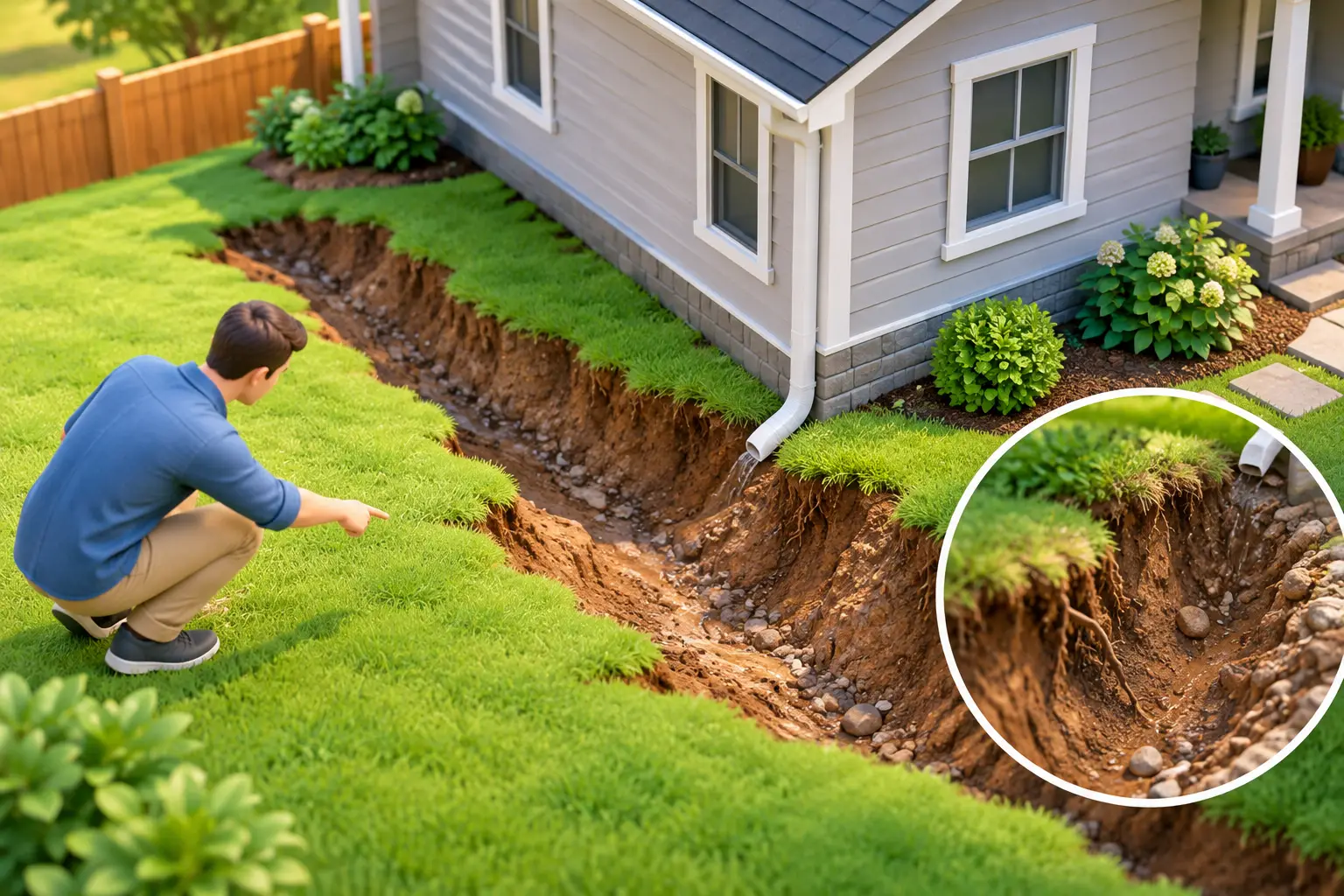
Not every wet basement has the same cause. A leaking window well, overflowing gutter, broken downspout extension, or grading that directs water toward the house can produce similar symptoms. However, those surface drainage issues can also make hydrostatic pressure worse by adding even more water to the soil around the foundation.
Hydrostatic Pressure on Basement Walls vs. Floors
Hydrostatic pressure affects walls and floors differently, and that distinction matters during an inspection.
Pressure Against Basement Walls
Saturated soil pushes laterally, or sideways, against below-grade basement walls. The pressure may be greatest after long periods of rain, poor drainage, or seasonal groundwater changes. In severe cases, especially where soil conditions and drainage are poor, excess pressure can contribute to horizontal cracks, inward wall movement, or bowing.
A crack alone does not prove that hydrostatic pressure is the only cause. Settlement, expansive soils, and construction details can also play a role. But horizontal cracking or visible inward movement should be evaluated promptly because it can indicate a wall that is carrying more pressure than it was designed to handle.
Pressure Beneath Basement Floors
Water beneath a basement slab pushes upward. If the groundwater level rises above the underside of the floor, pressure can force moisture through small openings in the concrete or through the joint between the slab and foundation wall.
This is a common reason water seems to come “out of nowhere” in a basement. Homeowners may mop up a puddle, only to find it returns after the next rain. Sealing the visible spot may reduce surface moisture for a time, but it does not remove the water pressure below the slab.
Signs Your Home May Have a Hydrostatic Pressure Problem
The clearest clue is a pattern. Hydrostatic pressure problems often become more noticeable after heavy rain, extended wet weather, or spring thaw. Water may enter at the same locations, especially along the basement perimeter.
Watch for dampness where the wall meets the floor, recurring puddles, bubbling paint, rusting metal posts or appliances, and white mineral residue on concrete. A sump pump that runs frequently can also be a sign that groundwater is collecting below the home, though regular operation is often exactly what keeps the basement dry.
Structural warning signs deserve additional attention. Horizontal cracks in a basement wall, a wall that appears to lean inward, or new separation around framing should not be treated as ordinary cosmetic damage. Water pressure may not be the only factor, but these symptoms call for an honest structural assessment.
Why Surface Sealers Are Rarely a Permanent Fix
It is understandable to want the fastest visible fix when water enters a basement. Homeowners often start with interior coatings, crack fillers, or waterproof paint. These products may have a place for minor surface maintenance, but they are not designed to relieve hydrostatic pressure.
Think of it this way: sealing a water path without managing the water itself can leave the pressure trapped outside or beneath the foundation. Water may simply find another joint, crack, or porous area. Repeated moisture can also cause coatings to peel and conceal a developing problem behind finished walls.
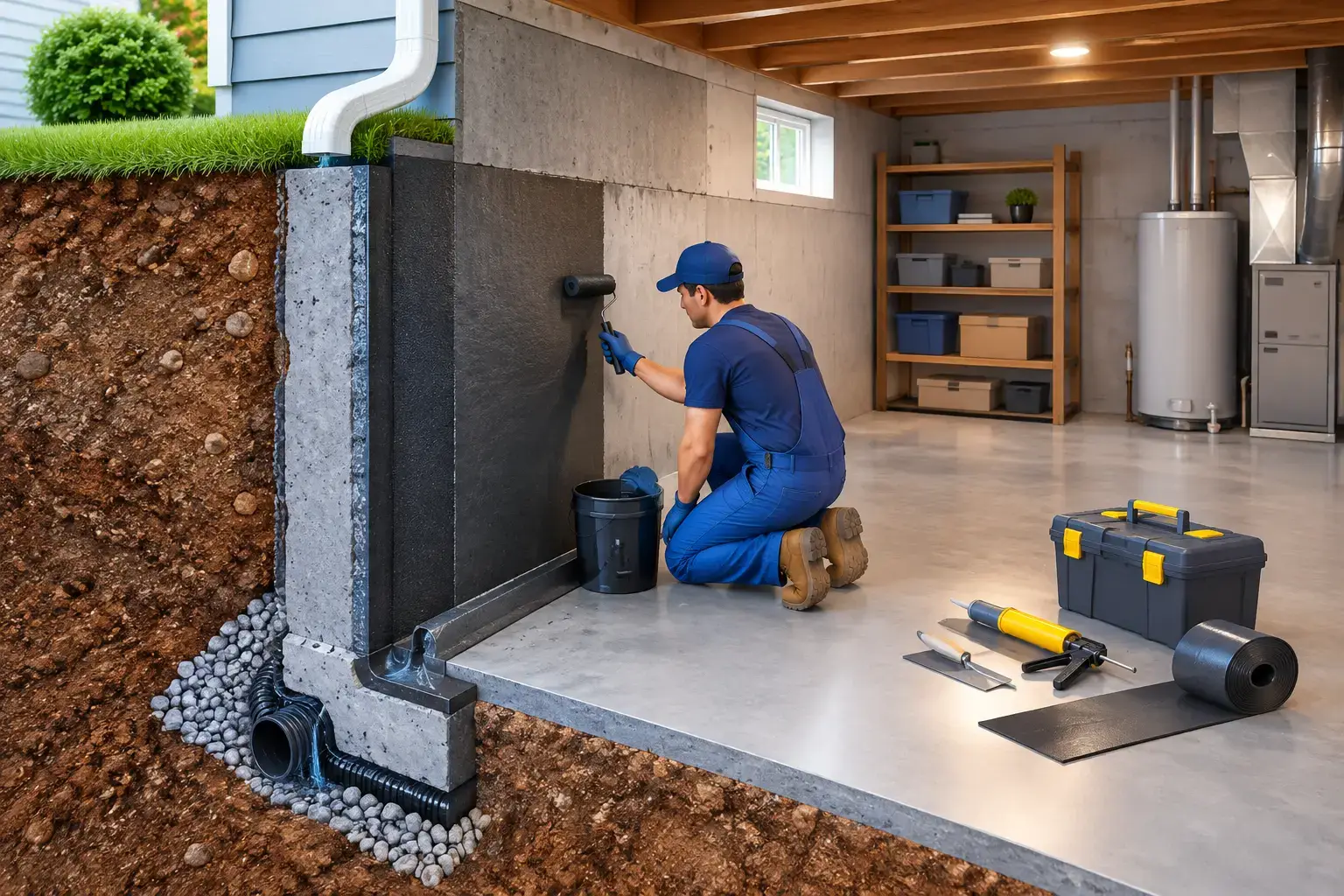
Permanent waterproofing focuses on water management. Depending on the source of moisture and the home’s construction, that can involve improving drainage conditions, collecting water at the foundation perimeter, directing it to a properly functioning sump system, and addressing cracks or structural concerns with the appropriate repair method. The correct scope depends on the cause, not just the location of the wet spot.
How a Professional Inspection Finds the Root Cause
A proper basement water assessment should look beyond the stain on the floor. The goal is to determine whether the moisture is caused by surface runoff, groundwater pressure, plumbing, condensation, an isolated crack, or a combination of issues.
An experienced inspector evaluates the visible entry points, foundation wall condition, floor-wall joint, exterior drainage patterns, gutter discharge, grading, and signs of ongoing structural movement. They also consider when the problem occurs. Water that appears only during intense storms can point to one issue, while moisture that persists through dry weather may suggest elevated groundwater or another source.
For homes in Virginia and the Maryland metropolitan region, local soil conditions, older foundation construction, sloped lots, and seasonal rainfall can all affect how water behaves around a property. There is no one-size-fits-all waterproofing solution, which is why diagnosis should come before repair recommendations.
Can Hydrostatic Pressure Damage a Foundation?
It can, particularly when water pressure is persistent and drainage problems are left uncorrected. Moisture alone does not always mean a foundation is failing, and many basement leaks can be resolved before major structural damage occurs. Still, repeated pressure against walls and beneath floors should not be dismissed.
The risk depends on the foundation type, soil conditions, amount of water present, wall condition, and whether there are existing cracks or movement. A sound wall may show no structural distress but still allow water into the basement. A wall with horizontal cracks or inward displacement needs a more urgent evaluation because moisture control and structural stabilization may both be necessary.
The trade-off is simple: early investigation is usually less disruptive than waiting for recurring water to damage finishes, insulation, stored belongings, framing, or the foundation itself. A free inspection can separate a minor maintenance issue from a problem that needs a permanent solution.
What Homeowners Can Do While Waiting for an Inspection
If water has entered your basement, move valuables away from the affected area and document where and when the moisture appears. Take photos after rainfall, note whether water comes through the wall-floor joint or a crack, and watch where roof runoff lands outside.
Keep gutters clear and make sure downspouts discharge away from the foundation. Avoid storing cardboard, fabric, or wood directly on a damp basement floor. If there is active standing water near electrical equipment, do not enter the area until it is safe to do so.
Most importantly, do not assume recurring water is normal for an older home. A dry, usable basement starts with controlling water before it can build pressure against the foundation. When the same moisture problem returns after every storm, it is time to find out what the water is doing below the surface and correct the cause for good.