A basement wall that feels damp after every storm is rarely just a basement problem. It is often evidence that foundation drainage is not moving water safely away from the home. Left alone, that water can saturate soil, build pressure against foundation walls, enter a crawlspace, and turn a manageable drainage issue into expensive structural damage.
For homeowners across Virginia and Maryland, drainage deserves attention before cracks widen, floors begin to slope, or water becomes a regular part of life below grade. The right solution is not simply sealing a visible leak. It is identifying where water is coming from, how it moves around the property, and why it is reaching the foundation in the first place.
What Foundation Drainage Is Designed to Do
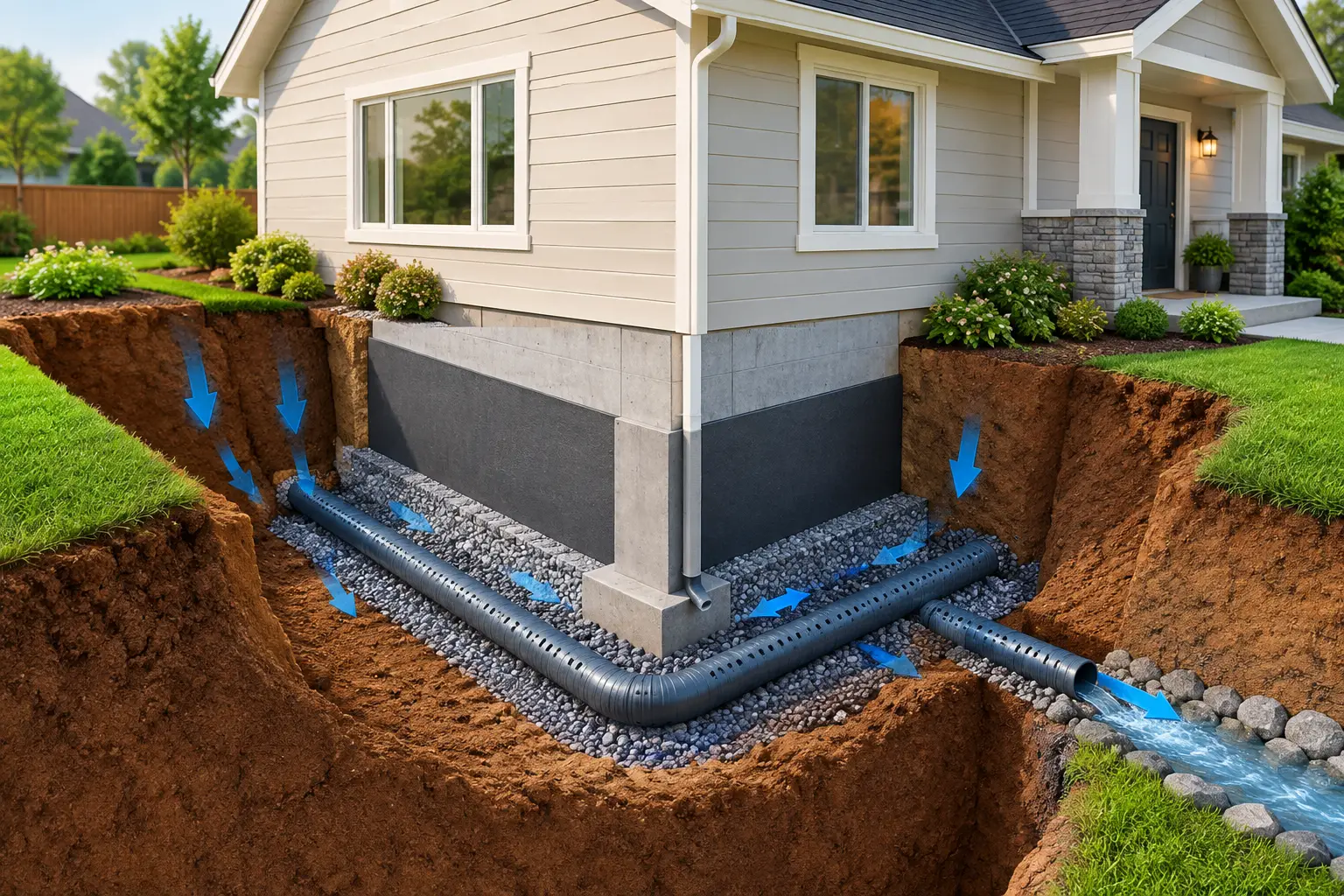
Foundation drainage is the system of grading, gutters, downspouts, drain lines, and other water-control measures that directs surface water and groundwater away from your home’s foundation. Its job is straightforward: keep the soil near the foundation from becoming oversaturated.
That matters because soil changes when it holds too much water. Heavy clay soils, common in many parts of Northern Virginia, can expand when wet and shrink as they dry. Those repeated changes place stress on foundation walls and footings. Waterlogged soil also becomes heavier, increasing the lateral pressure pushing against basement walls.
A sound drainage plan reduces that pressure and limits the amount of water available to enter through cracks, joints, window wells, or porous concrete. It protects more than the basement. It also helps preserve crawlspace framing, floor support systems, landscaping, and the long-term value of the home.
Warning Signs Your Home Has a Drainage Problem
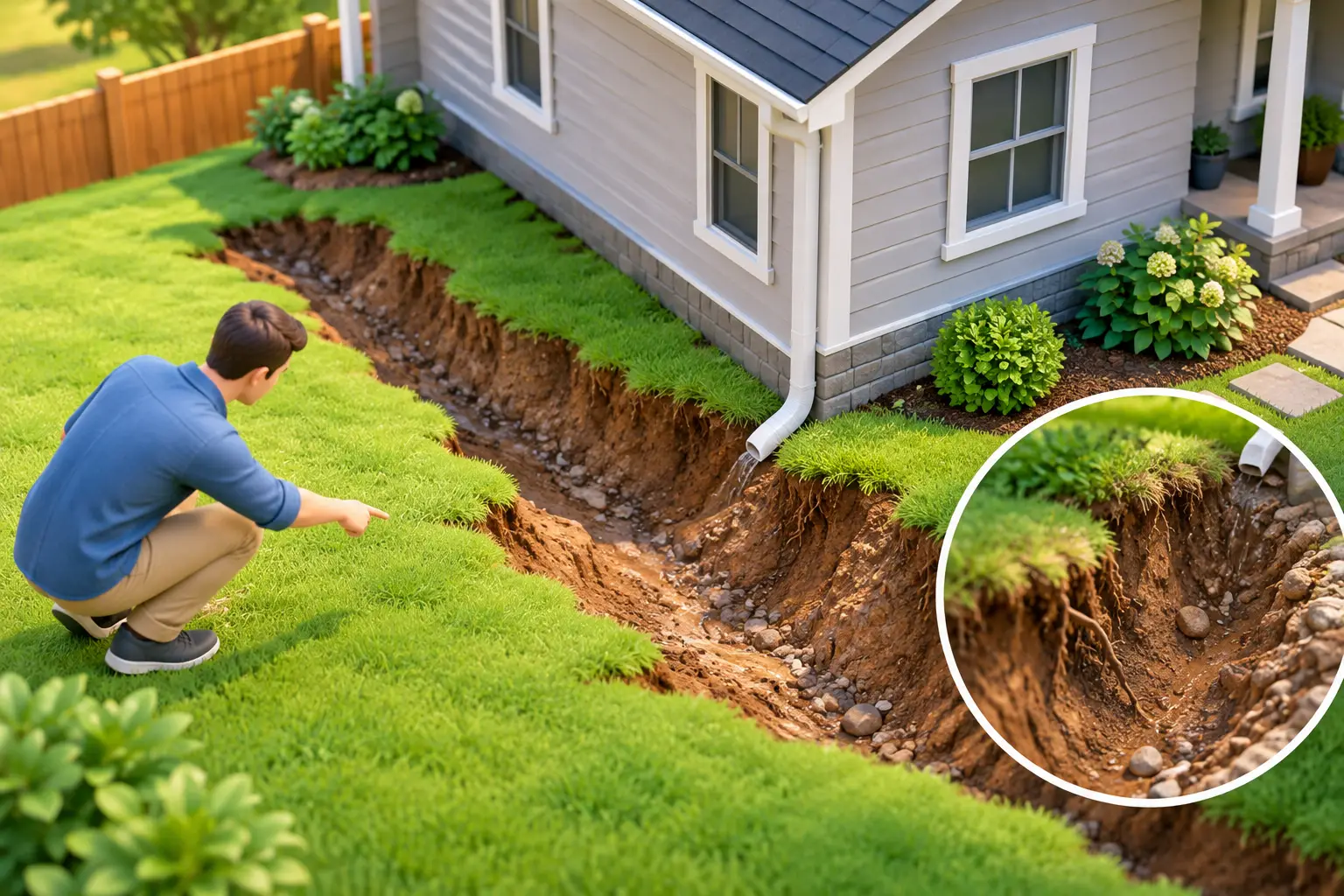
Some drainage failures are obvious, such as standing water in the basement. Others show up gradually and are easy to dismiss until the damage becomes more serious. Pay attention when rainwater pools near the foundation, gutters overflow, or downspouts discharge beside the house instead of carrying water farther away.
Inside, warning signs can include damp walls, peeling paint, musty odors, white mineral deposits on concrete, mold growth, or a crawlspace that remains humid long after rain. You may also notice wood rot, rusting metal supports, sagging floors, or insulation that has fallen from damp crawlspace framing.
Structural symptoms deserve prompt attention as well. Horizontal cracks, bowing basement walls, widening stair-step cracks in masonry, and doors that begin sticking can all be connected to soil movement or hydrostatic pressure. Not every crack means a home is failing, but every recurring water issue deserves an honest evaluation.
Why Sealing a Leak Is Not Always Enough
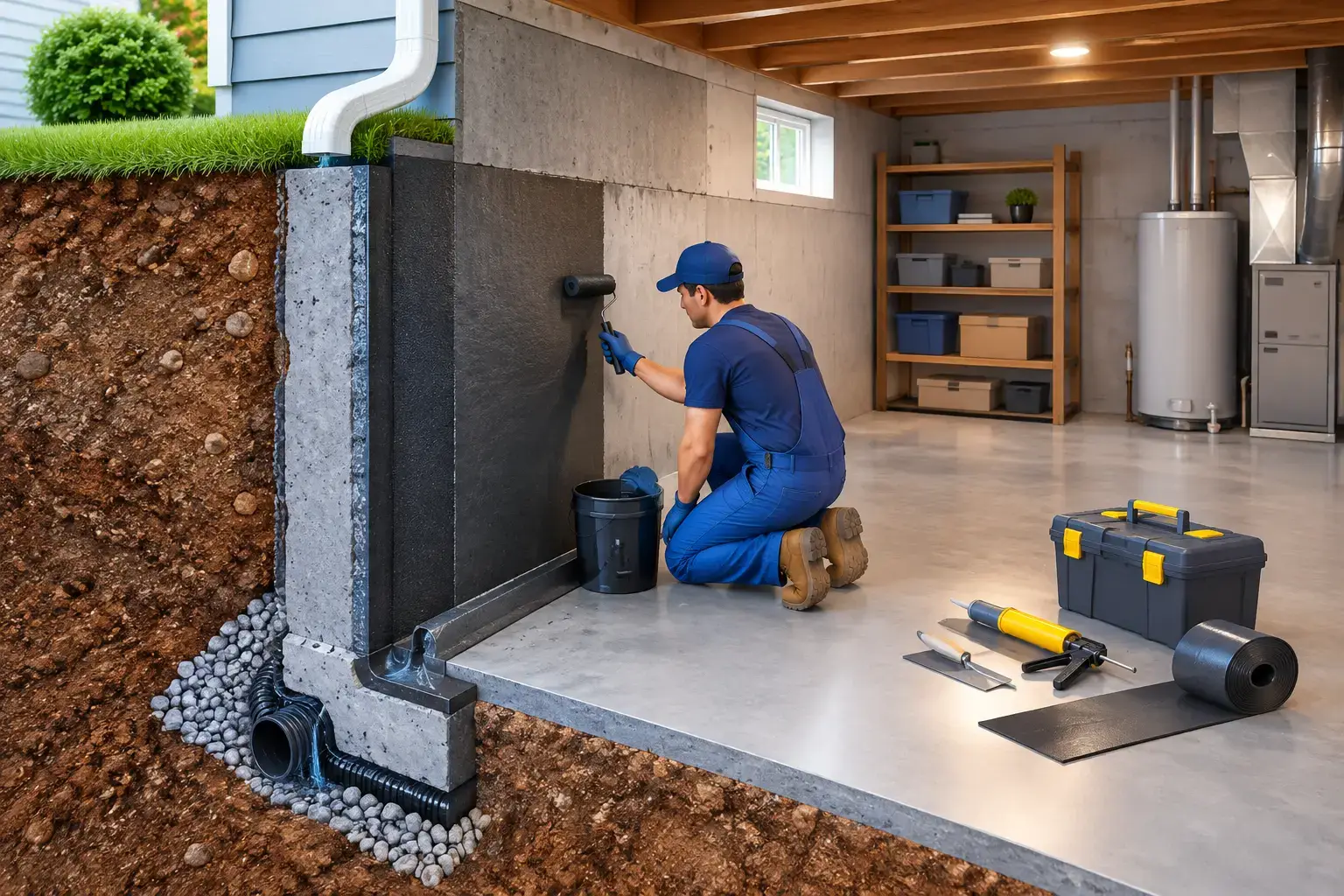
A waterproof coating or interior patch may slow a visible leak, but it does not stop water from collecting outside the foundation. If the soil remains saturated, pressure can continue building against the wall. Water may simply find another entry point.
This is why permanent repairs begin with diagnosis. A qualified inspection should look at roof runoff, lot grading, downspout discharge, soil conditions, wall movement, existing drainage components, and the specific path water takes during and after storms. The best repair scope depends on the cause.
For example, a home with overflowing gutters may need roof runoff corrected before more extensive work is considered. A home with persistent groundwater pressure, however, may require a more comprehensive drainage and waterproofing system. The difference matters. Installing the wrong solution can spend money without solving the problem.
The Parts of an Effective Foundation Drainage Plan
No two homes handle water the same way. A house on a slope, a home with a deep basement, and a home with a crawlspace each need a plan based on their site conditions. Still, effective drainage usually starts by controlling water at the surface before it reaches the foundation.
Proper grading should encourage water to flow away from the home, not toward it. Over time, mulch beds, settled soil, landscaping changes, and hardscape additions can create low areas that direct water back to the foundation. Correcting those areas can make a meaningful difference.
Gutters and downspouts are equally important. Gutters clogged with leaves or debris can dump concentrated water directly beside the house. Short downspouts create a similar problem, even when gutters appear to be working properly. Water needs a controlled route away from the foundation, where it will not flow back toward the home or overwhelm another part of the property.
When exterior conditions and water volume call for it, a professionally designed drainage system can collect and redirect water before it creates pressure against the foundation. In basements and crawlspaces with ongoing moisture intrusion, drainage work may be paired with waterproofing measures that manage water reliably and protect the structure from continued exposure.
Drainage Problems Can Affect More Than Concrete
Many homeowners think of drainage as a basement issue. In reality, excess moisture can create a chain reaction throughout the home. In a crawlspace, high humidity can feed mold growth, damage wooden beams and joists, and weaken the components supporting the floors above.
As framing absorbs moisture and deteriorates, homeowners may notice bouncy or uneven floors, gaps near trim, or interior doors that no longer operate smoothly. These symptoms can have several causes, but moisture should always be part of the investigation when a crawlspace is damp.
Water outside the foundation can also affect structural performance over time. Repeated wet-and-dry cycles may contribute to settlement in some soils, while water pressure can push basement walls inward. Addressing drainage early protects both the foundation and the systems connected to it.
When to Call for a Professional Inspection
A homeowner can safely check gutters, clear obvious debris, and watch how water moves across the property during a storm. Those observations are useful. But persistent wetness, foundation cracks, wall movement, mold, or sagging floors require a closer look.
Call for an inspection if water enters after moderate rain, if puddles remain against the foundation for more than a day, or if a musty smell keeps returning after cleaning. You should also act quickly if basement walls are bowing, cracking horizontally, or showing signs of inward movement. Drainage may be the cause, but the structure needs to be evaluated before damage progresses.
Foundation Works approaches these concerns with engineering-based diagnosis rather than one-size-fits-all repairs. A proper assessment separates cosmetic issues from conditions that threaten the home, then recommends a repair plan built around the actual source of the problem. There should be no pressure to pay for work your home does not need.
Small Maintenance Steps That Make a Difference
Good drainage systems still need regular attention. Check gutters and downspouts in spring and fall, and after major storms. Look for loose connections, blocked outlets, and areas where discharged water collects near the house.
Keep mulch and soil below siding, and avoid piling landscaping materials against the foundation. Watch for erosion channels, settled soil near the home, and patios or walkways that slope toward the structure. If you have a sump system or drainage components in the basement or crawlspace, have them checked when performance is uncertain rather than waiting for the next heavy rain.
These steps cannot replace a professional repair when water is already causing damage. They can, however, help prevent minor runoff issues from becoming a larger structural concern.
Water always follows the easiest path. Make sure that path leads away from your home, not into the spaces that support it. If you have noticed moisture, pooling water, cracks, or changes in your floors and walls, a free, no-obligation inspection can provide clear answers and a practical path forward.