A wet line where the basement wall meets the concrete slab is rarely just a housekeeping problem. Basement leaks at floor level often mean water is building up outside the foundation and finding its easiest path inside. You may notice damp carpet along one wall, a puddle after heavy rain, peeling paint, a musty smell, or white mineral residue at the base of the wall.
The water may dry up between storms, but the pressure and moisture that caused it can remain. Left alone, recurring basement water can damage finished spaces, encourage mold growth, rot stored belongings, and contribute to long-term foundation deterioration. The right repair starts with identifying where the water is coming from and why it is reaching the floor joint in the first place.
Why basement leaks at the floor happen
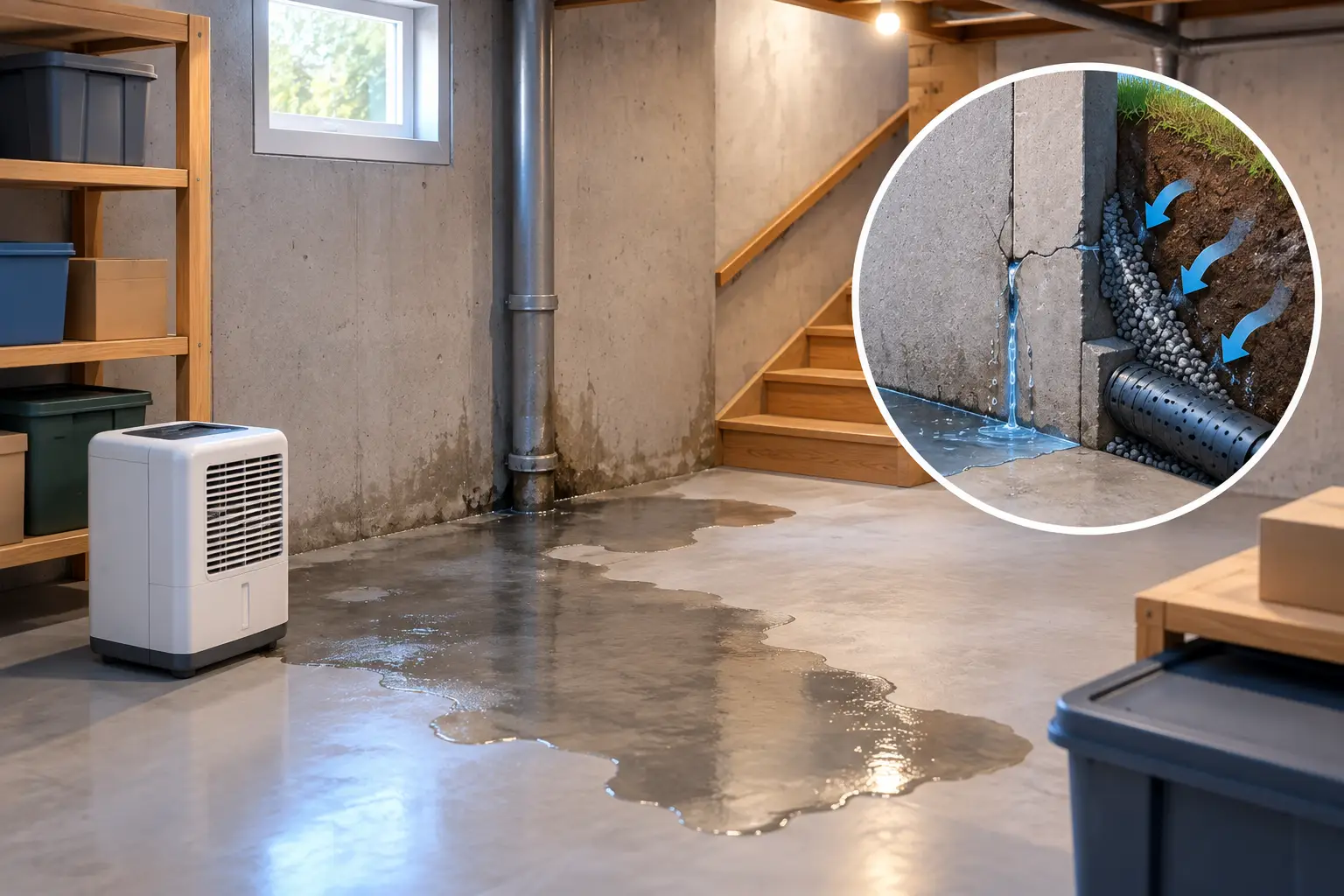
Most floor-level leaks occur at the cove joint – the seam where the foundation wall meets the basement slab. This joint is a natural transition between two separate concrete pours. It is not necessarily a sign that the foundation is failing, but it can become the first place groundwater enters when pressure builds around the home.
After prolonged rain, saturated soil can hold water against the foundation. That water creates hydrostatic pressure, which pushes moisture through small openings, porous concrete, and the wall-to-floor joint. A basement may look perfectly dry during a normal week, then leak at the floor after a fast-moving summer storm or days of steady rain.
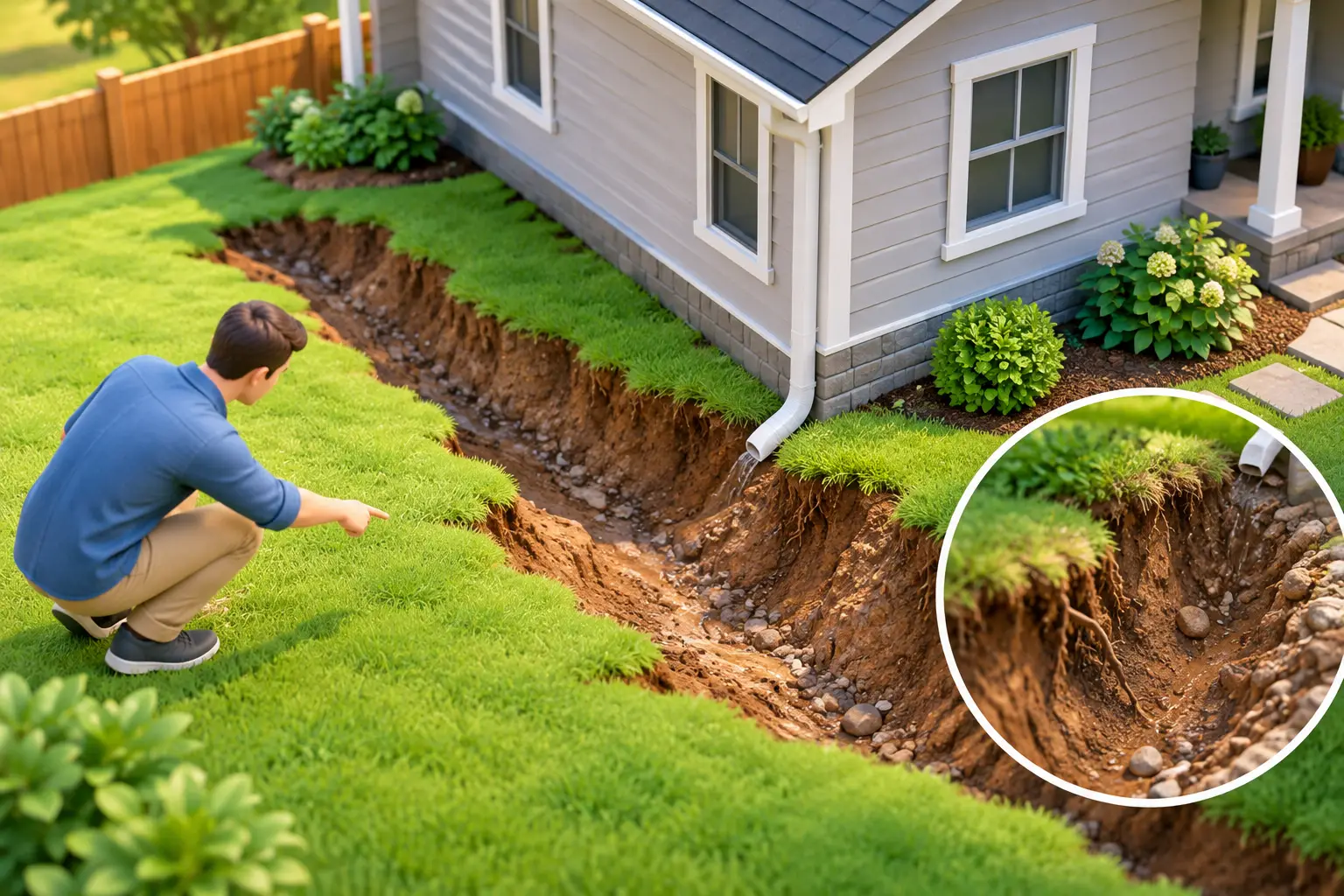
Poor surface drainage makes the problem worse. Roof runoff that lands near the house, soil that slopes toward the foundation, clogged gutters, and downspouts that discharge too close to the wall can all concentrate water where it does the most harm. In parts of Virginia and Maryland, changing soils, heavy seasonal rain, and older drainage systems can make these conditions especially common.
Floor leaks can also be tied to a crack in the foundation wall, a failed footing drain, or water moving beneath the slab. If water appears in one isolated area, a plumbing issue is another possibility. A professional inspection should distinguish between groundwater intrusion and an interior water source before any repair is recommended.
The pattern of the leak matters
The location and timing of water tell an important story. If the basement gets wet only after rainfall, the cause is usually related to drainage or groundwater. If water appears during dry weather, especially near a bathroom, laundry area, or utility line, a plumbing leak should be ruled out first.
Water entering along a long stretch of the wall-floor seam often points to pressure around the exterior foundation. A single wet spot may indicate a localized drainage issue, a wall crack, or a gap around a pipe penetration. Brown or muddy water can suggest surface runoff, while clear water seeping slowly through the cove joint is more often groundwater under pressure.
Do not assume that a small amount of water means a small problem. The visible puddle is only the part that made it indoors. The larger concern is the repeated moisture exposure around the foundation and beneath the slab.
Warning signs that deserve a closer look
A basement leak becomes more urgent when it appears alongside other foundation symptoms. Watch for horizontal or stair-step wall cracks, walls that bow inward, doors that suddenly stick, sagging floors above the basement, or new gaps around trim. These conditions do not always share the same cause, but they can indicate that soil pressure, settlement, or water exposure is affecting more than the basement finish.
Musty odors, moldy drywall, warped baseboards, rusted appliances, and persistent humidity are also signs that moisture control needs attention. Even if you do not see standing water, damp basement air can damage the space over time.
Why caulk and paint rarely solve the problem
It is understandable to reach for waterproof paint, caulk, or a patching compound when water appears near the floor. These products can improve appearance and may slow minor seepage for a time. They do not relieve hydrostatic pressure outside the wall or correct the drainage conditions that are feeding the leak.
When water is being forced toward the foundation, a surface coating can fail, blister, or simply redirect water to another weak point. The result is often a frustrating cycle: patch, repaint, wait for rain, and find water again in a nearby area.
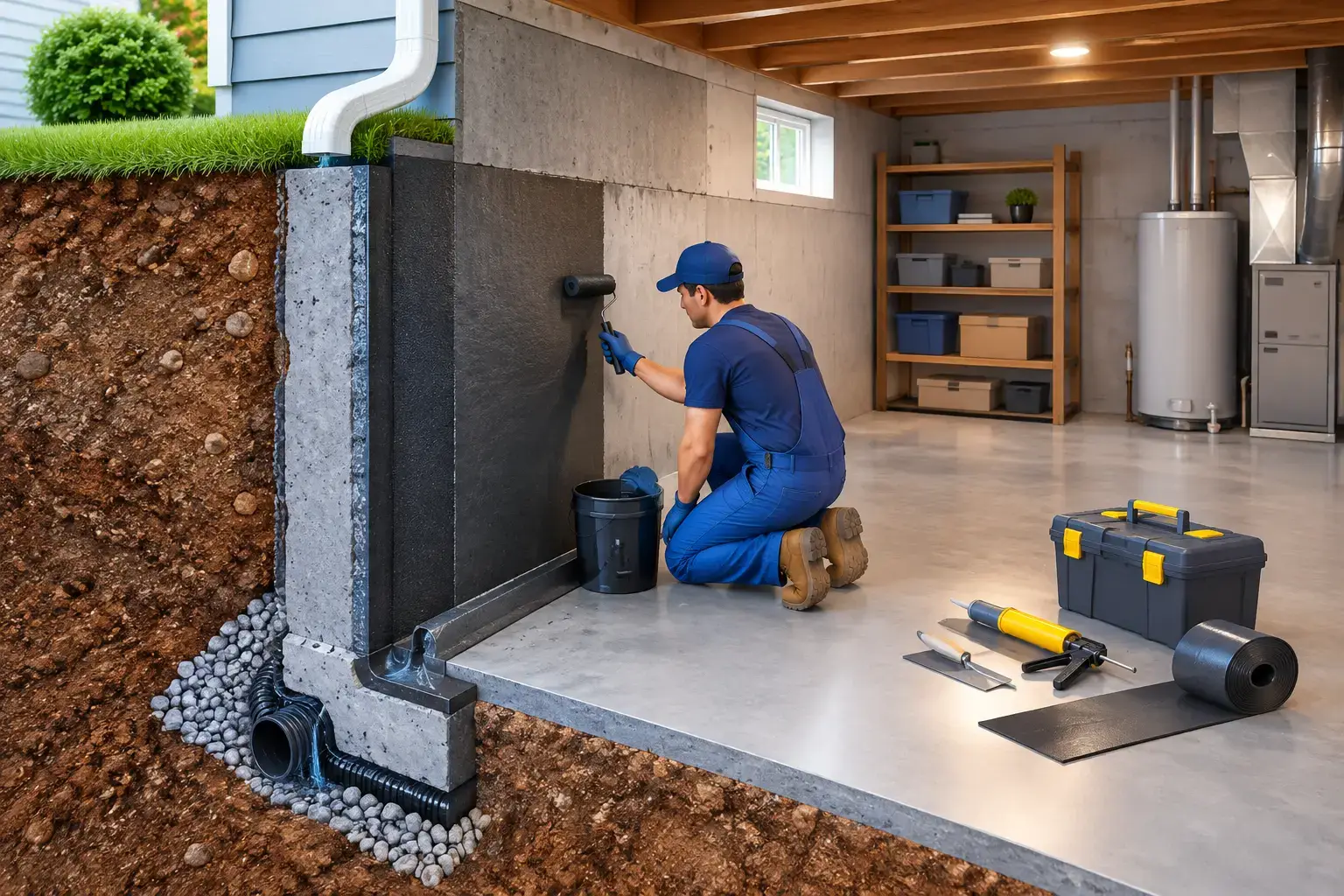
A lasting solution is based on the source of water and the way it travels around the home. That may involve improving exterior drainage, managing water at the foundation perimeter, collecting groundwater before it reaches the finished floor, or repairing cracks and other entry points as part of a broader waterproofing plan. The correct approach depends on the home, soil conditions, grading, and the severity of the water intrusion.
What a proper inspection should determine
A useful basement waterproofing inspection is not a sales pitch built around a wet spot. It should trace the water path from the roofline and yard to the foundation wall and basement floor. The goal is to determine whether the leak is caused by surface water, groundwater pressure, a foundation defect, plumbing, or a combination of issues.
An experienced inspector should evaluate the grade around the house, gutter and downspout discharge, visible foundation cracks, wall movement, floor-wall joints, interior moisture patterns, and signs of drainage failure. They should also explain which observations are cosmetic and which point to a repair that protects the structure and living space.
For example, extending a downspout may be enough when roof runoff is the clear culprit and the basement has no other signs of water pressure. But if water repeatedly enters at the cove joint across multiple walls, the home may need a more comprehensive waterproofing system. Treating every leak the same way can waste money and delay the repair that actually works.
What you can do while waiting for an inspection
First, keep water away from electrical equipment and avoid using a wet basement outlet. Move boxes, furniture, and stored valuables off the floor, especially if rain is in the forecast. If you have a finished basement, remove wet rugs and dry affected materials promptly to limit mold and material damage.
Outside, make sure gutters are not overflowing and that downspouts carry water away from the foundation. Clear leaves and debris where safe to do so. Check for low areas near the house where water pools after rain. These steps may reduce immediate water exposure, but they should not replace a professional evaluation if the leak has happened more than once.
Take photos during and after the leak. Note the date, weather conditions, the exact location of the water, and whether it appeared quickly or gradually. That information can make the source easier to identify.
Protect the basement before the damage spreads
A dry basement is not simply a comfort issue. It protects flooring, walls, stored belongings, indoor air quality, and the value of your home. More importantly, it gives you a chance to address water pressure and drainage concerns before they create more extensive foundation or structural damage.
Foundation Works approaches basement water intrusion with engineering-based diagnosis and permanent repair systems, not cosmetic patching. A free, no-pressure inspection can clarify whether the problem is a minor drainage correction or a waterproofing issue that needs a more complete solution.
If water has appeared where the wall meets the floor, do not wait for the next storm to tell you more. A clear diagnosis now can help protect your home, your investment, and the space your family depends on.