
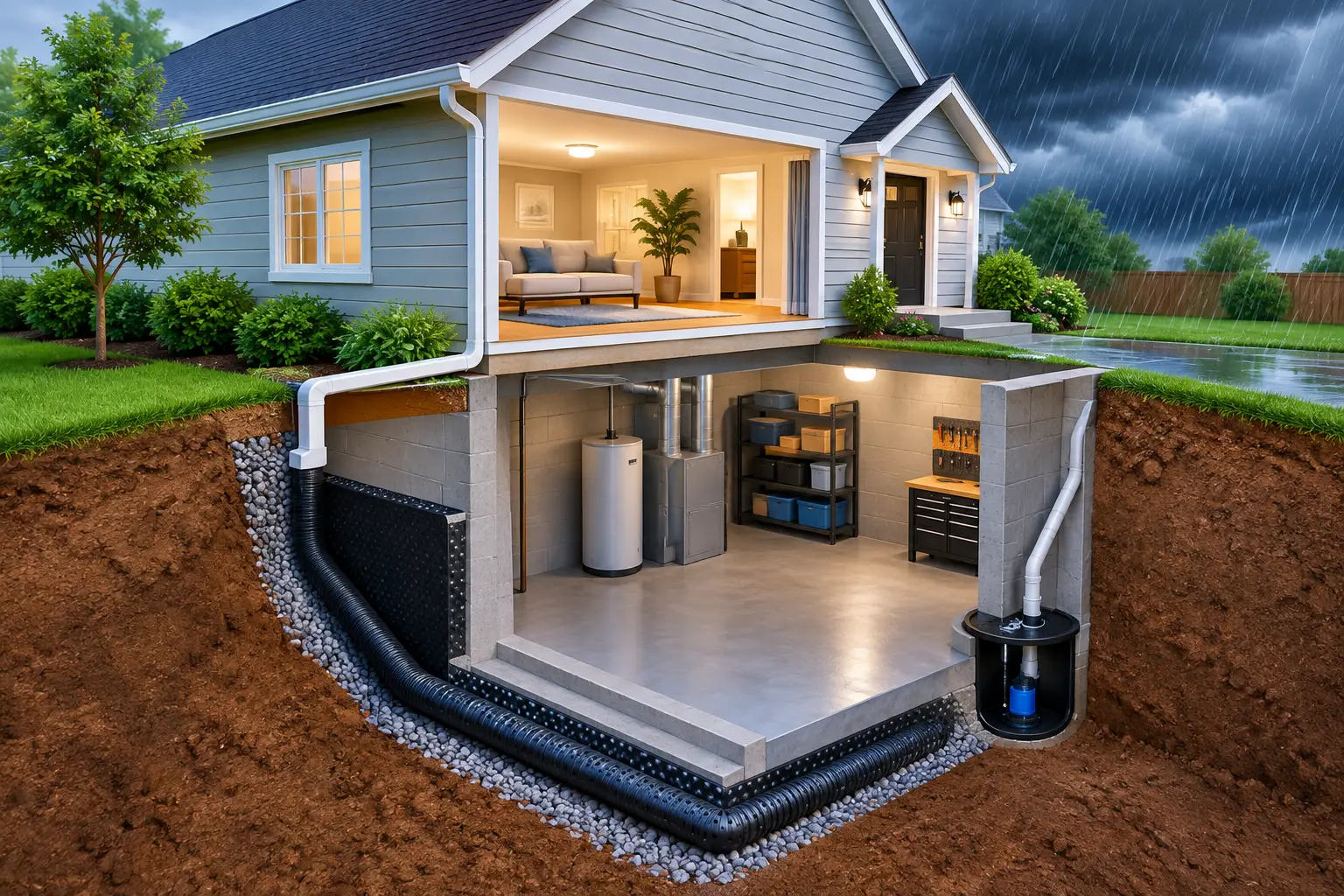
A basement can stay dry for years, then take on water during one hard Virginia rainstorm. The difference is often not the storm itself. It is where water is collecting around the foundation, how it is draining away, and whether the home has a reliable path for groundwater to escape. Knowing how to prevent basement flooding starts with finding the source of the water pressure before it finds a weak point in your foundation.
A damp corner, white mineral residue on a wall, musty odors, or a small puddle near the perimeter are not problems to ignore until the next storm. They are early warnings that the drainage system, waterproofing system, or foundation itself needs attention. Addressing them early is usually far less disruptive than cleaning up after standing water damages flooring, stored belongings, drywall, and framing.
Why basements flood during heavy rain
Most basement flooding begins outside. When rainwater pours off the roof, collects beside the house, or saturates poorly graded soil, it creates hydrostatic pressure against the foundation. That pressure pushes water through cracks, gaps around utility penetrations, porous concrete, and the joint where the wall meets the floor.
In Northern Virginia and the Maryland metropolitan region, clay-heavy soils can make this worse. Clay absorbs water, expands, and drains slowly. After repeated storms, the ground around the home may remain saturated even when the surface looks dry. Water then has nowhere easy to go except toward the lowest point: your basement or crawlspace.
A failed sump pump, clogged discharge line, undersized drainage system, or damaged exterior drain can turn a manageable moisture issue into a flood. The right solution depends on how and where water is entering. A wall crack that leaks only during storms calls for a different repair than water rising through the basement floor.
How to prevent basement flooding at the source
The most effective waterproofing plans control water before it reaches the foundation. Start with the simple items you can observe from outside after a rain. Look for overflowing gutters, downspouts that empty beside the foundation, low areas near the house, or mulch beds that slope inward toward the wall.
Keep roof runoff away from the foundation
Your roof moves a surprising volume of water during a storm. Gutters and downspouts need to capture that runoff and carry it well away from the house. Clean gutters regularly, especially after leaves fall, and make sure downspouts are securely connected and not crushed or blocked.
Downspout extensions should discharge on ground that slopes away from the home. Water that exits only a foot or two from the wall can soak directly into the backfill around the foundation. Simply redirecting roof runoff can reduce the water load on your basement walls substantially.
Also check where that water ultimately goes. An extension that sends water toward a neighbor’s property, a driveway that drains back to the house, or a low spot that holds water creates another problem. The goal is controlled drainage away from the structure without creating erosion or pooling elsewhere.
Correct negative grading around the house
The soil around your foundation should slope down and away from the home. A gradual slope helps surface water move outward instead of collecting against the basement wall. Over time, soil settles, landscaping changes, and mulch accumulates. What once drained properly may now funnel water toward the house.
Regrading can be a practical solution when the issue is limited to surface runoff. However, adding soil blindly can cover siding, block weep holes, or place soil too high against the foundation. It should be done carefully, with attention to the home’s existing drainage details.
If water remains against the house despite proper grading, the issue may be below grade. Saturated soil, a failed footing drain, or groundwater pressure may require a more comprehensive waterproofing approach.
Maintain the sump pump before you need it
A sump pump is often the last line of defense against groundwater. It collects water from a drainage system and pumps it away from the foundation. If it fails during a storm, water can rise quickly.
Test the pump periodically by pouring water into the pit and confirming that the float activates, the pump runs, and water exits through the discharge line. The discharge point should remain clear and should not freeze during winter or empty immediately beside the foundation. If your neighborhood experiences frequent outages during storms, battery backup protection can provide valuable peace of mind.
A working pump alone is not always enough. If the pit fills faster than the pump can handle, the drainage system may be undersized, blocked, or overwhelmed by excessive water around the foundation.
Protect the basement walls and floor
Keeping water away from the house is the first priority, but existing foundation openings still need proper repair. Sealing the visible side of a crack without correcting outside drainage may stop a drip temporarily while water pressure continues building behind the wall.
Treat cracks as a diagnostic clue
Not every foundation crack is structural, but cracks can provide a path for water intrusion. Vertical cracks are common and may result from concrete shrinkage or minor settling. Horizontal cracks, stair-step cracks in block walls, bowing walls, or cracks that widen over time require more urgent attention because they can indicate pressure or movement affecting the foundation.
Waterproof crack repair should match the crack type and the condition of the wall. If the crack is tied to settlement, lateral soil pressure, or structural distress, the foundation needs stabilization as well as water control. A permanent repair addresses the reason the crack developed, not just the water stain it left behind.
Consider an interior drainage system when groundwater is the issue
When water enters at the wall-floor joint or rises through the slab, an interior drainage system may be the most dependable solution. These systems collect groundwater at the basement perimeter and direct it to a sump pump before it reaches finished areas.
This approach is especially useful when exterior excavation is impractical, when groundwater pressure is persistent, or when an older home’s original footing drains no longer function. The trade-off is that interior drainage manages water after it reaches the foundation perimeter. It works best alongside good exterior drainage that reduces the total amount of water pressing against the home.
Watch for warning signs between storms
Basement flooding is rarely a complete surprise. Pay attention to changes in your home, particularly after prolonged rain. A musty smell, damp carpet edges, peeling paint, rust on appliances, mold growth, or chalky white deposits on concrete all point to ongoing moisture exposure.
Outside, look for soil erosion near downspouts, standing water along the foundation, cracked or sunken concrete that directs water toward the house, and gutters pulling away from the roofline. Inside, note whether water appears in one location or several. A single wet wall may suggest a concentrated drainage issue, while moisture around the entire perimeter can point to broader groundwater pressure.
Do not overlook structural symptoms. Doors that begin sticking, sloping floors, expanding wall cracks, and inward movement in basement walls may indicate that water-saturated soils are affecting more than your basement’s dryness. Those conditions deserve a professional evaluation promptly.
Know when a professional inspection is the right next step
Home maintenance can solve minor runoff problems, but repeated leaks, standing water, or wall movement should not be treated as a weekend sealing project. The wrong repair can hide the evidence while moisture continues damaging the structure behind finished walls.
A thorough inspection should identify where the water originates, how it travels, whether the foundation is under pressure, and which combination of drainage, waterproofing, crack repair, or structural stabilization will provide a lasting result. An honest evaluation should also tell you when a concern is cosmetic or when simple maintenance is enough.
Foundation Works provides free, no-obligation inspections for homeowners who need a clear answer about water intrusion, drainage, and foundation conditions. Engineering-based diagnosis helps separate a temporary patch from a repair designed to protect the home for the long term.
The best time to prepare your basement is when the floor is still dry. Walk your property after the next rain, follow the path of the water, and act on the warning signs before the next storm gives water a way inside.

