Water on a basement floor is not a cleanup problem first. It is a warning that water has found a path to your foundation, and that path can worsen with every storm. Knowing how to drain wet basements safely can limit immediate damage, but lasting protection depends on identifying why the water got in.
A few puddles near one wall may come from a clogged gutter or a failed window well. Water spreading across the floor, recurring dampness, white mineral staining, musty odors, or cracks in the wall can point to a larger drainage or foundation issue. Act quickly, but do not make the mistake of treating standing water as the whole problem.
Start With Safety Before Removing Water
Do not step into a flooded basement if the water level is near electrical outlets, appliances, extension cords, or the electrical panel. Shut off power to the basement only if you can do so safely from a dry location. If you cannot, contact a qualified electrician or emergency service before entering the area.
Avoid entering water that may be contaminated by a sewer backup, which can carry harmful bacteria. Wear waterproof boots, gloves, and eye protection for ordinary groundwater cleanup. Keep children and pets out of the area until it is dry and safe.
If water is entering rapidly during a storm, focus first on protecting people, not possessions. Move valuables, documents, and furniture only when it is safe to do so. Take photos or video of the affected walls, floor, and water level before cleanup if you may need documentation for an insurance claim or a professional inspection.
How to Drain Wet Basements Safely
The right method depends on how much water is present, how quickly it is entering, and whether the floodwater is still rising. For a small, contained puddle, a wet/dry vacuum, mop, and absorbent towels may be enough. Remove the water, then use fans and a dehumidifier to dry the space thoroughly.
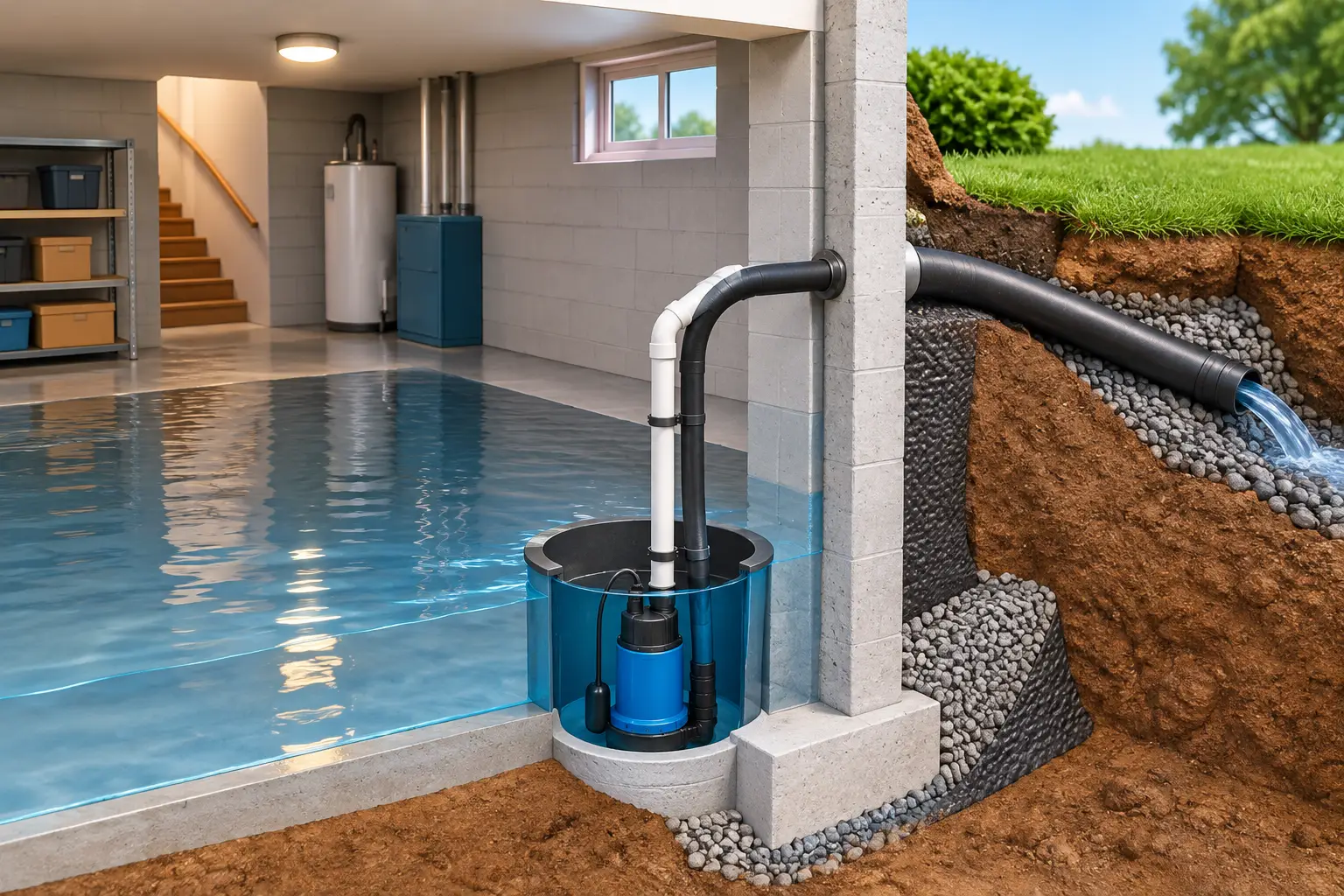
For deeper standing water, a submersible utility pump can move water outside through a discharge hose. The discharge point matters. Do not pump water directly beside the foundation, into a window well, or toward a neighboring property. Send it well away from the home and downhill where it cannot flow back toward the basement.
Pump carefully if the basement is heavily flooded after a major storm. Water outside the foundation can create pressure against the walls. Removing a large amount of interior water too quickly, while saturated soil still presses from outside, can be risky in certain conditions. If water is several feet deep, walls are cracked or bowing, or the property has experienced widespread flooding, get professional guidance before pumping it out completely.
Once the water is gone, remove wet cardboard, rugs, insulation, and other porous materials that cannot be dried promptly. Drywall, wood framing, and stored belongings can begin supporting mold growth quickly. Run fans to circulate air, use a dehumidifier, and keep the basement temperature moderate. A dehumidifier helps with residual moisture, but it cannot solve an active leak or groundwater pressure.
Find the Route Water Is Taking
The location of the water is a clue, but not always the source. Water can travel along foundation walls, under flooring, or through cracks before appearing somewhere else. Look for patterns after the area is safe and dry enough to inspect.
Water near a basement window may indicate an overflowing or poorly drained window well. Water at the base of several walls after heavy rain often points to saturated soil and hydrostatic pressure – the pressure created when groundwater builds up around the foundation. A wet floor seam, where the wall meets the slab, commonly signals that water is collecting beneath or beside the foundation and pushing inward through the easiest opening.
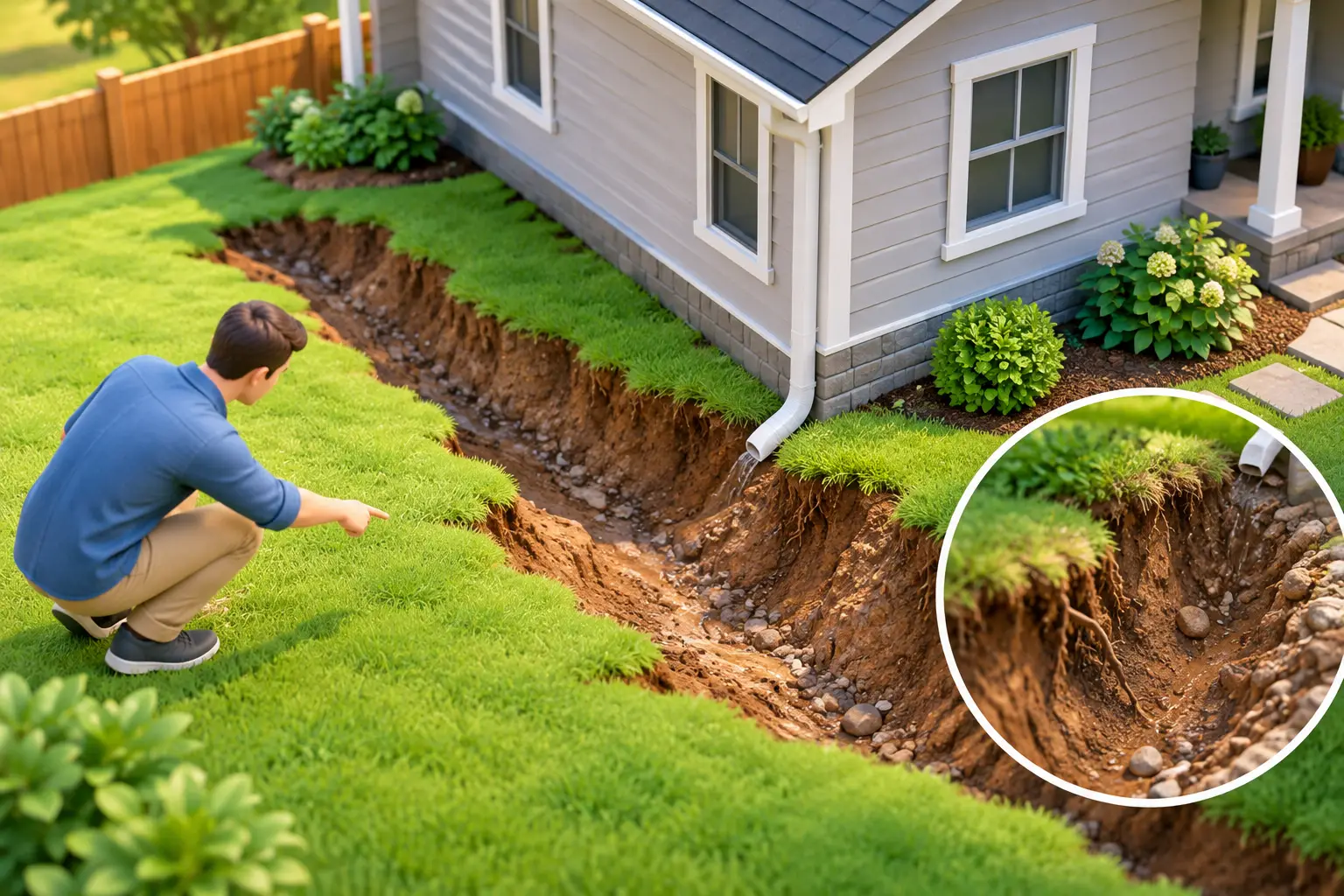
Check the exterior during dry weather. Gutters should be clear and securely connected to downspouts. Downspouts should carry roof runoff well away from the home. The soil around the foundation should slope away from the walls, rather than creating a trough that holds water against them. Low spots, settled soil, short downspout extensions, and overflowing gutters can send thousands of gallons of roof water toward the basement over the course of a season.
Also look at basement wall cracks. A hairline crack that stays dry may be cosmetic, but a crack that leaks, widens, offsets, or appears with inward wall movement deserves prompt attention. Water infiltration and structural damage often develop together because saturated soil increases pressure on basement walls.
Fix the Cause, Not Just the Puddle
Drying the basement is the immediate task. Keeping it dry requires the right repair for the actual water source. Simple exterior maintenance may correct some issues. Cleaning gutters, extending downspouts, and restoring positive grading can reduce the amount of water reaching the foundation.
However, these steps will not always solve chronic basement water. If groundwater rises around the home, surface changes alone may not relieve the pressure below grade. Repeated water at the wall-floor joint, water after nearly every heavy rain, and dampness that returns despite good gutter maintenance may require a professionally designed drainage and waterproofing system.
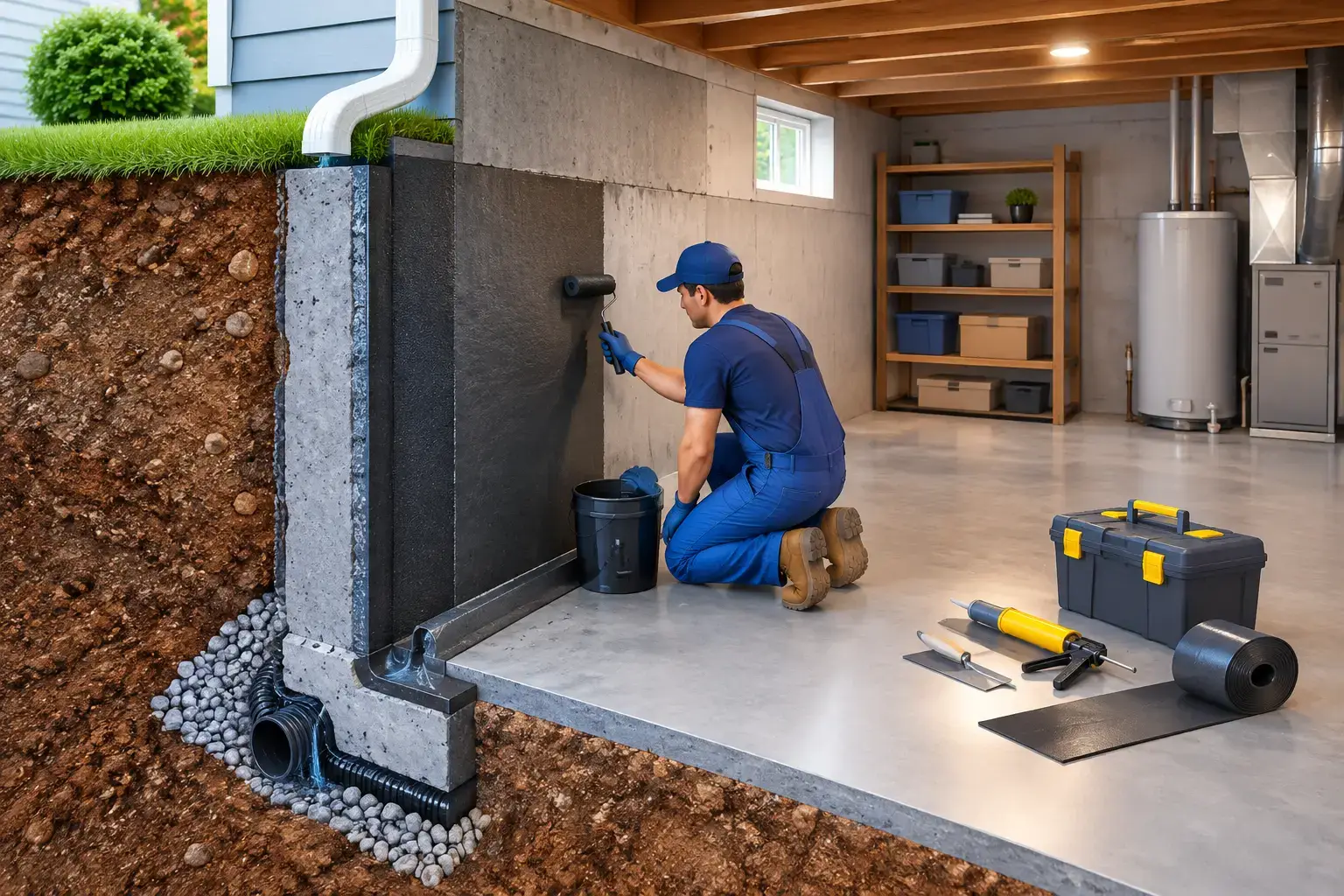
Interior drainage systems are designed to collect water before it spreads across the basement floor and direct it to a sump system for controlled discharge. This approach can be effective when water pressure builds around the foundation or when exterior excavation is not the most practical solution. The proper system depends on the home’s construction, soil conditions, water path, and the condition of the foundation walls.
Cracks should be evaluated as part of the drainage plan, not treated as an isolated caulking job. Sealing the visible opening may reduce a small leak, but it does not remove the external water pressure that caused it. The same is true of waterproof coatings applied over a damp wall. If water is still trapped outside the foundation, it will continue looking for a way in.
Watch for Signs of a Larger Foundation Problem
A wet basement becomes more urgent when water appears alongside structural warning signs. Do not wait for the next storm if you see horizontal cracks, stair-step cracks in block walls, bowed or leaning walls, crumbling masonry, or a wall that feels damp over a wide area.
Inside the home, sticking doors, new cracks above windows, sloping floors, and gaps between trim and walls can also be signs that settlement or moisture-related movement is affecting the structure. These symptoms do not automatically mean major repairs are needed. They do mean the home should be assessed by someone who can distinguish surface-level moisture from pressure, movement, or drainage failure below grade.
For homeowners in Virginia and the Maryland metropolitan region, changing weather patterns can make these issues especially frustrating. Intense rain can saturate clay-heavy soils quickly, while dry periods can cause soil to shrink and shift. That cycle can stress foundations, alter drainage paths, and turn an occasional leak into a recurring problem.
When to Call a Basement Water Professional
Call for a professional inspection when water returns after cleanup, the source is not obvious, the basement smells persistently musty, or cracks and wall movement are present. A proper evaluation should look beyond the wet spot. It should assess exterior drainage, grading, foundation conditions, wall cracks, floor seams, and the path water takes around the home.
Be cautious of quick fixes presented without an inspection. A dehumidifier, a coat of sealant, or a single patch may have a place in a larger solution, but none should be treated as a permanent answer to active groundwater intrusion. Permanent fixes start with an accurate diagnosis.
Foundation Works provides honest, engineering-based evaluations for homeowners dealing with basement water, drainage concerns, and foundation warning signs. The goal is not to sell a one-size-fits-all system. It is to identify what is allowing water in and recommend the repair scope that protects the home over the long term.
A dry basement protects more than stored boxes and finished living space. It helps preserve air quality, structural materials, and the value of one of your largest investments. Once the immediate water is removed, use what you observed to address the route it took in – before the next storm turns a small warning into a larger repair.